Why Start Early?
Early oral hygiene sets the foundation for a lifetime of healthy smiles. Cleaning an infant’s gums and, soon as the first tooth erupts removes bacteria before decay can begin and teaches the mouth to adapt to regular care. Establishing these habits reduces the risk of early childhood caries and supports proper development of the jaw and speech. Regular dental visits from the first birthday allow professionals to monitor growth, apply preventive fluoride treatments, and address problems before they become costly. Together, early home care and timely professional check‑ups create a protective routine that promotes strong enamel, healthy gums, and confident, pain‑free oral health throughout life.
Infant and Early Toddler Care
Infant & Early Toddler Oral‑Hygiene Summary
| Age / Stage | Oral‑Hygiene Action | Frequency | Key Points |
|---|---|---|---|
| Newborn – 3 mo | Wipe gums with soft, damp cloth or tiny infant toothbrush | After each feeding | Removes bacteria & sugars; start within first days of life |
| 4‑6 mo (first tooth) | Soft‑bristled brush + smear of fluoride toothpaste (grain‑of‑rice size) | Twice daily (2 min) | Use gentle circular motions; no rinsing after brushing |
| 6‑12 mo | Transition to regular infant toothbrush; introduce fluoride toothpaste (pea‑size) | Twice daily | Continue wiping gums after each feeding; avoid bottle‑rot by eliminating night‑time bottle |
| 12 mo | Switch to sippy cup; schedule first dental visit | Once (by 12 mo or 6 mo after first tooth) | Preventive fluoride varnish; early assessment |
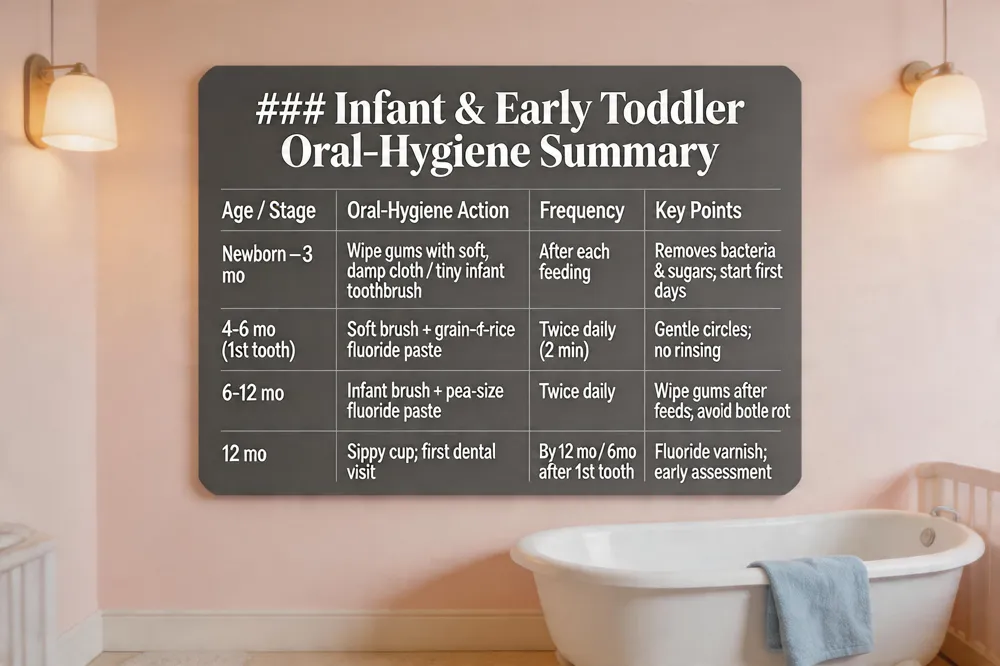 Begin oral hygiene the moment your baby is born. After each feeding, gently wipe the gums with a soft, damp cloth or a tiny infant toothbrush to remove bacteria and sugars; this should start within the first few days of life. When the first tooth erupts (usually 4‑6 months), switch to a soft‑bristled brush and apply a smear of fluoride toothpaste the size of a grain of rice, brushing twice daily. Avoid putting the infant to sleep with a bottle—especially formula, breast‑milk, or juice—to prevent “bottle‑rot” and limit sugary drinks to meals only, transitioning to a sippy cup by 12 months. Schedule the first dental visit by the child’s first birthday (or within six months of the first tooth) for preventive fluoride varnish and early assessment. Breast‑fed newborns receive natural protective factors from human milk, but still need gum cleaning after each feeding; a deep latch promotes proper palate development, and the same gentle brushing routine should begin once teeth appear.
Preschool and Early Elementary Routine
Preschool & Early Elementary Oral‑Hygiene Summary
| Age | Brushing Details | Flossing | Sealants & Fluoride | Tips |
|---|---|---|---|---|
| 3‑5 yr | Soft child‑size brush, pea‑size fluoride paste, 45° angle, circular motions, 2 min | Start when two teeth touch; use floss picks or pre‑threaded floss | Dental sealants on newly erupted permanent molars (≈ 6 yr); fluoride varnish every 6 mo (high‑risk) | Turn brushing into a game; use timers, songs, stickers |
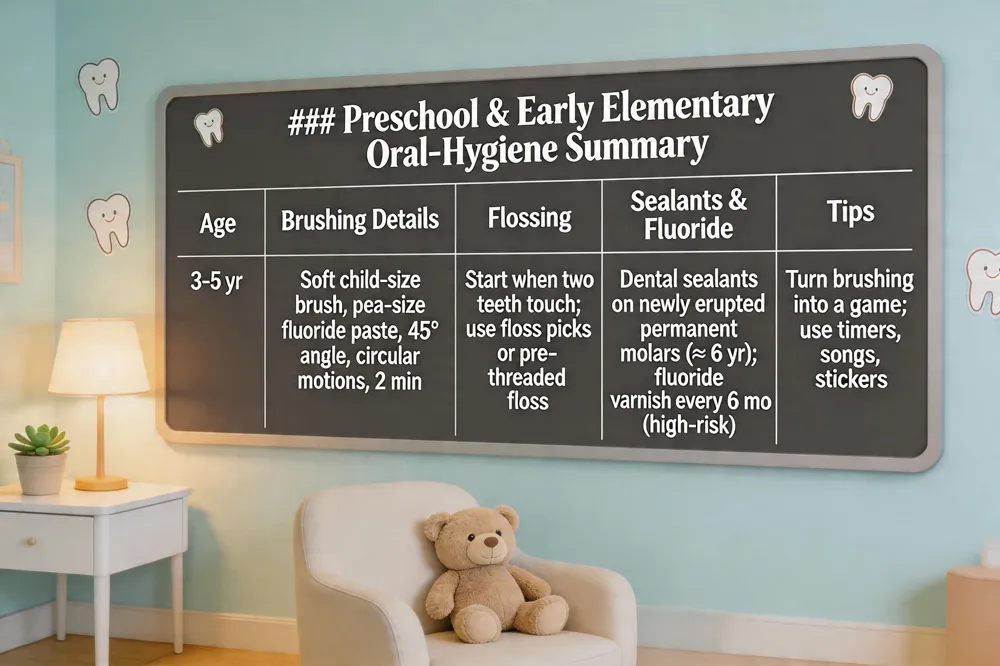 Supervised brushing for ages 3‑5 uses a soft, child‑size brush, pea‑size fluoride paste, and a 45‑degree angle with gentle circular motions for two minutes. An adult holds the child’s head, guides the brush, and checks that all surfaces—including molars and tongue—are clean. Flossing starts when two teeth touch; thin floss picks or pre‑threaded floss make it easy, and daily use removes plaque between teeth a brush can’t reach.
Dental sealants are applied to newly erupted permanent molars (around age 6) to protect pits and fissures, while fluoride varnish can be painted every six months for extra protection, especially in high‑risk children.
When a child refuses, turn brushing into a game: sing a two‑minute song, let them choose a favorite brush or flavor, use a timer, and reward with stickers. Consistent modeling, positive reinforcement, and a calm tone keep the routine enjoyable.
School‑Age Children (6‑12 Years)
School‑Age Children (6‑12 yr) Oral‑Hygiene Summary
| Routine | Steps (in order) | Frequency | Additional Care |
|---|---|---|---|
| Brushing | 1️⃣ Wet brush & add pea‑size fluoride paste | ||
| 2️⃣ 45° angle, short circular motions (outer surfaces) | |||
| 3️⃣ Same on inner surfaces | |||
| 4️⃣ Tilt brush vertically for chewing surfaces | |||
| 5️⃣ Spit, no rinsing | Twice daily, ≥2 min each | Use soft‑bristled brush | |
| Flossing | Use child‑friendly floss picks or thin floss; when two teeth touch | Daily | Removes plaque between teeth a brush can’t reach |
| Sealants | Apply to newly erupted permanent molars (≈ 6 yr) | Once per molar, as needed | Protect pits & fissures |
| Fluoride Varnish | Apply professionally | Every 6 mo | Extra protection, especially high‑risk |
| Orthodontic Evaluation | Assess alignment during mixed‑dentition stage | Around 6‑9 yr | Early detection of issues |
| Dental Visits | Comprehensive exam & cleaning | Every 6 mo | Maintains health & catches problems early |
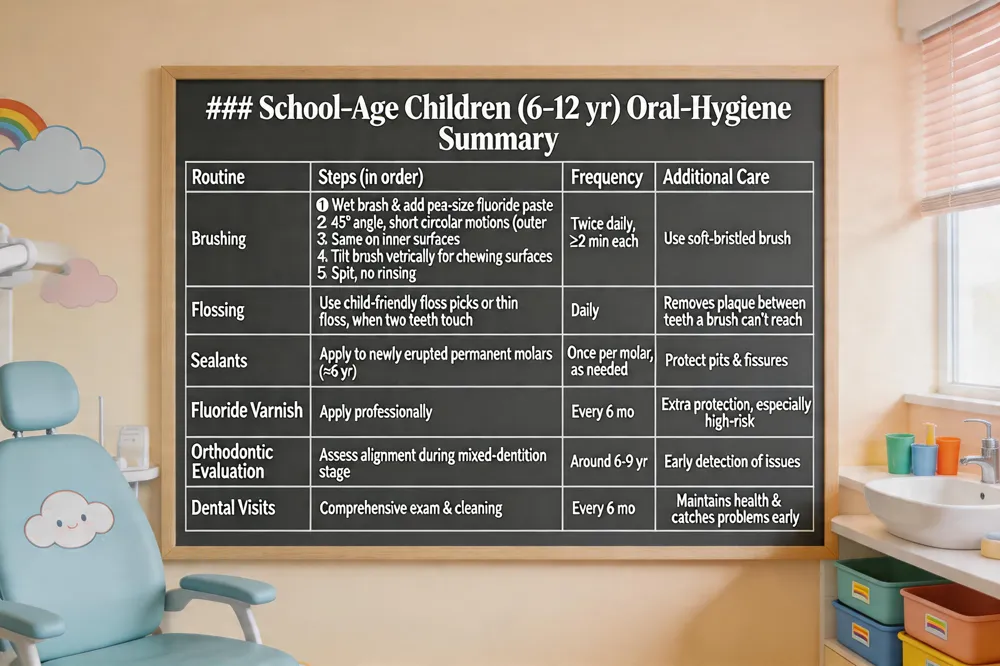 At ages 6‑12, oral hygiene should be a structured twice 30‑minute routine. Children must brush twice daily for at least two minutes using a soft‑bristled brush and a pea‑sized amount of fluoride toothpaste. The recommended steps are: 1) Wet the brush, apply toothpaste; 2) Hold the brush at a 45° angle to the gum line and use gentle short circular motions on outer surfaces; 3) Repeat on inner surfaces; 4) Tilt the brush vertically to clean chewing surfaces; 5) Spit and avoid rinsing to let fluoride stay on the teeth.
Introduce flossing once two teeth touch; use child‑friendly floss picks or thin floss thread
Dental sealants should be placed on newly erupted permanent molars (≈ age 6) and fluoride varnish applied twice a year for extra protection.
Orthodontic evaluations are recommended during the mixed‑dentition stage (around 6‑9 years) to identify alignment issues early
Maintaining these practices, along with regular dental visits (every six months) supports healthy teeth and gums throughout the school‑age years.
Adolescents (13‑18 Years) and Young Adults
Adolescents & Young Adults Oral‑Hygiene Summary
| Component | Recommendation | Frequency | Notes |
|---|---|---|---|
| Brushing | Soft‑bristled brush, fluoride toothpaste, gentle circular motions, 45° angle | Twice daily, ≥2 min each | Do not rinse to let fluoride remain |
| Flossing | Standard floss or floss picks | Daily | Removes plaque between teeth |
| Mouthwash | Fluoride‑containing antibacterial rinse | After brushing | Adds extra protection |
| Diet | Limit sugary/acidic foods & drinks; choose water/milk | Ongoing | Reduces decay risk |
| Orthodontic Appliance Care | Extra brushing after meals, interdental brushes, water flosser | After each meal | Prevent white‑spot lesions |
| Sports Mouthguards | Custom‑fit guard | Every practice & game | Protects teeth from trauma |
| Lifestyle | Avoid tobacco, vaping, oral piercings; balanced calcium‑rich diet | Ongoing | Reduces gum inflammation & sensitivity |
| Dental Visits | Professional cleaning, sealant check, decay screening | Every 6 mo | Ensures long‑term oral health |
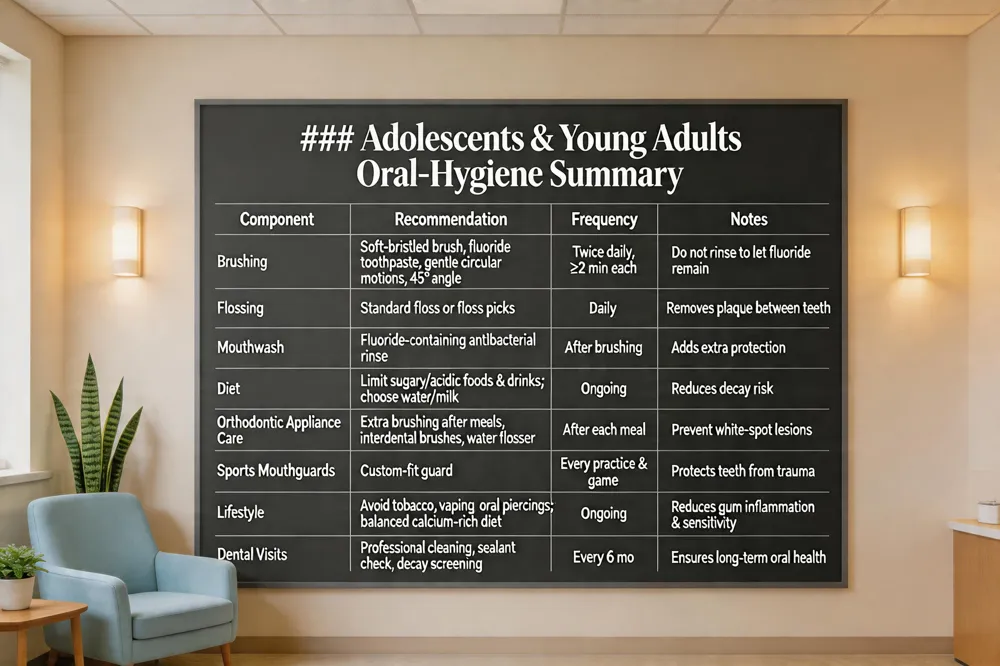 Dental hygiene for teenagers – Teenagers should brush twice a day for at least two minutes with a soft‑bristled brush and fluoride toothpaste, using gentle circular motions at a 45‑degree angle. Daily flossing removes plaque between teeth, and a fluoride‑containing mouthwash adds antibacterial protection. Limit sugary or acidic foods and drinks; choose water or milk instead.
Teenager teeth – Rapid growth and hormonal changes make gums vulnerable to decay and gum disease. Consistent oral‑hygiene, regular six‑month dental visits, and early orthodontic evaluation (around age 7‑9) help prevent problems and keep teeth healthy.
Basic oral hygiene routine for teens – 1) Brush twice daily (2 min each) with fluoride toothpaste; 2) Floss daily; 3) Rinse with fluoride mouthwash after brushing.
Orthodontic appliance care – Braces require extra brushing after meals, interdental brushes, and possibly a water flosser to keep brackets clean and avoid white‑spot lesions.
Sports mouthguards – Properly fitted guards protect teeth during contact sports and should be worn at every practice and game.
Lifestyle factors – Avoid tobacco, vaping, and oral piercings; both increase gum inflammation and infection risk. A balanced diet rich in calcium, vitamin D, and phosphorus supports enamel.
Regular dental visits – Six‑month check‑ups allow professional cleanings, sealant evaluation, and early detection of decay or gum disease, ensuring a healthy smile into adulthood.
Family‑Wide Preventive Strategies
Family‑Wide Preventive Oral‑Health Strategies
| Strategy | Who Benefits | Frequency / Timing | Key Benefits |
|---|---|---|---|
| Professional Dental Visits & Cleanings | All family members | Every 6 mo | Early detection of cavities & gum disease |
| Fluoride Varnish | Children (especially high‑risk) | Every 6 mo | Strengthens enamel, reduces decay |
| Dental Sealants | School‑age children (permanent molars) | Once per molar, as needed | Protects pits & fissures from decay |
| Nutrition | Whole family | Ongoing | Calcium‑rich, low‑sugar diet supports enamel, saliva flow |
| Modeling & Habit Teaching | Parents & caregivers | Daily | Children adopt lifelong brushing & flossing habits |
| Senior‑Specific Care | Adults 65+ | Daily + regular visits | Extra‑soft/electric brushes, fluoride rinses, dry‑mouth remedies |
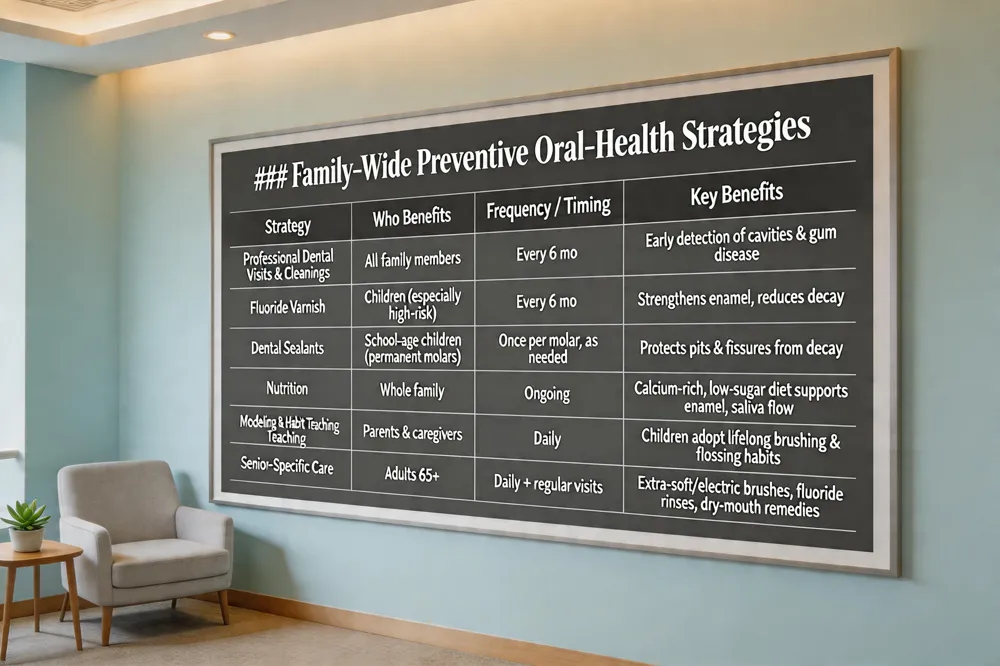 Regular dental visits and professional cleanings every six months are the backbone of a preventive plan, allowing early detection of cavities, gum disease, and application of fluoride varnish or sealants on newly erupted molars. Fluoride varnish strengthens enamel, while sealants protect pits and fissures from decay, especially in school‑age children. Nutrition matters: a calcium‑rich, low‑sugar diet and adequate water intake keep saliva flowing and neutralize acids. Parents who model diligent brushing, flossing, and routine self‑exams teach children lifelong habits and reinforce adherence. Seniors benefit from extra‑soft or electric brushes, fluoride mouth rinses, and dry‑mouth remedies to counter age‑related reductions in saliva and increased sensitivity. Overall, a family‑wide approach—combining professional care, fluoride protection, balanced nutrition, habit modeling, and tailored senior strategies—maintains oral health across the lifespan.
Practical Tips for Everyday Success
Practical Daily Tips for All Ages
| Tip | Description |
|---|---|
| Game‑Based Brushing | Use a 2‑minute kitchen timer or favorite song; reward consistency with sticker charts or small prizes |
| Smart Toothbrushes & Apps | Provide visual feedback on technique & duration; encourage proper circular motions |
| Hydration & Sugar‑Free Gum | Chew after meals to boost saliva flow and neutralize acids |
| Mouthguard Use | Wear a dentist‑fitted guard for any contact sports |
| 3‑3‑3 Rule | Brush three times a day, start within three minutes after a meal, brush for at least three minutes each session |
| 2‑2‑2 Rule | Brush twice a day for two minutes each time; see dentist twice a year |
| 7‑4 Rule | By 7 months a child should have ~4 primary teeth; four more every four months, full set of 20 by age 3 |
| Self‑Exam | Perform regular visual checks for changes; seek professional care if needed |
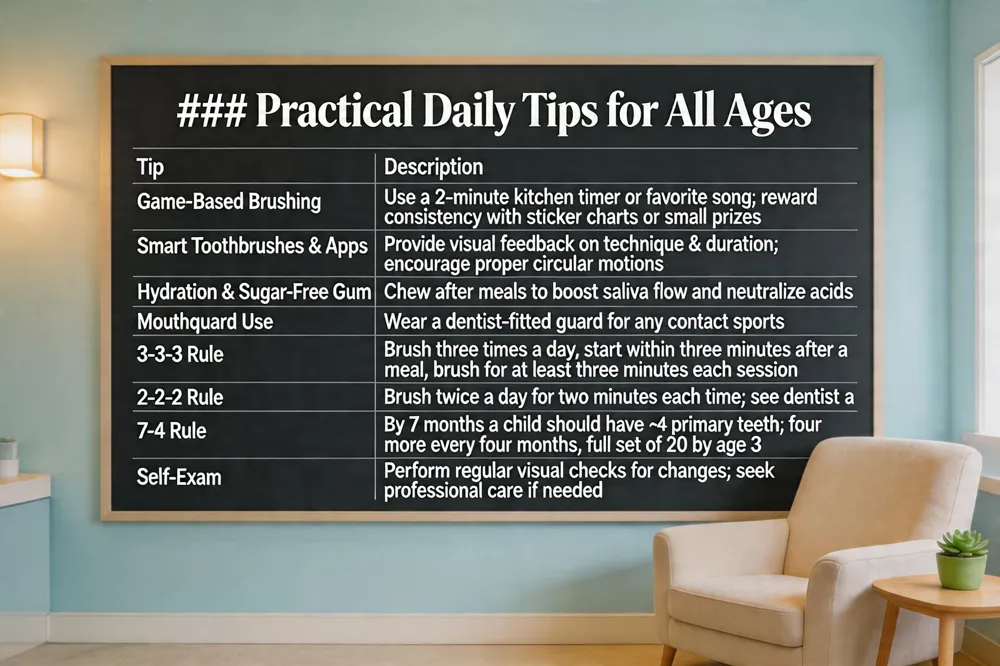 Helping children develop lifelong oral‑hygiene habits is easier when you turn the routine into a game. Use a two‑minute kitchen timer or a favorite song to keep brushing on track, and reward consistency with sticker charts or small prizes. Smart toothbrushes and brushing apps provide visual feedback, encouraging proper technique and duration. Encourage regular hydration and sugar‑free gum after meals to boost saliva flow and neutralize acids. For active kids, a dentist‑fitted mouthguard protects teeth during sports and reduces injury risk.
What is the 3‑3‑3 rule for brushing teeth? It calls for brushing three times a day, starting within three minutes after a meal, and brushing for at least three minutes each session.
What is the 3‑3‑3 rule for oral hygiene? Brush three minutes, three times daily, and wait three minutes after acidic foods before brushing to let saliva remineralize enamel.
What is the 2‑2‑2 rule for teeth? Brush twice a day for two minutes each time and see the dentist twice a year.
What is the 7‑4 rule for teeth? By seven months a child should have about four primary teeth, with four more appearing every four months, reaching a full set of twenty by age three.
How to take care of your teeth without going to the dentist? Brush twice daily with a soft‑bristle brush and fluoride toothpaste, floss or use a water flosser daily, finish with an antibacterial or fluoride rinse, limit sugary/acidic foods, stay hydrated, consider sugar‑free gum, and perform regular self‑exams for changes, seeking professional cleanings whenever possible.
Putting It All Together
Creating a consistent family oral‑care routine begins with the simple habits described for each age group—wiping an infant’s gums, using a pea‑sized fluoride paste for toddlers, introducing floss as teeth touch, and brushing twice daily for two minutes once school age arrives. When the whole household follows the same schedule, children see hygiene as a normal, shared activity rather than a chore. Partnering with Dr. Burns reinforces these practices; his office provides personalized fluoride varnish, sealant placement, and regular six‑month check‑ups that catch problems early. Over time, this teamwork builds stronger enamel, fewer cavities, and healthier gums, laying the foundation for a lifetime of confident smiles everywhere.