Introduction
Cosmetic dentistry is a specialized branch of dental care that goes beyond basic oral health to enhance the appearance of a smile. By improving the balance, symmetry, and color of teeth and gums, cosmetic procedures such as professional whitening, porcelain veneers, bonding, and clear aligners not only create a more attractive smile but also bolster self‑confidence and social interaction. The impact extends to oral health as well; many aesthetic treatments protect weakened teeth, simplify hygiene, and help prevent future decay or gum disease. This article explores the most common cosmetic dental options, the technology that makes them possible, and how personalized treatment planning can deliver lasting, natural‑looking results while supporting overall dental wellness.
Cosmetic Dentistry vs Orthodontics
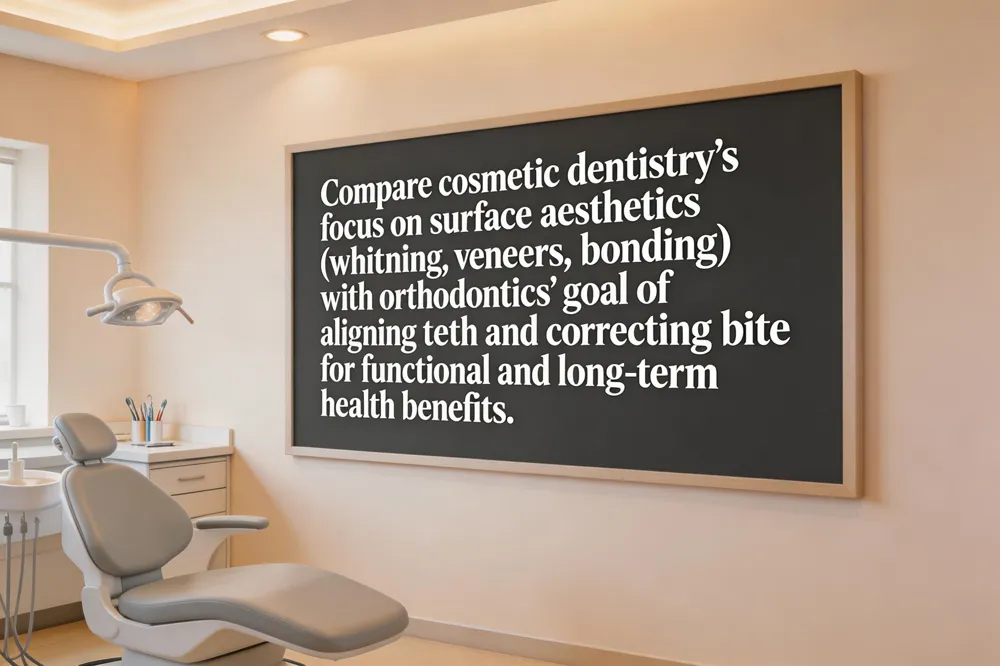 Cosmetic dentistry and orthodontics are distinct yet complementary branches of dental care.
Definition of cosmetic dentistry – This specialty focuses on improving the visual appeal of a smile. Common procedures include professional teeth whitening, porcelain veneers, composite bonding, gum contouring, and restorative options such as crowns or implants. The goal is to enhance color, shape, and symmetry without primarily altering bite function. Treatments are often completed in a single visit or a few short appointments, and they boost confidence and social interaction.
Definition of orthodontics – Orthodontics corrects misaligned teeth and bite problems using braces, clear aligners (e.g., Invisalign), or other appliances. It addresses both aesthetics and functional issues such as uneven wear, speech difficulties, and jaw strain. Treatment typically spans months to years, with regular adjustments and monitoring.
Key differences – Cosmetic dentistry concentrates on surface aesthetics, while orthodontics reshapes the underlying dental and skeletal relationships. Cosmetic procedures protect weakened teeth (crowns, veneers and may prevent future decay, but they do not correct malocclusion. Orthodontics, on the other hand, can prevent future dental problems by aligning teeth properly, improving oral hygiene access and reducing the risk of gum disease.
When to choose one over the other – If the primary concern is discoloration, minor chips, gaps, or a desire for a brighter smile, cosmetic dentistry is the most efficient route. When teeth are crooked, the bite is uneven, or there is a risk of jaw or digestion issues, orthodontic treatment is recommended. In many cases, a combined approach—such as orthodontic alignment followed by veneers—delivers the best long‑term aesthetic and functional outcome.
Local Cosmetic Dental Options in Midland
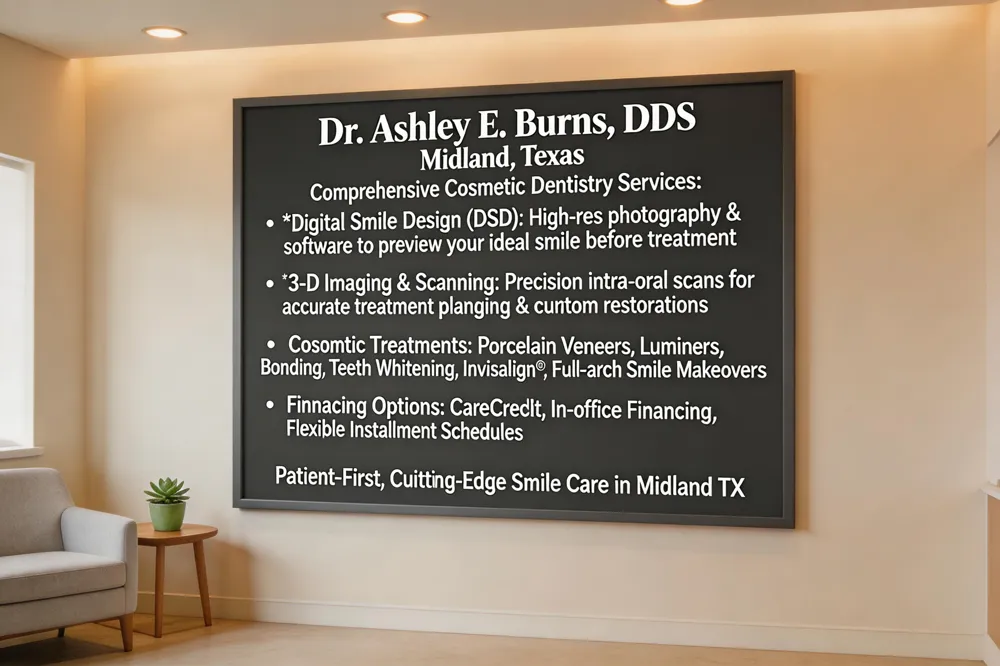 In Midland, Texas, Dr. Ashley E. Burns, DDS offers a full suite of cosmetic dentistry services designed to enhance both the appearance and health of your smile. The practice provides professional teeth‑whitening, porcelain veneers, composite bonding, custom‑fabricated dental crowns, and complete full‑smile design plans that address stains, chips, gaps, and uneven spacing while preserving as much natural tooth structure as possible.
Advanced technology is a cornerstone of Dr. Burns’s approach. Digital smile design and 3‑D imaging allow patients to see a realistic preview of their post‑treatment smile, ensuring the final result aligns with facial aesthetics and personal expectations. These tools also aid in precise treatment planning, reducing the number of appointments and optimizing outcomes.
While most dental insurance plans cover only medically necessary procedures, Dr. Burns’s office will review any potential coverage for restorative aspects of cosmetic work and discuss available financing options, such as CareCredit or in‑office payment plans, to make treatments affordable.
If you are searching for “cosmetic dentistry options near me,” schedule a consultation with Dr. Ashley E. Burns, DDS to explore a personalized, technology‑driven smile makeover that fits your budget and lifestyle.
Veneers: Process, Pros, Cons, and Cost
 Step‑by‑step veneer placement
- Consultation: The dentist examines your teeth, checks for cavities or gum disease, and discusses shade, shape and and material options.
- Preparation: A minimal amount of enamel (≈0.5‑0.7 mm) is removed from the facial surface of each tooth.
- Impression/scan: A digital scan or traditional impression captures the exact anatomy for the laboratory‑made porcelain shells.
- Temporary veneer: While the permanent veneers are fabricated (about two weeks), temporary veneers protect the prepared teeth.
- Bonding: The final veneers are bonded with a strong resin cement, adjustments are made, and bite and aesthetics are verified.
- Follow‑up: A short check‑up ensures proper fit and gum health.
Veneers vs. crowns – pros and cons
- Veneers: Preserve most natural tooth structure, excellent front‑tooth aesthetics, minimal preparation, but less strength, may chip or stain, and typically last 7‑10 years.
- Crowns: Provide full‑coverage protection, restore strength to severely damaged teeth, last 15‑25 years, but require 1‑2 mm reduction, are more costly, and involve greater tooth removal.
Price ranges
- Porcelain veneers: $900‑$2,500 per tooth (composite $500‑$1,500).
- Dental crowns: $800‑$3,000 per tooth (porcelain/zirconia $1,000‑$3,000; metal/PFM $800‑$1,500). Veneers are rarely covered by insurance; crowns may receive partial reimbursement when placed for structural reasons.
Where bonding fits Dental bonding uses a tooth‑colored composite resin, is the most conservative and affordable option for minor chips, gaps or short‑term aesthetic fixes, but it stains more easily and is less durable than veneers or crowns. In a decision tree, bonding is ideal for small, quick repairs; veneers for moderate cosmetic enhancement; and crowns for extensive structural damage or when full coverage is needed.
Financial Considerations & Specialty Insights
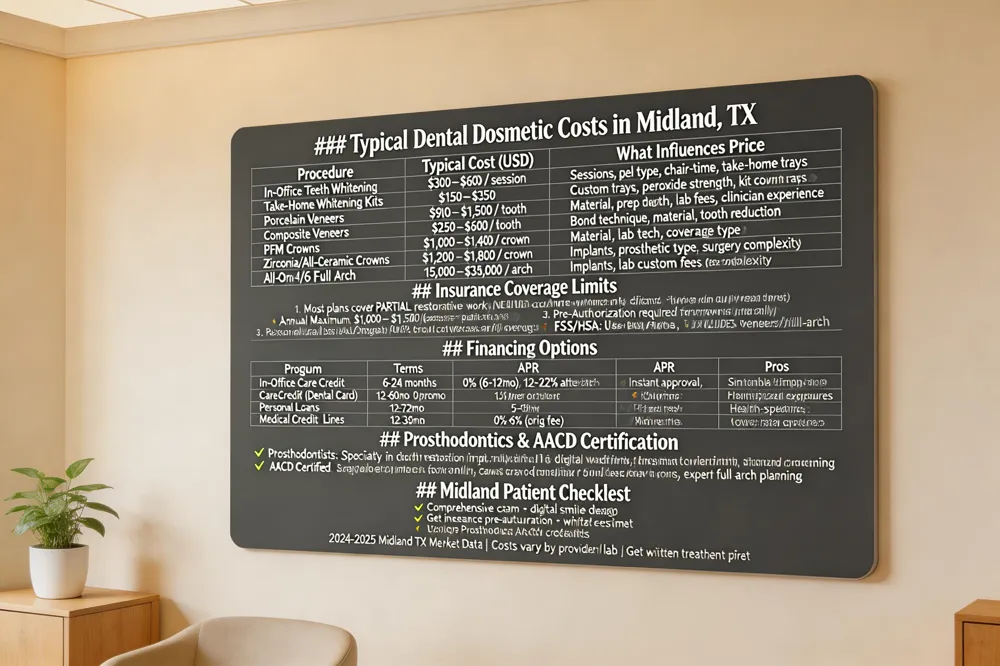 Understanding the financial side of cosmetic dentistry helps patients set realistic expectations. In Midland, professional in‑office teeth whitening typically runs $250‑$450, while premium options can reach $400‑$500. Porcelain veneers cost about $1,000‑$2,200 per tooth, and all‑porcelain or porcelain‑fused‑to‑metal crowns range $1,200‑$1,600. A full‑arch makeover with implants or bridges can exceed $7,000, and comprehensive smile makeovers often surpass $10,000. Most insurance plans treat these procedures as elective, so they rarely cover whitening, veneers, or bonding; however, crowns and implants may receive partial reimbursement when they address functional needs. To bridge the cost gap, many offices offer flexible third‑party financing, payment plans, or credit options that spread expenses over months.
Cosmetic dentistry is not an ADA‑recognized specialty. The closest formal specialty is prosthodontics, which includes restorative aesthetics. Many general dentists augment their training through courses, certifications, and membership in the American Academy of Cosmetic Dentistry, allowing them to perform advanced aesthetic procedures.
Regarding whitening and crowns, standard bleaching agents do not alter the shade of porcelain or ceramic crowns. Whitening natural teeth will leave the crown unchanged, potentially creating a mismatch. The best approach is to complete whitening before crown placement or replace the crown with a shade‑matched restoration. Whitening is safe for existing crowns and will not damage them.
Choosing the Right Provider & Extra Resources
 Cosmetic dentistry before and after The online gallery at Dr. Ashley E. Burns, DDS displays side‑by‑side images of whitening, Invisalign, porcelain veneers, bonding and crowns, showing how a dull smile can become bright, uniform, and functional while preserving healthy tooth structure.
Family dentist Midland, TX Dr. Burns delivers comprehensive preventive, restorative and cosmetic care for patients of all ages, emphasizing education, modern technology and a warm, patient‑centered environment.
Walk‑in dentist Midland, TX The practice accepts walk‑ins for urgent care—severe toothaches, knocked‑out teeth or chipped teeth—and offers same‑day appointments without prior reservation.
Dentists in Midland, TX Midland boasts several qualified dentists, including Dr. Burns, Dr. Brandon Rebber, and the Coulon team, each offering a blend of cosmetic, restorative and holistic services to meet diverse needs.
Best dentist in Midland, TX Patient reviews consistently rank Dr. Burns as a top provider for her skill in veneers, implants, smile design and her gentle, thorough communication style.
Cosmetic dental treatment meaning These elective procedures—whitening, bonding, veneers, crowns, inlays/onlays, gum contouring—enhance the appearance of teeth and gums, often improving function and confidence.
How to become a cosmetic dentist Earn a DDS/DMD, obtain licensure, then pursue advanced education, residencies or fellowships focused on aesthetic dentistry, and earn AACD certification.
What is the 3‑3‑3 rule for teeth? Brush three times daily for three minutes, floss or use interdental brushes after each session, and replace your toothbrush every three months to maintain optimal oral health.
Conclusion
Choosing the right cosmetic dental procedure begins with a clear understanding of your smile goals—whether you seek brighter teeth, straightening, replacement of missing teeth, or a complete smile makeover. Evaluate the health of the underlying teeth and gums, the amount of tooth structure that can be preserved, and any functional concerns such as bite stress or grinding. Consider the longevity of the material, the level of invasiveness, expected cost, and insurance coverage, keeping in mind that many aesthetic treatments are self‑funded. Finally, verify the dentist’s training, certifications (such as AACD membership), and use of modern tools like digital smile design or CEREC for same‑day restorations.
To translate these factors into a treatment plan that fits your lifestyle and budget, schedule a personalized consultation with Dr. Ashley E. Burns in Midland, Texas. Her patient‑centered approach and advanced technology will help you achieve a confident, lasting smile.