Welcome to Your Oral Health Journey
This article is designed to empower readers with evidence‑based guidance for preserving and enhancing oral health across the lifespan. It speaks directly to three key groups—young adults in their 20s establishing foundational habits, individuals in their 40s facing increased gum‑recession and dry‑mouth concerns, and older adults who must manage enamel wear, root caries, and systemic health connections. The core themes weave together three pillars of optimal oral care: diligent oral‑hygiene routines (twice‑daily brushing with a soft‑bristled, fluoride‑approved,, daily flossing or interdental cleaning, and regular antimicrobial mouthwash use), nutrition that fortifies teeth and gums (adequate calcium, vitamin D, vitamin C, magnesium, and a diet low in added sugars and acidic foods), and proactive professional care (biannual dental exams, professional cleanings, fluoride treatments, and early detection of gum disease or oral cancer). By integrating these strategies, readers can reduce cavities, prevent periodontal disease, and support overall systemic health.
Core Daily Oral Hygiene Practices
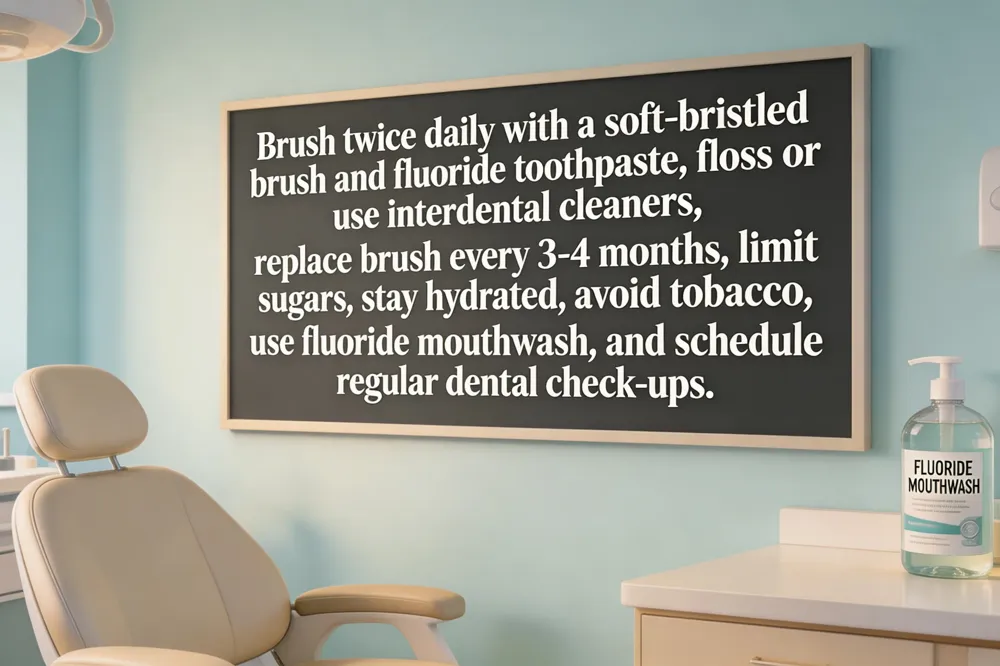 Maintaining healthy teeth starts with proper brushing technique: Brush teeth twice a day for two minutes each time using a soft‑bristled toothbrush and fluoride toothpaste. Replace the brush every three to four months or when bristles fray. Interdental cleaning—daily flossing or interdental brushes—removes plaque below the gumline and between teeth, preventing gingivitis and periodontitis. Follow brushing, a fluoride or antimicrobial mouthwash (alcohol‑free) for 30–60 seconds to reduce bacterial load. A typical oral‑care sequence is: rinse with water, floss or use an interdental brush, brush all surfaces (including the tongue), then mouthwash.
10 ways to keep your teeth healthy: 1️⃣ Brush twice daily with fluoride toothpaste. 2️⃣ Floss or use interdental cleaners each day. 3️⃣ Replace toothbrush every three months. 4️⃣ Limit sugary/acidic foods. 5️⃣ Eat calcium‑rich foods (dairy, leafy greens, almonds). 6️⃣ Stay hydrated; water washes away debris. 7️⃣ Avoid tobacco. 8️⃣ Visit dentist for regular check‑ups/cleanings. 9️⃣ Use a fluoride mouthwash. 🔟 Protect teeth during sports with a mouthguard.
Strong teeth are supported by a balanced diet low in added sugars, adequate calcium, vitamin D, and vitamin C, plus regular professional cleanings every six months to detect early decay or gum disease.
Nutrition That Fortifies Teeth and Bones
 A nutrient‑dense diet is a cornerstone of lifelong oral health, especially after age 40 when enamel thins and gum recession increases. Calcium‑rich foods such as dairy (milk, cheese, yogurt) and fortified plant milks supply the mineral needed for strong enamel and supporting bone. Vitamin D, found in fatty fish like salmon and sardines, eggs, and fortified foods, enhances calcium absorption and helps remineralize early lesions. Leafy greens (kale, spinach, collard greens) provide a blend of calcium, magnesium, vitamin K, and vitamin C, which together support gum tissue repair and bone density. Nuts and seeds, particularly almonds and sesame seeds, add phosphorus and additional calcium, while also offering a crunchy texture that naturally cleans tooth surfaces. Crunchy raw vegetables—carrots, celery, apples—act as mechanical scrubbers, increasing saliva flow that neutralizes acids and delivers minerals to the tooth surface. Adequate hydration is essential; water stimulates saliva, the mouth’s natural buffer, and helps wash away food debris and sugars that feed plaque‑forming bacteria. Incorporating these foods into a balanced diet reduces the risk of cavities, root caries, and periodontal disease, while also supporting overall skeletal health.
Oral Care Strategies for Your 40s and Beyond
 Enamel Thinning with Age
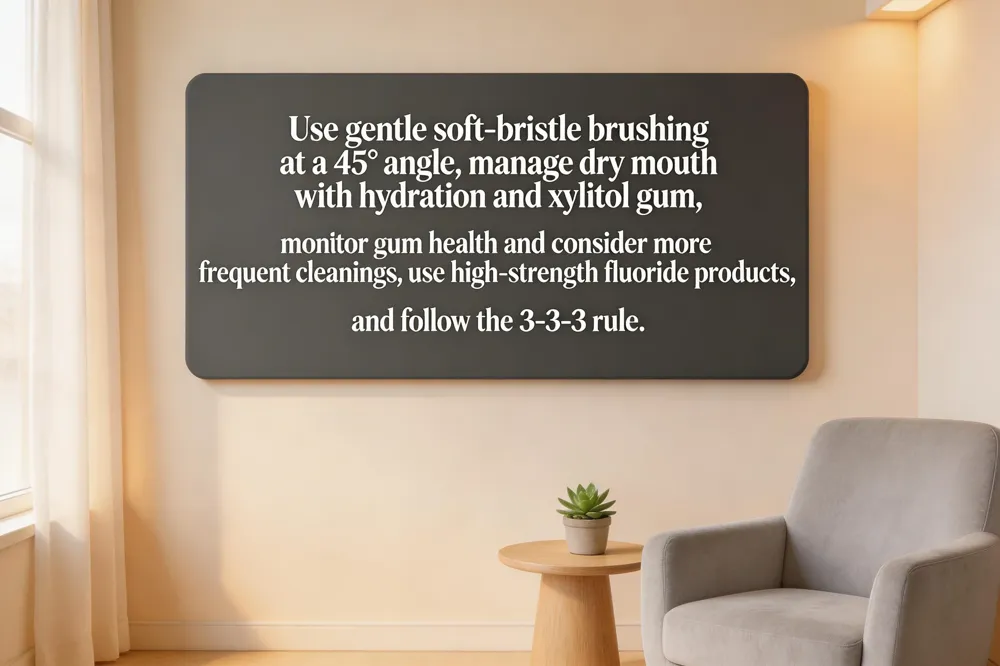
After 40, enamel naturally thins from years of wear, acidic foods, and chewing forces, making teeth more vulnerable to cracks and sensitivity. Gentle brushing with a soft‑bristled brush at a 45° angle protects the softened surface.
Enamel Thinning with Age
After 40, enamel naturally thins from years of wear, acidic foods, and chewing forces, making teeth more vulnerable to cracks and sensitivity. Gentle brushing with a soft‑bristled brush at a 45° angle protects the softened surface.
Dry Mouth (Xerostomia) Management Hormonal changes, medications, and the hot, dry climate of places like Midland can reduce saliva flow. Stay well‑hydrated, chew sugar‑free xylitol gum, and discuss saliva substitutes or prescription fluoride rinses with your dentist.
Periodontal Disease Monitoring Gum recession and root exposure increase after 40. Schedule a periodontal assessment if you notice bleeding, swelling, or recession, and consider more frequent cleanings (every 3‑4 months) for early disease.
Fluoride Treatments and High‑Strength Toothpaste Fluoride promotes remineralization of weakened enamel. Adults with dry mouth or higher decay risk benefit from prescription‑strength (5,000 ppm) toothpaste or in‑office fluoride varnish every 3‑6 months.
Professional Cleanings Frequency Twice‑yearly cleanings are essential, but patients over 40 with early disease may need appointments every 3‑4 months to keep plaque and tartar under control.
Lifestyle Factors: Smoking, Alcohol, Hydration Quit tobacco and limit alcohol, both of which accelerate gum disease and oral cancer. Drinking plenty of water washes away debris, buffers acids, and supports saliva production.
How to take care of teeth in 40s? Maintain a strict oral‑hygiene routine: brush twice daily with a soft‑bristle brush and fluoride toothpaste, floss or use a water flosser, consider fluoride rinses, schedule bi‑annual dental visits, eat calcium‑rich foods, stay hydrated, and quit smoking.
How to keep teeth strong after 40? Brush twice a day, floss daily, get regular cleanings, use prescription fluoride if needed, consume calcium‑bearing foods, limit sugars and acids, avoid tobacco, moderate alcohol, stay hydrated, and chew sugar‑free gum to stimulate saliva.
What is the 3‑3‑3 rule for teeth? Brush three times daily, for three minutes each session, and replace your toothbrush every three months. Use a soft‑bristle brush, a pea‑sized fluoride paste, and wait 20–30 minutes after acidic foods before brushing.
Addressing Common Adult Dental Concerns
 Wisdom Teeth Eruption Timing & Late‑Emerging Teeth
Most wisdom teeth emerge between ages 17 and 25. By age 27, many are fully erupted, impacted, or already removed. However, late eruption into the late twenties is not unheard of. If a tooth becomes painful, swells, or shifts alignment after 27, a dental exam is essential to prevent infection or crowding.
Wisdom Teeth Eruption Timing & Late‑Emerging Teeth
Most wisdom teeth emerge between ages 17 and 25. By age 27, many are fully erupted, impacted, or already removed. However, late eruption into the late twenties is not unheard of. If a tooth becomes painful, swells, or shifts alignment after 27, a dental exam is essential to prevent infection or crowding.
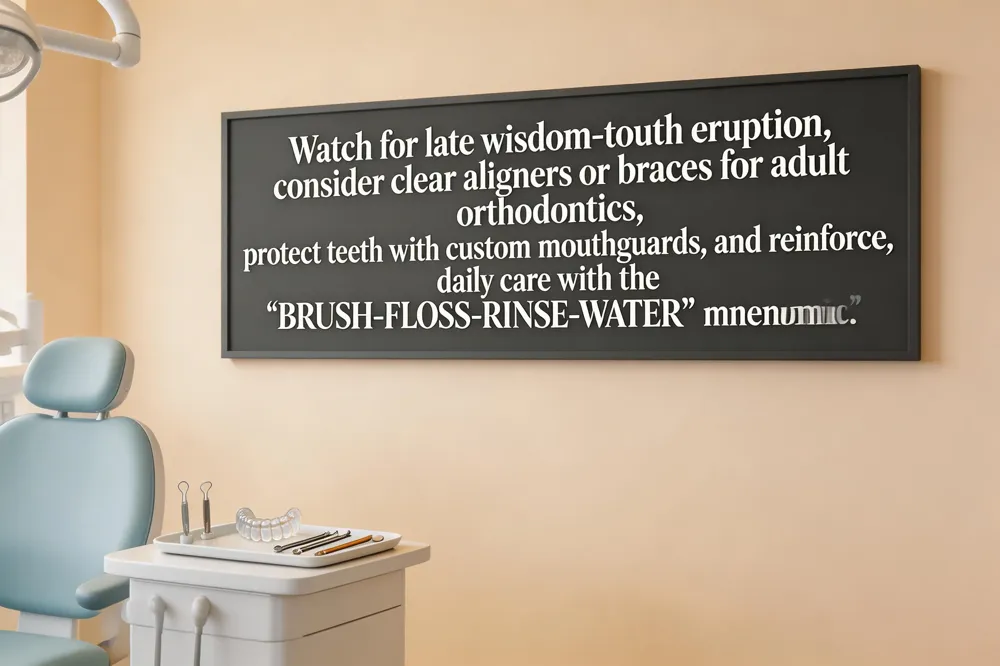
Orthodontic Options for Adults Adults in their 20s can safely pursue orthodontic treatment. Clear aligners (e.g., Invisalign) offer a discreet, removable solution that typically finishes in 12‑16 months. Traditional braces remain effective for complex bite corrections. Both modalities remodel tooth position throughout life, enhancing aesthetics and reducing future decay risk.
Mouthguard Use for Sports and Grinding A custom‑fit mouthguard protects teeth during contact sports and mitigates night‑time bruxism. Dental‑lab‑fabricated guards distribute forces evenly, preventing enamel wear, fractures, and temporomandibular joint discomfort.
Mnemonic Reminders for Daily Care Use “BRUSH‑FLOSS‑RINSE‑WATER”:
- BRUSH twice a day for two minutes with a soft‑bristle brush and fluoride toothpaste
- RinseT daily with floss daily or interdental brushes.
- Use an alcohol‑free fluoride mouthwash.
- Stay hydrated; water stimulates saliva, the mouth’s natural buffer.
Is 27 late for wisdom teeth? Most erupt by 25, but late emergence is possible. Any pain or swelling at 27 warrants a dental evaluation to decide on monitoring or extraction.
Can you fix your teeth in your 20s? Absolutely. Modern orthodontics—clear aligners or braces—works well for adults, correcting crowding, bite issues, and aesthetic concerns while supporting long‑term oral health.
Professional Preventive and Restorative Services
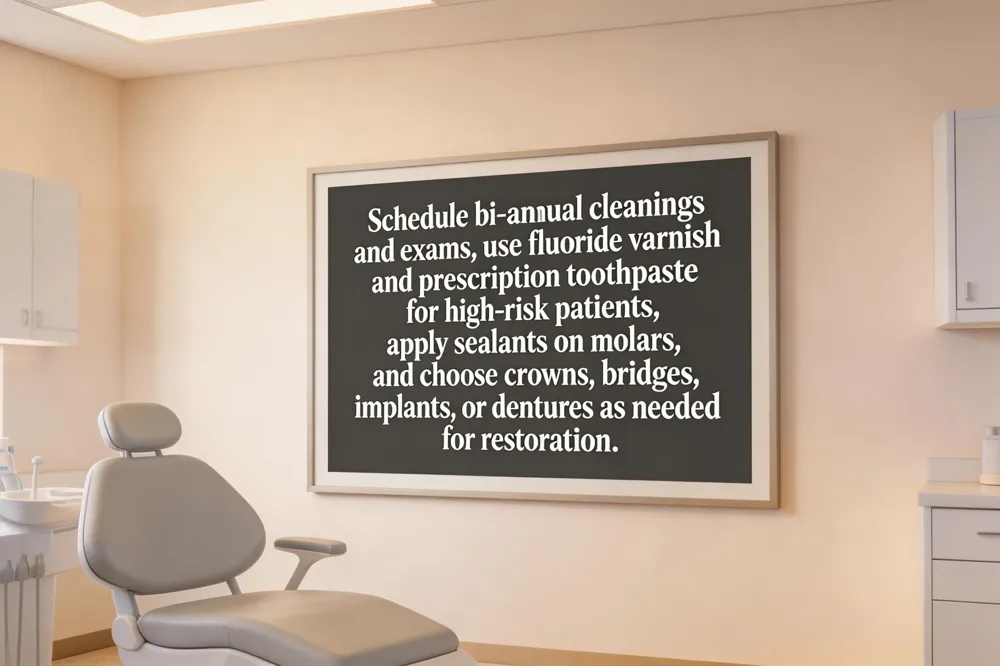 Routine dental cleanings and comprehensive examinations at least twice a year are the cornerstone of adult oral health. A hygienist removes plaque and tartar that brushing and flossing miss, while the dentist screens for cavities, gum disease, and early signs of oral cancer. For patients at higher risk—those with dry mouth, a history of decay, or early gum recession—periodic fluoride varnish applications (every 3–6 months) and prescription‑strength fluoride toothpaste (up to 5,000 ppm) provide extra protection by promoting remineralization of enamel. Sealants placed on the chewing surfaces of molars create a barrier against plaque in pits and fissures, dramatically reducing the likelihood of new caries. When teeth are damaged or missing, restorative options such as crowns, bridges, dental implants, or removable dentures restore function and aesthetics; each option is tailored to the patient’s bone health, bite alignment, and lifestyle. Custom‑fabricated mouthguards guard teeth during sports and protect against bruxism‑related wear, while night guards can alleviate jaw muscle strain. For individuals with limited hand dexterity, electric toothbrushes with pressure sensors and timers deliver consistent two‑minute brushing, and floss holders or interdental brushes make daily interdental cleaning achievable. Together, these preventive and restorative services help maintain strong teeth, healthy gums, and a confident smile throughout adulthood.
Take the Next Step with Ashley E. Burns, DDS
Maintaining a healthy smile after 40 hinges on a few core habits: brushing twice daily with a soft‑bristled, fluoride toothpaste, flossing or using interdental cleaners each day, staying well‑hydrated to combat dry mouth, and limiting sugary or acidic foods. Regular professional cleanings—ideally every three to four months for higher‑risk patients—allow early detection of gum disease, root caries, and oral cancer, while fluoride treatments and high‑strength toothpaste reinforce enamel that naturally thins with age. Personalized care matters because each adult’s risk profile is shaped by medications, hormonal changes, smoking history, and systemic conditions such as diabetes. Dr. Ashley E. Burns tailors preventive plans, incorporates the latest digital imaging and laser therapies, and offers restorative options like crowns, bridges, or implants when needed. Schedule a comprehensive exam in Midland today to protect your teeth, gums, and overall health—your future self will thank you.