Understanding Denture Options
Traditional removable dentures are acrylic prostheses that sit on the gums and are held in place by suction, adhesives, or clasps. They are inexpensive, non‑invasive, and can be fabricated quickly, but they often slip while eating or speaking, may cause sore spots, and do not stimulate the jawbone, leading to gradual bone loss and a sunken facial appearance. Many patients therefore explore implant‑supported alternatives. Implant‑supported dentures are anchored to titanium implants surgically placed into the jawbone, providing a secure, natural‑feeling fit that eliminates the need for adhesives. The implants stimulate bone, preserving density and maintaining facial structure. Although the treatment requires surgery, a healing period of several months, and a higher upfront cost, the long‑term benefits include superior stability, improved chewing efficiency, enhanced speech clarity, and a lifespan that can extend for decades with proper care. These advantages make implant‑supported dentures an attractive option for patients seeking lasting comfort and function.
Implant‑Supported Dentures Explained
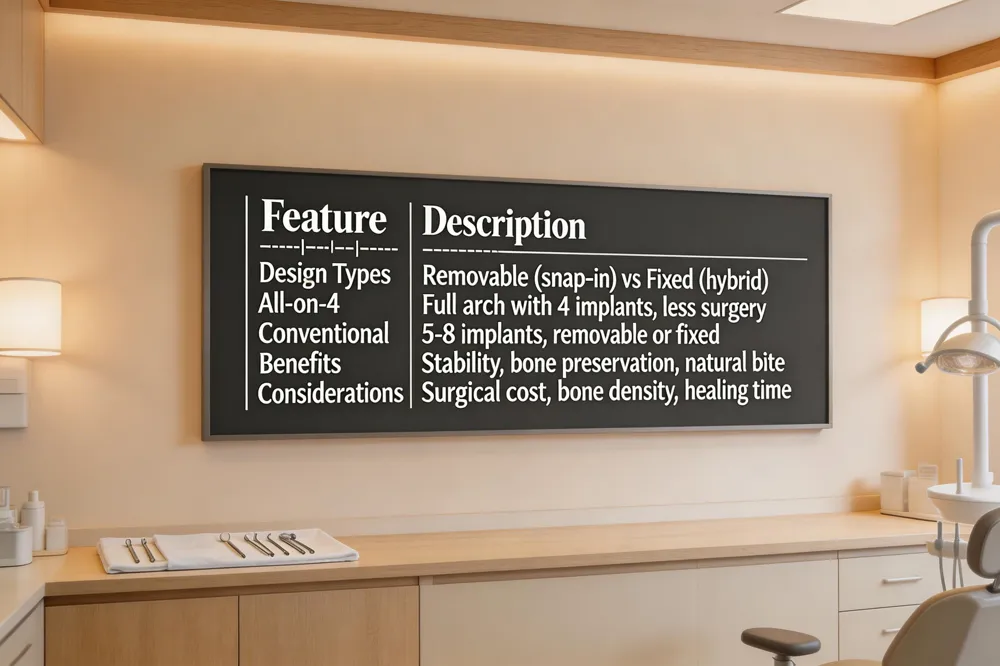
| Feature | Description |
|---|---|
| Design Types | Removable (snap‑in) vs Fixed (hybrid) |
| All‑on‑4 | Full arch with 4 implants, less surgery |
| Conventional | 5‑8 implants, removable or fixed |
| Benefits | Stability, bone preservation, natural bite |
| Considerations | Surgical cost, bone density, healing time |
 Implant‑supported dentures are anchored to titanium implants placed surgically into the jawbone. The implants act as artificial tooth roots, allowing the denture to snap on or be permanently fixed for a stable, natural‑feeling fit that also stimulates the bone and preserves its density.
Removable vs. Fixed Designs Removable implant‑supported dentures (often called snap‑in or overdentures) attach to implants with clips, balls, or bars that the patient can detach for cleaning. Fixed implant‑supported dentures, also known as hybrid or permanent dentures, are screwed or fused to the implants and can only be removed by a dentist for maintenance. Fixed designs function like natural teeth—no slipping, no adhesives, and they are brushed and flossed like natural dentition, offering superior chewing efficiency and long‑term durability.
All‑on‑4 versus Other Implant‑Supported Options All‑on‑4 restores a full arch with just four strategically angled implants, creating a permanent bridge that eliminates a removable prosthesis. It typically involves less surgery and a shorter recovery, but may be costlier upfront and requires sufficient bone density. Conventional implant‑supported dentures usually use 5‑8 implants to retain a removable or fixed prosthesis, offering a customizable fit and often allowing the use of an existing denture.
Key Takeaways
- Implant‑supported dentures provide enhanced stability, bone preservation, and a more natural bite.
- Patients can choose removable snap‑in options for easy cleaning or fixed hybrid dentures for a permanent solution.
- All‑on‑4 offers a streamlined, full‑arch restoration with fewer implants, while broader implant‑supported denture protocols provide flexibility in design and attachment.
Traditional Dentures: Benefits, Limitations, and Long‑Term Impact
| Aspect | Details |
|---|---|
| Advantages | Low cost, non‑invasive, quick fabrication |
| Limitations | Slip, need adhesives, no bone stimulation |
| Long‑term impact | Alveolar bone resorption, facial changes |
| Ideal candidates | Seniors with limited budget/medical issues |
| Compared to implants | Less stability, more maintenance |
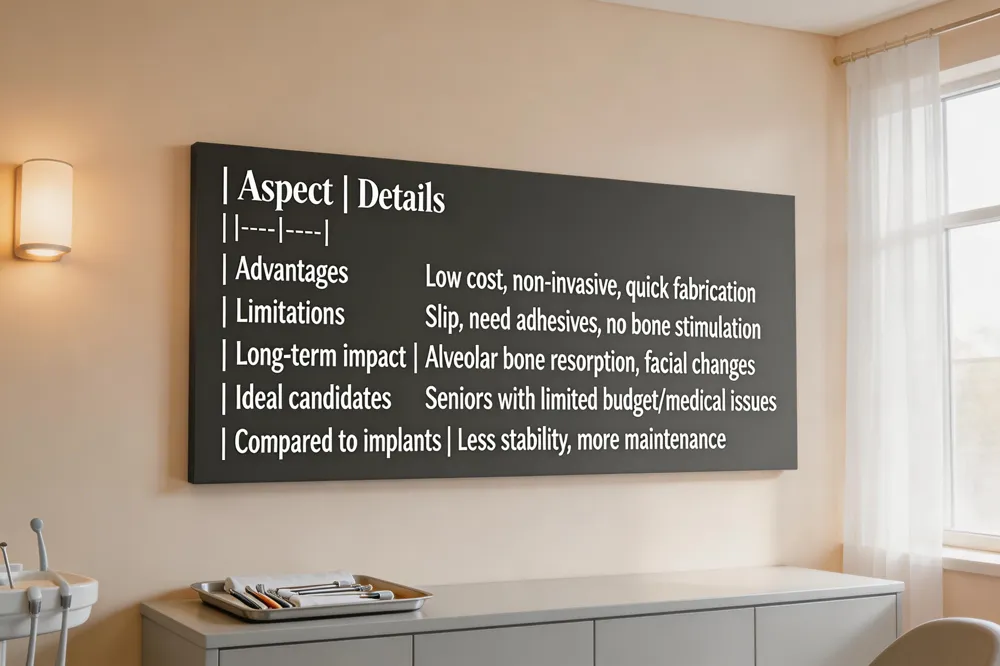 Traditional dentures are a quick, non‑invasive solution that many patients appreciate for their low upfront cost and ease of fabrication. Because Traditional dentures rest on the gums, they can be produced in a single appointment and require no surgery, making them especially attractive for seniors with limited budgets or medical concerns. However, the lack of anchorage to the jawbone means stability is often compromised; dentures may slip while eating or speaking and usually require adhesives for added retention.
One of the most significant long‑term drawbacks is bone loss. Without the stimulating effect of dental implants, the underlying alveolar ridge gradually resorbs, leading to a sunken facial appearance and changes in fit that necessitate frequent relines or replacements. This bone resorption can also affect facial aesthetics and diminish chewing efficiency over time. Dental implants stimulate the jawbone and help prevent bone loss associated with traditional dentures.
For seniors, the trade‑off is clear: dentures offer a cost‑effective, rapid answer to tooth loss, yet they may cause sore spots, require daily adhesives, and contribute to progressive bone loss. Implant‑supported dentures while more expensive and surgical, provide superior stability, bone preservation, and a more natural feel. The decision hinges on overall health, bone condition, budget, and personal comfort with surgery.
Dentures vs implants pros cons: Traditional dentures are affordable and quick but slip and do not stimulate bone; implant‑supported dentures give stability and bone preservation but need surgery and higher cost.
Dentures vs implants elderly: Seniors benefit from the low cost and simplicity of dentures, yet may experience discomfort and bone loss; implant dentures offer permanent stability but require a health assessment and higher investment.
Implant‑supported dentures pros and cons: Pros—stable fit, improved chewing, speech clarity, bone preservation. Cons—surgical risks, higher cost, several‑month healing, diligent oral hygiene.
Disadvantages of implant‑supported dentures: Surgical placement may be challenging with limited bone, carries risks of infection, nerve injury, peri‑implantitis, and requires long‑term maintenance and higher expense.
Lifestyle Impacts: Eating, Cleaning, and Daily Comfort
| Phase | Dietary Guidance |
|---|---|
| Immediate post‑op (0‑6 mo) | Soft, lukewarm foods; avoid crunchy, sticky, hot, acidic |
| Post‑healing | Normal diet; can eat steak, crusty bread |
| Cleaning | Fixed: brush, floss around abutments, antimicrobial rinse | | Removable: nightly removal, soak, denture brush, interdental brushes | | Speech | Improved clarity, no slippage | | Comfort | Stable fit, increased confidence |
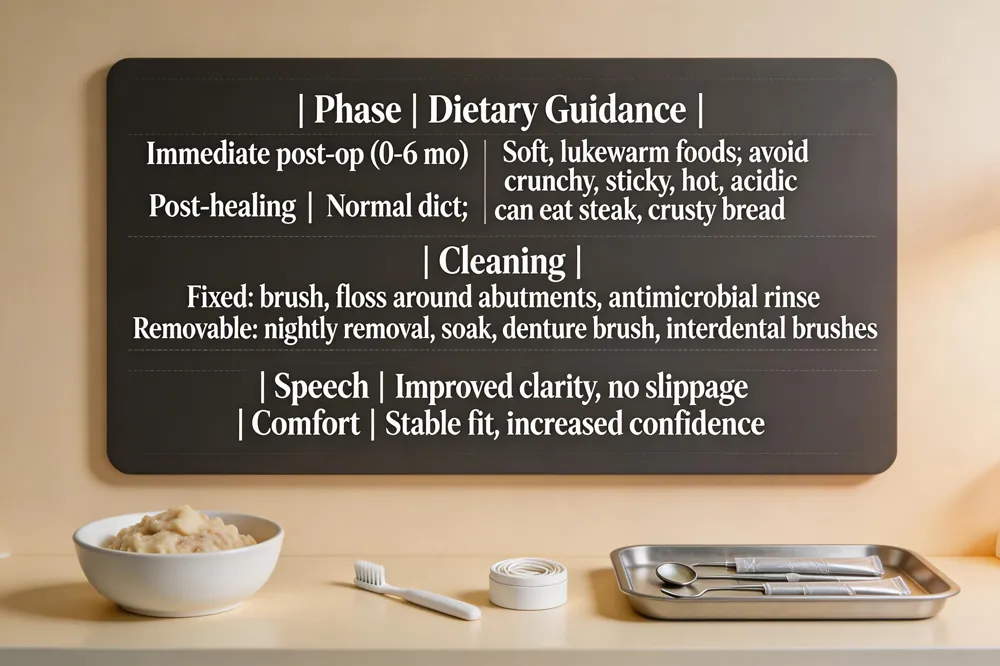 During the first few weeks after implant‑supported denture surgery, patients should avoid crunchy foods such as chips, popcorn, and nuts; hard fruits or vegetables; sticky sweets like caramel, taffy, or gummies; and the use of straws, as the suction can disturb the surgical site. Very hot, acidic, or spicy foods may also cause irritation, so a soft, lukewarm diet is recommended until osseointegration is confirmed (typically 3–6 months).
Once the prosthesis is securely attached, normal chewing returns. At that point steak, crusty bread, and other tough items can be enjoyed much as with natural teeth. The key is to respect the healing timeline—soft foods during the initial phase and a gradual re‑introduction of harder textures after the implants have fully integrated.
Cleaning protocols differ for permanent and removable implant dentures. For fixed prostheses, brush twice daily with a soft‑bristled toothbrush, floss around the abutments, and rinse with an alcohol‑free antimicrobial mouthwash. Removable snap‑in dentures should be taken out each night, rinsed in lukewarm water, gently brushed with a denture brush and non‑abrasive cleanser, and soaked overnight in a denture‑cleaning solution. Interdental brushes or a water flosser are useful for cleaning around the implant tops. Avoid abrasive toothpaste, bleach, or hot water, which can damage the prosthesis or implant components.
Implant‑supported dentures also enhance speech clarity and confidence. Because the denture is anchored to the bone, there is no slippage while talking, laughing, or eating, eliminating the clicking or mumbling often heard with traditional dentures. Patients typically report a boost in self‑esteem and a more natural appearance, which translates into greater social comfort and willingness to engage in everyday activities.
Financial Considerations: Costs, Insurance, and Financing
| Option | Approx. Cost (USD) | Coverage |
|---|---|---|
| Traditional full‑arch dentures | $1,000‑$5,000 (initial) | Usually covered partially |
| Snap‑in implant denture | $5,000‑$12,000 per arch | Limited; often not fixtures |
| Fixed All‑on‑4 bridge | $12,995‑$19,900 (full arch) | Limited; may cover prosthesis |
| Financing | 0 % APR 24 mo, $250/mo plans | Offered by many practices |
| Insurance | Rarely covers implants; may cover denture base or crowns |
 When weighing denture options, patients should compare both up‑front and long‑term expenses. Traditional full‑arch dentures typically range from $1,000 to $5,000 initially, but they often require relining or replacement every five to seven years, which can add $1,000‑$3,000 per adjustment. Implant‑supported dentures start at about $5,995 for a basic snap‑in solution and can rise to $12,995‑$19,900 for fixed‑secure bridges; these figures include implants, custom prosthesis, surgical fees, and any necessary bone grafting. Upper denture implants fall within a similar range, from $5,000 for a snap‑in to $20,000+ for a full‑arch fixed bridge. Snap‑in denture implants usually cost $5,000‑$12,000 per arch, so a full‑mouth solution may total $10,000‑$24,000. Insurance coverage for Implant‑supported dentures is limited: most plans do not cover the implant fixtures themselves but may reimburse the denture base or restorative crowns. Because of these gaps, many practices offer financing options such as 0 % APR for 24 months, low‑interest loans, or monthly payment plans starting as low as $250. Aspen Dental, for example, provides Implant‑supported dentures that can be upgraded from a conventional denture when the patient is ready.
Patient Experience and Visual Results
| Metric | Observation |
|---|---|
| Treatment timeline | Exam → imaging → implant surgery → 3‑6 mo healing → prosthesis placement |
| Visual outcome | Natural‑looking smile, no palate plate (upper) |
| Satisfaction | Enhanced chewing, speech, confidence |
| Bone requirements | Adequate volume; may need grafts or sinus lift |
| Options | All‑on‑4 fixed, removable overdenture (2‑4 implants), full‑arch fixed (5‑8 implants) |
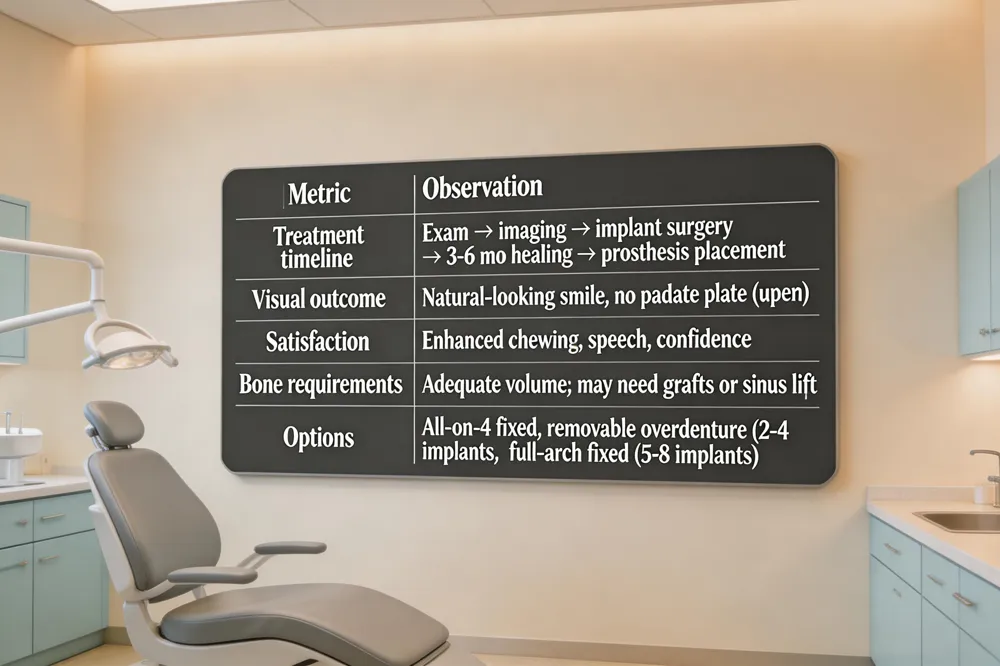 Our Midland office maintains a before‑and‑after gallery that showcases the dramatic transformation patients achieve with implant‑supported dentures—whether they choose an all‑on‑4 fixed bridge or a removable overdenture. The images illustrate how missing teeth or traditional dentures are replaced with a stable, natural‑looking smile. A typical treatment timeline begins with a comprehensive exam and 3‑D imaging, followed by surgical placement of titanium implants, a 3‑6‑month healing period for osseointegration, and finally the custom‑fabricated denture that snaps onto (or is fixed to) the implants. Upper implant‑supported dentures snap onto or are permanently attached to implants in the upper jaw, eliminating the need for a palate‑covering plate, enhancing comfort, taste, and aesthetics; adequate bone volume is required, and bone grafts or sinus lifts may be necessary. Snap‑in dentures (overdentures) use 2‑4 implants and are removable for cleaning, offering a cost‑effective, flexible solution, while implant‑supported dentures employ more implants for a permanent bridge with higher chewing efficiency. The choice depends on bone health, budget, and whether a removable or permanent prosthesis is preferred.
Making an Informed Choice
Choosing between implant‑supported dentures and traditional dentures hinges on several key takeaways. Implant‑supported dentures offer superior stability, bone preservation, and long‑term durability, while traditional dentures are less invasive, quicker to deliver and have a lower upfront cost. The decision should reflect your lifestyle, budget, jawbone health, and desire for comfort.
To explore the best option for you, start by contacting a U.S. dental practice—such as Spencer DDS in Great Falls, MT or any local office—by phone or through their online request form. Schedule a personalized consultation where the dentist will evaluate your oral health, take 3‑D imaging, discuss bone density, and outline the treatment timeline and financing possibilities.
Regardless of the choice, long‑term maintenance is essential. Implant‑supported dentures require diligent oral hygiene, regular professional cleanings, and periodic check‑ups to monitor osseointegration, while traditional dentures need daily removal, soaking, and occasional relining. Consistent care protects your investment and maintains optimal oral health for years to come.