Welcome to Your Child’s Oral Health Journey
Early oral care is critical because primary teeth guide jaw development, hold space for permanent teeth, and support speech and nutrition. Even before a tooth erupts, wiping the infant’s gums twice daily with a soft cloth removes bacteria and prepares the mouth for brushing. Establishing a "dental home" by the first birthday—or within six months of the first tooth—ensures regular check‑ups, timely fluoride varnish, and anticipatory guidance from a pediatric dentist. This partnership helps detect early childhood caries, which affect more than half of children aged 6‑8, and reduces pain, infection, and school‑day loss. Key milestones include: (1) gum cleaning from birth; (2) brushing with a rice‑grain‑sized fluoride smear when the first tooth appears (≈6 months); (3) switching to a pea‑sized amount at age 3 and introducing flossing once two teeth touch; (4) routine dental visits every six months; and (5) orthodontic screening by age 7. Following these steps builds lifelong healthy smiles.
Foundations: From Infancy to Preschool
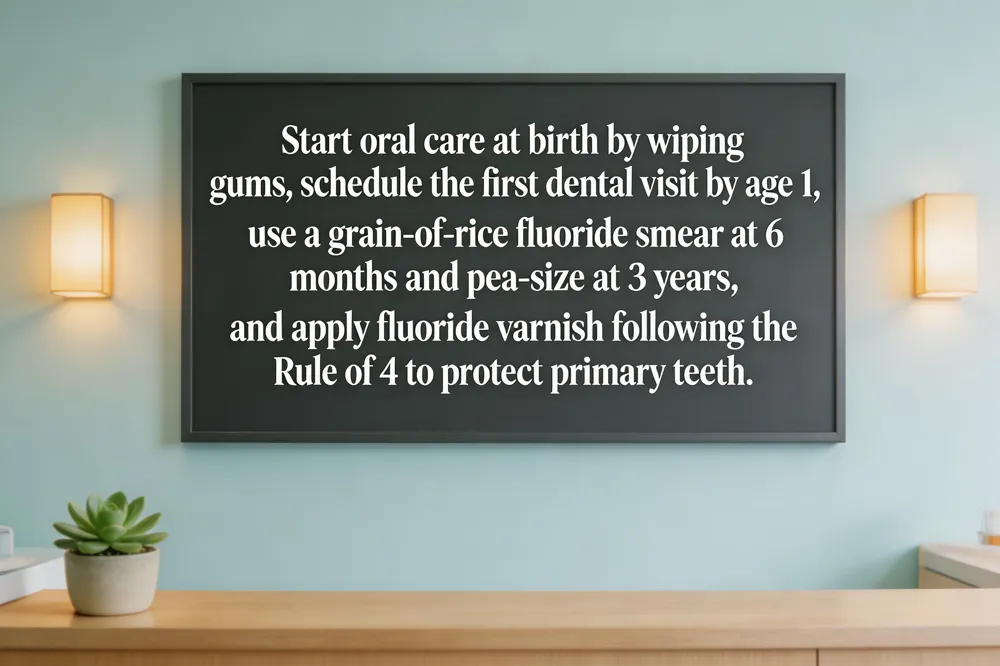 Cleaning gums before teeth erupt
- Begin oral care at birth by gently wiping the infant’s gums with a damp washcloth after each feeding. This removes bacteria and prepares the mouth for the first tooth.
Cleaning gums before teeth erupt
- Begin oral care at birth by gently wiping the infant’s gums with a damp washcloth after each feeding. This removes bacteria and prepares the mouth for the first tooth.
Scheduling the first dental visit - The American Academy of Pediatric Dentistry and the CDC advise a dental check‑up by the child’s first birthday or within six months of the first tooth’s eruption. Early visits establish a dental home, allow risk assessment, and provide personalized anticipatory guidance.
Early fluoride use and the Rule of 4 - When the first tooth appears (≈6 months), use a soft‑bristled brush and a smear of fluoride toothpaste the size of a grain of rice. Switch to a pea‑size amount at age 3. The “Rule of 4” (often cited as 7 + 4) reminds clinicians that by 7 months a child should have the first primary tooth and by 11 months (four months later) a total of four teeth should be present, prompting timely fluoride varnish applications.
Why dental care is essential for children - Primary teeth guide jaw development, preserve space for permanent teeth, and support speech and chewing. Untreated decay can cause pain, infection, missed school days, and poor nutrition. Regular brushing with fluoride toothpaste, supervised flossing once two teeth touch, and bi‑annual dental check‑ups reduce cavity risk by up to 33 % with fluoride varnish and 80 % with sealants. Modeling good oral habits at home reinforces these practices, fostering lifelong oral health and confidence.
Building Habits: Ages 2‑5
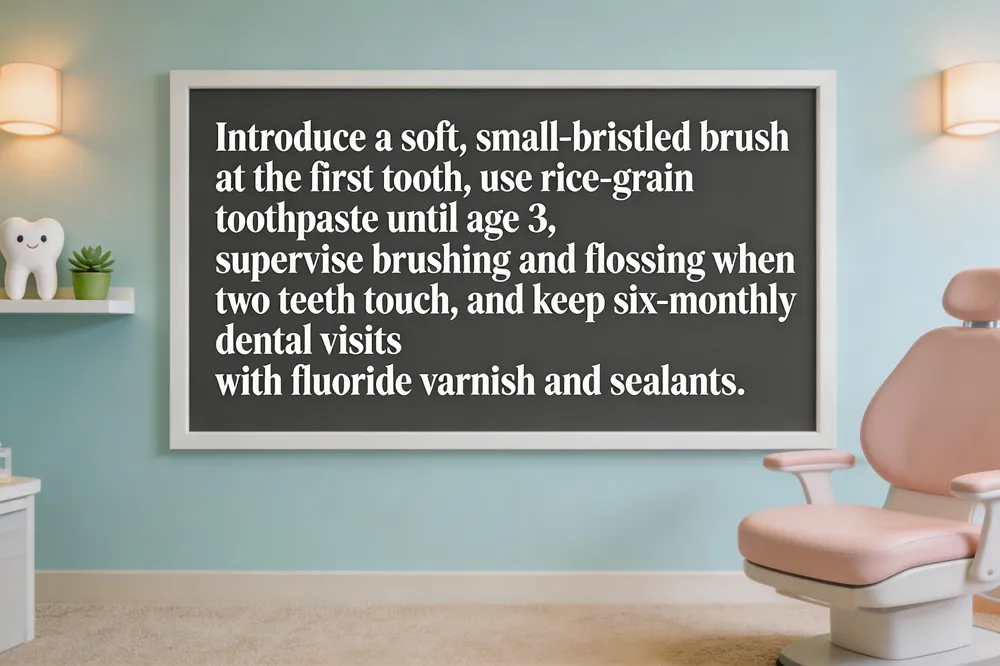 Good dental care for children starts early and continues with age‑appropriate habits. Before teeth appear, gently wipe gums twice daily with a soft, damp cloth after each feeding. As soon as the first tooth erupts, introduce a soft, small‑bristled toothbrush and brush twice a day. Use a rice‑grain‑sized smear of fluoride toothpaste for children under three, then switch to a pea‑sized amount once they can spit it out (generally by age three). Supervise brushing until the child can reliably clean all surfaces, usually around age six. When two teeth touch (around age two to three), Introduce flossing when two teeth touch, using child‑friendly picks or flossers. Schedule a dental check‑up by the first birthday and maintain six‑monthly visits, during which the dentist may apply fluoride varnish and sealants for added protection. Encourage drinking fluoridated tap water and limit sugary snacks and drinks, especially between meals, to reduce plaque‑producing acids.
For engaging oral‑hygiene education, preschoolers enjoy short animations such as the American Dental Association’s “Brush, Floss, Rinse” series, Sesame Street’s “Tooth‑brushing Song,” Crest + Oral‑B’s “Captain Power Clean,” and Colgate Kids’ “Dr. Rabbit” tutorials. These videos make brushing fun, reinforce technique, and help children develop a lifelong habit of caring for their smiles.
Safe oral‑care products include toddler‑size soft‑bristled toothbrushes (manual or gentle electric), fluoride toothpaste with 0.25 %–0.5 % fluoride for under‑six users, and age‑appropriate flossers. For children over six, alcohol‑free mouth rinses can be added. Always choose products free of harsh dyes or flavors, and ensure proper supervision to prevent swallowing excess fluoride.
School Age Strategies: Ages 6‑12
 RoutineSix‑Month Dental Check‑ups
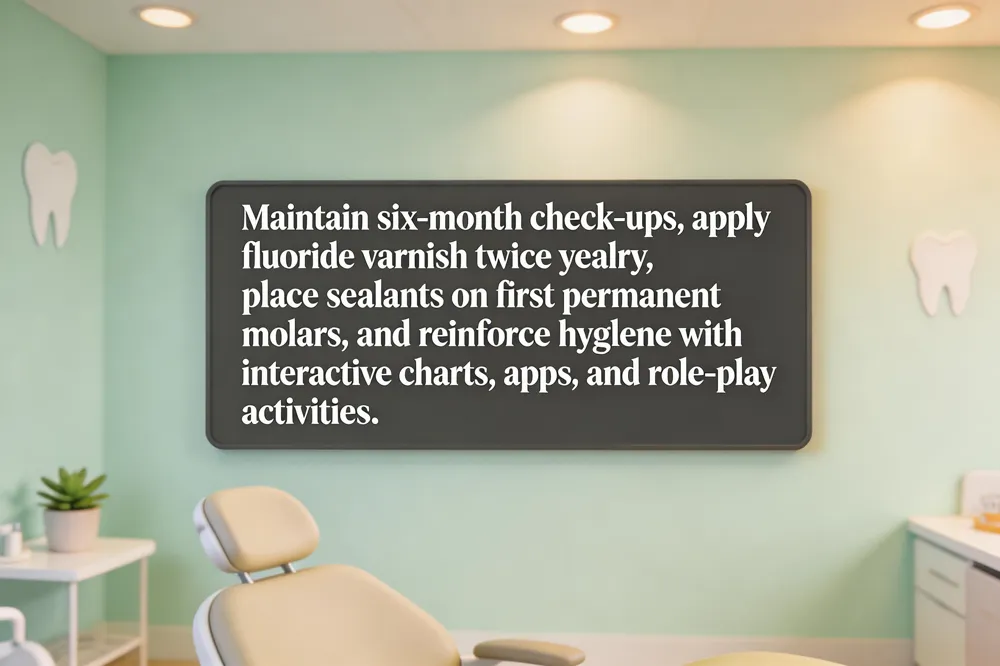
Children should visit the dentist every six months to monitor tooth eruption, catch early decay, and receive professional cleanings. These visits let the dentist apply fluoride varnish, assess sealant needs, and provide personalized anticipatory guidance.
RoutineSix‑Month Dental Check‑ups
Children should visit the dentist every six months to monitor tooth eruption, catch early decay, and receive professional cleanings. These visits let the dentist apply fluoride varnish, assess sealant needs, and provide personalized anticipatory guidance.
Fluoride Varnish, Sealants, and Preventive Care Fluoride varnish applied twice a year strengthens enamel and can prevent up to one‑third of cavities in primary teeth. When the first permanent molars erupt (around age six), sealants should be placed on chewing surfaces to reduce cavity risk by up to 80%. Together with a fluoride‑rich diet and water, these measures form the backbone of preventive care.
Interactive Activities that Reinforce Hygiene Play‑based tools such as a “tooth‑brushing chart,” sing‑along songs, and mini‑dentist role‑play stations turn daily brushing into a fun game. Hands‑on practice with child‑size brushes and a pea‑sized fluoride dab teaches proper technique while building fine‑motor confidence.
Digital Resources for Brushing Education Apps like “Brush Up” and the ADA’s MouthHealthy videos provide timers, visual cues, and reward systems that keep kids engaged for the recommended two minutes. Printable charts and printable video lessons can be used at home or in school health classes.
What do the AAPD guidelines say about pediatric dentistry? The AAPD recommends establishing a dental home by age 1, using risk‑based exam intervals, applying fluoride varnish and sealants, and employing child‑friendly behavior‑management strategies to promote lifelong oral health.
What activities help preschoolers develop good oral hygiene habits? Interactive charts, storybooks, sing‑along songs, toothbrush‑painting, and mini‑dentist play stations make brushing enjoyable and reinforce proper technique.
What resources help kids learn how to brush their teeth? Printable brushing charts, timer apps (e.g., Brush Up), ADA MouthHealthy videos, and community oral‑health curricula provide visual cues, rewards, and age‑appropriate guidance.
Health & Fun: Managing Special Needs
 Can diabetics receive help with dental treatment in the United States?
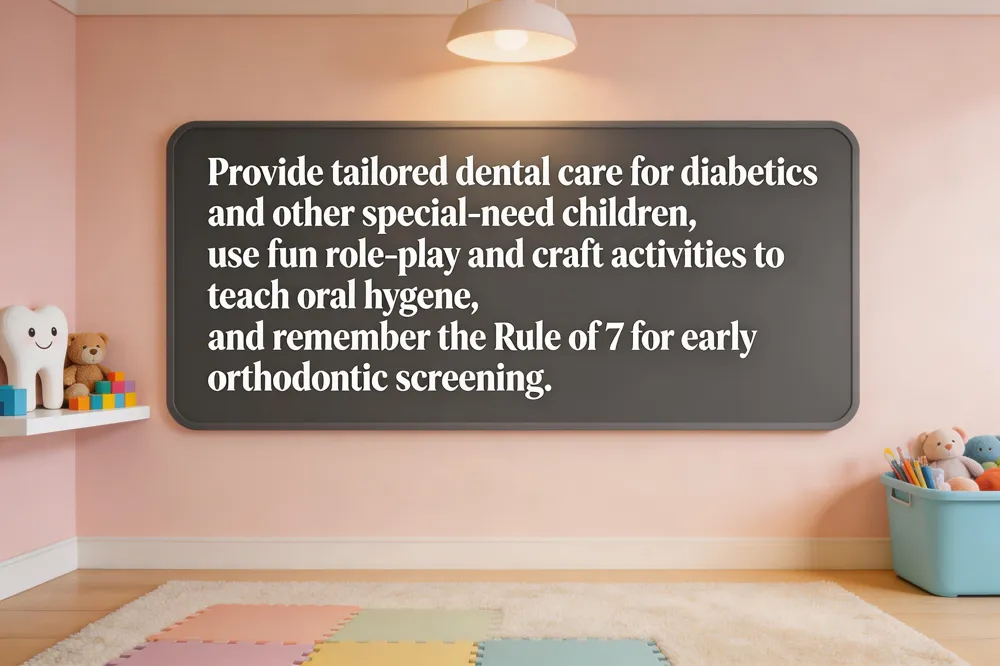
Diabetic patients are eligible for a full range of dental services. Private dental insurance, Medicaid (in states that cover adult dental care), and low‑income public programs all provide access to preventive cleanings, periodontal therapy, and restorative procedures. Because diabetes raises the risk of gum disease, tooth decay, and oral infections, regular six‑month check‑ups are especially important. Dental offices, such as Dr. Ashley E. Burns, DDS, coordinate care with medical providers, offer education on blood‑sugar control, and tailor treatment plans to maintain both oral and systemic health.
What are some fun dentist‑related activities for kids?
Hands‑on play makes oral‑hygiene lessons memorable. Set up a “Dental Office Role‑Play” where children rotate as dentist, patient, and hygienist using a toy kit and a cardboard chair. Craft projects like a Tooth‑Fairy pillow or a marshmallow‑mouth flossing model illustrate tooth anatomy and the importance of flossing. Interactive games—Floss Relay Race, Egg‑Enamel demo, or a Tooth‑Brushing Chart Competition—turn daily brushing into a joyful challenge. Dental Trivia Bingo and “Healthy vs. Unhealthy Snack Sort” reinforce nutrition choices while keeping the mood light.
What is the rule of 7 in pediatric dentistry?
The Rule of 7 advises that children receive their first orthodontic evaluation by age seven. Early screening detects bite problems, jaw‑growth issues, and alignment concerns while the transition from primary to permanent teeth is underway, allowing timely, minimally invasive interventions that guide proper dental development.
Putting Knowledge Into Practice
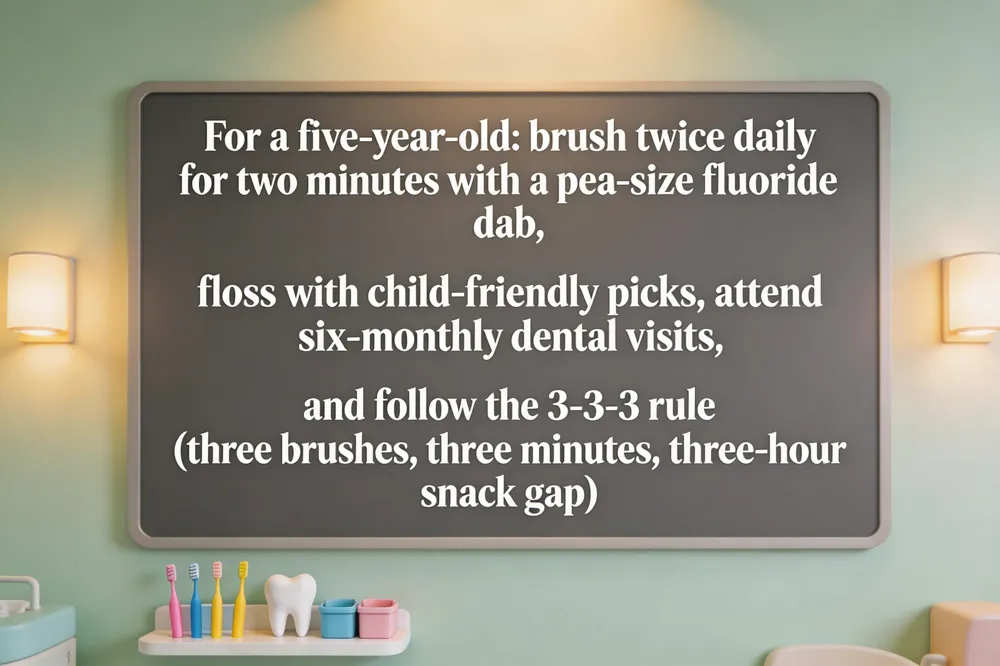 A five‑year‑old should brush twice a day for two minutes with a soft‑bristled toothbrush and a pea‑sized amount of fluoride toothpaste, spitting out the paste rather than swallowing it. Daily flossing—using child‑friendly floss picks or a flosser—removes plaque between the teeth that touch. Schedule a dental check‑up every six months; the dentist can apply fluoride varnish, assess the need for sealants on the permanent molars, and reinforce proper technique. Encourage drinking fluoridated tap water and limit sugary snacks and drinks to lower cavity risk. Supervise brushing until the child can reliably clean all surfaces, usually around age six to seven.
The 3‑3‑3 rule is a simple oral‑health guideline: brush three times a day, for three minutes each session, and avoid eating or drinking for three hours before bedtime. This routine promotes consistency, reduces plaque buildup, and helps prevent cavities and gum disease.
Before teeth appear, clean the infant’s gums after every feeding with a soft, damp cloth or gauze pad. Keep the baby upright for at least 30 minutes after meals, avoid night‑time bottles with anything other than water, and never share utensils or pacifiers. Begin fluoride varnish after the first tooth erupts and schedule the first dental visit by the first birthday. These early habits lay a solid foundation for lifelong oral health and ease the transition to adolescent preventive care.
Putting It All Together for a Lifetime of Healthy Smiles
From the first gum wipe to the teen years, each stage has clear oral‑health milestones. By six months begin wiping gums with a damp cloth; at the first tooth introduce a soft bristled brush and a rice‑grain‑sized smear of fluoride toothpaste. By age three switch to a pea‑sized amount, start flossing when two teeth touch, and schedule the first dental visit—ideally by the first birthday. From ages six to twelve add sealants on permanent molars, continue fluoride varnish applications, and obtain an orthodontic evaluation by seven. Maintaining these habits—brushing for two minutes, daily flossing, limited sugary snacks, and drinking fluoridated water—greatly reduces cavities and supports speech, nutrition, and school performance. Six‑month check‑ups give clinicians the chance to monitor growth, reinforce techniques, and catch problems early. Ashley E. Burns, DDS offers a dental home in Midland, Texas, providing education, fluoride varnish, sealants, and gentle care to keep your children’s smiles healthy for life.