Welcome to Your Smile Decision Guide
This guide is designed to help patients in Midland, Texas make informed choices about the restorative and cosmetic dental options available to them. By clarifying the differences between porcelain veneers, ultra‑thin Lumineers, and full‑coverage crowns, the article equips readers with the knowledge needed to match a treatment to their aesthetic goals, tooth health, and budget. Cosmetic treatments such as veneers and Lumineers focus on improving the appearance of healthy front teeth, while restorative solutions like porcelain crowns protect and rebuild teeth that are severely damaged, decayed, or have undergone root‑canal therapy. The guide walks readers through the key factors to consider—extent of discoloration, structural integrity, enamel preservation, longevity, cost, and insurance coverage—using clear, patient‑friendly language. For Midland residents, the information is tailored to local dental practices, financing options, and common oral‑health concerns in the area, empowering them to have confident, personalized discussions with their dentist for a brighter future.
Understanding Veneers, Lumineers, and Crowns
 Traditional porcelain veneers are thin ceramic shells about 0.5–0.7 mm thick that require removal of roughly 0.5 mm of enamel to achieve a precise fit. Lumineers, an ultra‑thin brand of veneers (≈0.2 mm), usually need little or no enamel reduction, making them a minimally invasive and potentially reversible option. Because of their greater thickness, traditional veneers are stronger, more resistant to chipping and stains, and typically last 15–25 years, whereas Lumineers generally last 10–20 years and may be more prone to fracture.
Pros of Lumineers include minimal preparation, quick aesthetic improvement for minor discoloration, lower initial cost per tooth, and reversibility. Cons are limited customization, reduced ability to mask deep stains, thinner material that can chip, and a shorter lifespan, especially for patients with bruxism.
Pros of traditional porcelain veneers are lifelike appearance, extensive customization of color, shape, and translucency, high stain resistance, and durability of 10–15 years (up to 20 years with excellent care). Cons include irreversible enamel removal, higher upfront cost, possible temporary sensitivity, and the need for a nightguard in heavy grinders.
Lumineers are designed for little or no tooth preparation; most dentists bond the ultra‑thin shells directly to polished enamel, sometimes performing only a light polishing. When cared for with proper oral hygiene, routine check‑ups, and avoidance of hard foods, Lumineers typically last 10 to 20 years.
Insurance, Costs, and Financing in Midland
 In Midland, Texas, cosmetic restorations such as Lumineers are generally not covered by dental insurance because they are classified as elective aesthetic procedures. Most plans reserve benefits for medically‑necessary work like crowns or bridges, though a few PPOs may offer limited discounts if a veneer is deemed essential for structural integrity.
The per‑tooth price for Lumineers in the area typically falls between $1,200 and $2,000, reflecting material quality, case complexity, and the dentist’s expertise. A full‑mouth makeover involving 12‑14 teeth therefore ranges from roughly $9,600 to $28,000, with many practices quoting a bundled price of $14,000‑$20,000 after preparation and bonding.
Crowns have a broader insurance footprint. Porcelain‑fused‑to‑metal crowns usually cost $800‑$1,500 per tooth, while all‑ceramic or zirconia crowns range from $1,200‑$2,500, and are often reimbursed when placed for restorative reasons.
Ashley E. Burns, DDS offers flexible financing through CareCredit and other dental‑care credit programs, allowing patients to spread payments over low‑interest plans. The office also accepts cash, checks, debit, and credit cards, and the team assists patients in selecting the most affordable option for their smile transformation.
Clinical Decision Factors for Front Teeth
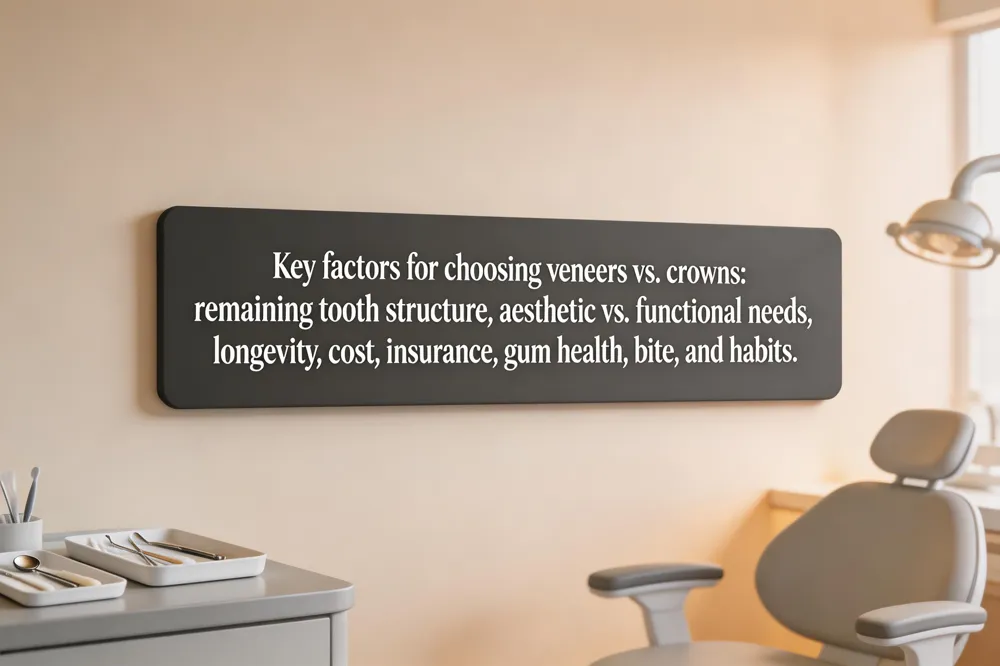 When deciding between Veneers and crowns for front teeth, the foremost consideration is the amount of healthy tooth structure remaining. Veneers require only 0.5–0.7 mm of facial enamel removal and are ideal for purely cosmetic problems such as discoloration, minor chips, or small gaps. Crowns on the other hand demand 1–2 mm reduction all around to provide full‑coverage protection for teeth that are structurally compromised, have large restorations, or have undergone root‑canal therapy. Evaluate aesthetic goals versus functional needs, longevity (Veneers 10‑15 years, crowns 15‑20 years), cost, and insurance coverage, as crowns are often covered while veneers are usually out‑of‑pocket. Also discuss gum health, bite alignment, and habits like bruxism with your dentist.
Durability differs markedly between porcelain crowns and zirconia crowns. Zirconia offers flexural strength of 900‑1200 MPa, making it highly resistant to chipping and suitable for high‑stress molars; it can last 15 years or more with survival rates above 95 % after a decade. Porcelain crowns provide superior aesthetics but are more prone to fracture, typically lasting 10‑15 years.
Composite veneers are resin‑based shells placed directly in one visit with minimal enamel removal. They are less durable, stain more quickly, and usually need replacement after 5‑7 years. Porcelain veneers are lab‑fabricated, mimic natural translucency, resist stains, and can endure 10‑15 years or longer, making them the preferred choice for lasting, natural‑looking results.
Procedures, Longevity, and Maintenance
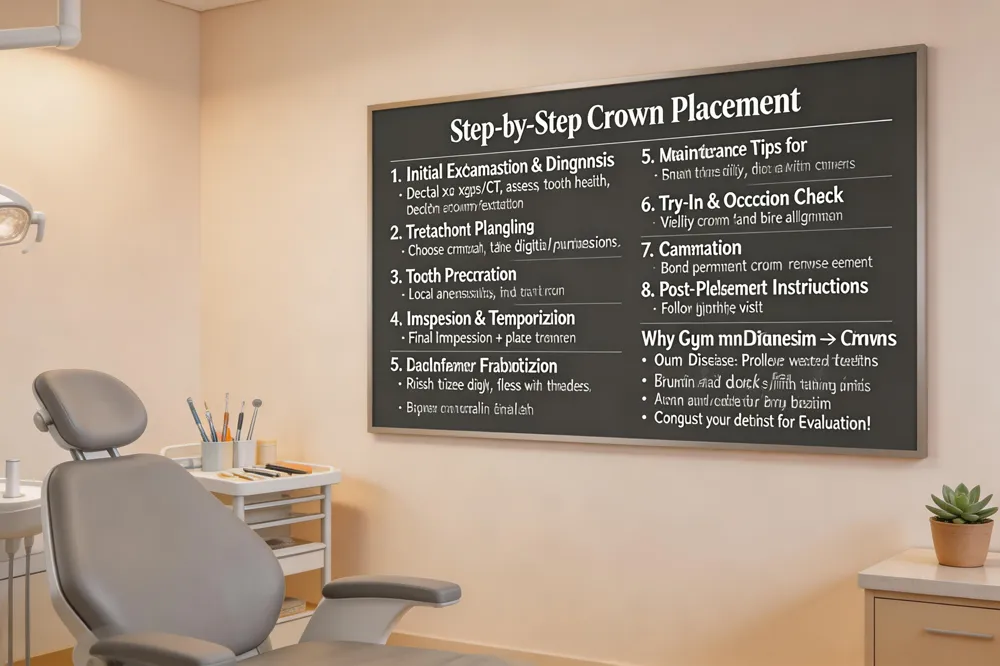 When a porcelain crown is placed, the dentist first performs a comprehensive exam and takes X‑rays. After numbing the tooth, a small amount of enamel (typically 1.5‑2 mm) is removed and the tooth is reshaped. An impression—either traditional or digital—is captured, and a temporary crown protects the prepared tooth while the laboratory fabricates the custom porcelain crown (usually in one to two weeks). At the second visit the temporary is removed, the tooth is cleaned, the permanent crown is tried in, adjusted for bite, and permanently cemented, then polished and patient care instructions are given.
Dentists may advise against veneers if the tooth or gum health is compromised—severe gum disease, large cavities, insufficient enamel, or bruxism can undermine bonding and lead to failure. In such cases a crown or orthodontic solution is safer.
Both crowns and veneers require diligent maintenance: brush twice daily with a soft‑bristled brush and non‑abrasive toothpaste, floss daily, attend six‑month cleanings, avoid hard foods, limit staining drinks, and wear a night‑guard if you grind.
To schedule a cosmetic‑dentistry consultation with Dr. Ashley E. Burns, call (432) 697‑3333, use the online request form, or book via Zocdoc, specifying the desired service (veneers, Lumineers, or crowns).
Patient Resources and Visual Inspiration
 To see real‑world results, visit the Ashley Burns DDS website and click the “Smile Gallery” or “Before & After” section. The gallery displays high‑resolution before‑and‑after photos of Lumineer and porcelain veneer cases performed right here in Midland, showing a range of cosmetic improvements. If you prefer a printed portfolio, ask for one during your consultation, or request specific images by calling 432‑218‑4389. The practice also shares additional case photos on its Instagram and Facebook pages, which are linked from the site. For deeper education, explore the downloadable patient guides on veneer preparation, bonding protocols, and post‑procedure care that are available in the office and online. These tools help you understand the process and set realistic expectations for your smile makeover.
Making an Informed Choice for Your Smile
Choosing between Lumineers, traditional porcelain veneers, and crowns hinges on thickness, durability, and invasiveness. Lumineers are ultra‑thin (≈0.2 mm) and usually require no enamel removal, offering a reversible, minimally invasive option but limited customization and a slightly shorter lifespan (10‑20 years). Traditional veneers (≈0.5‑0.7 mm) need modest enamel reduction, provide extensive shade and shape control, and last 15‑25 years. Crowns encase the whole tooth, demand 1.5‑2 mm reduction, and deliver the greatest strength for severely damaged teeth, lasting 10‑20 years or more. Because each case is unique, a personalized clinical evaluation—including oral health, bite forces, aesthetic goals, and budget—is essential. Midland patients should schedule a comprehensive exam, discuss digital smile‑design mock‑ups, explore financing options, and collaborate with a qualified cosmetic dentist to determine the optimal solution for a confident, lasting smile and a restored bite function.