Why Early Detection Matters
Routine dental exams are the cornerstone of preventive oral health. By visiting the dentist every six months—or more often when risk factors such as diabetes, smoking, or gum disease are present—clinicians can identify cavities, early gingivitis, or early oral cancer before they become painful or costly. The mouth is a gateway to the body; untreated dental infections can exacerbate systemic conditions like heart disease, stroke, and poorly control. Early detection therefore protects not only teeth and gums but also overall health. When problems are caught early, treatment is usually simple, minimally invasive, and far less expensive—think fluoride treatments for demineralized enamel instead of fillings, or scaling and polishing rather than deep periodontal surgery. Moreover, timely intervention reduces the risk of tooth loss, preserves natural aesthetics, and improves quality of life. In short, regular check‑ups enable dentists to spot subtle warning signs—bleeding gums, sensitivity, persistent bad breath—allowing patients to maintain a healthy smile and a healthier body.
Recognizing Early Dental Symptoms
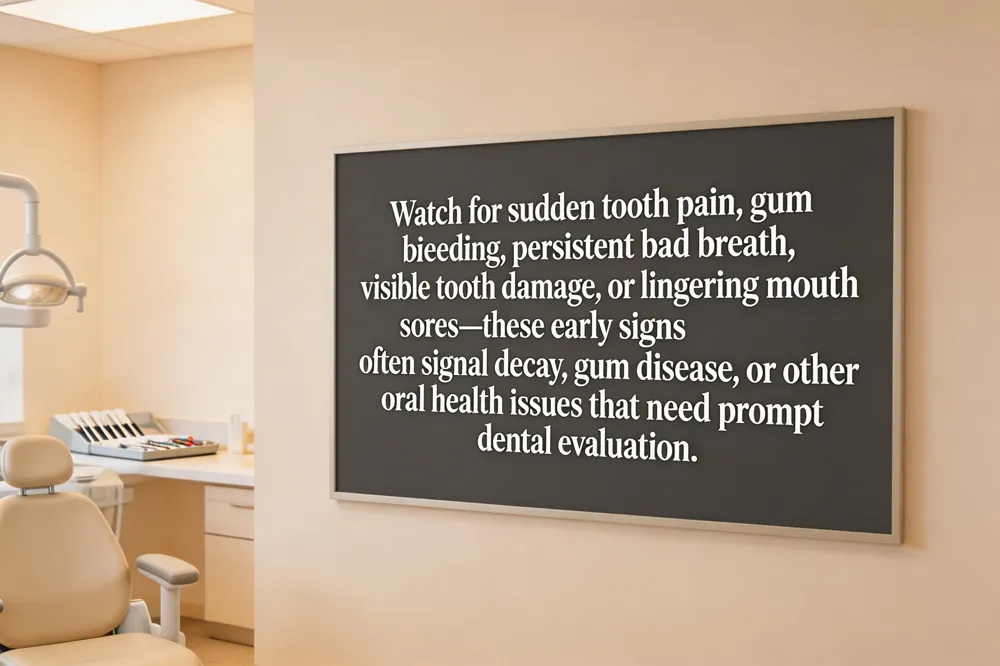 Tooth pain and sensitivity – Sudden or lingering ache, especially when biting, chewing, or exposing teeth to hot or cold, often signals decay, a cracked tooth, or pulp irritation.
Bleeding or swollen gums – Bleeding, redness, or tenderness during brushing or flossing is an early sign of gingivitis that can progress to periodontitis if untreated.
Persistent bad breath and taste changes – Halitosis that does not improve with good oral hygiene, or an ongoing unpleasant taste, may indicate bacterial buildup, gum disease, or early decay.
Visible tooth damage and a shifting smile – Dark spots, cracks, chips, or noticeable changes in tooth alignment suggest enamel loss, cavities, or periodontal bone loss requiring prompt evaluation.
Mouth sores, bumps, and chewing difficulties – Lesions that linger longer than a week, unexplained lumps, or pain while chewing or swallowing can be early indicators of infection, oral pathology, or TMJ problems.
What are signs I should see a dentist? If you notice any of the above symptoms—persistent pain, gum bleeding, bad breath, visible tooth changes, or lingering sores—schedule an appointment promptly. High‑risk factors such as diabetes, pregnancy, tobacco use, or dry mouth also warrant earlier evaluation.
What should I know about early signs of a cavity? Early cavities often appear as white chalky spots, brown stains, or faint tooth sensitivity to hot, cold, or sweet foods even without pain. Detecting these changes early allows minimally invasive treatment like fluoride varnish, preserving natural tooth structure.
Understanding Dental Visit Timing
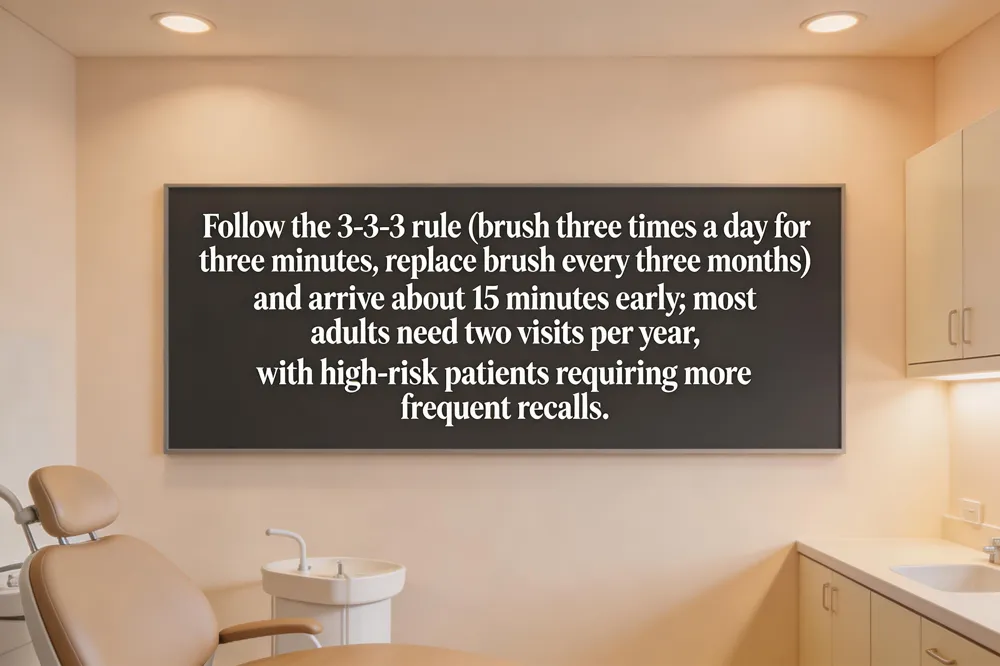 Regular dental care follows a few simple guidelines that keep your smile healthy and your visits efficient. The 3‑3‑3 oral‑care rule reminds patients to brush three times a day, spend about three minutes each time, and replace the brush or electric head every three months. Adding a three‑step routine—brush, floss (or inter‑proximal cleaning), and rinse with fluoride mouthwash—helps remove plaque and reduces the risk of cavities and gum disease.
Arriving early vs. too early: Aim to be at the office roughly 15 minutes before your scheduled time. This window allows you to complete paperwork, verify insurance, and settle in without holding up the day’s schedule. Arriving much earlier adds idle waiting time for both you and the staff, while arriving late can disrupt the flow of appointments.
Recommended recall intervals: Most adults benefit from two dental visits per year—one for a professional cleaning and a routine exam. High‑risk patients (history of cavities, gum disease, diabetes, smoking, pregnancy, etc.) may need three to four visits annually, while low‑risk individuals with excellent oral hygiene can sometimes extend to once a year. Personalized recall intervals are based on your oral health status, medical history, and the dentist’s clinical judgment.
Systemic Health and Dental Screening
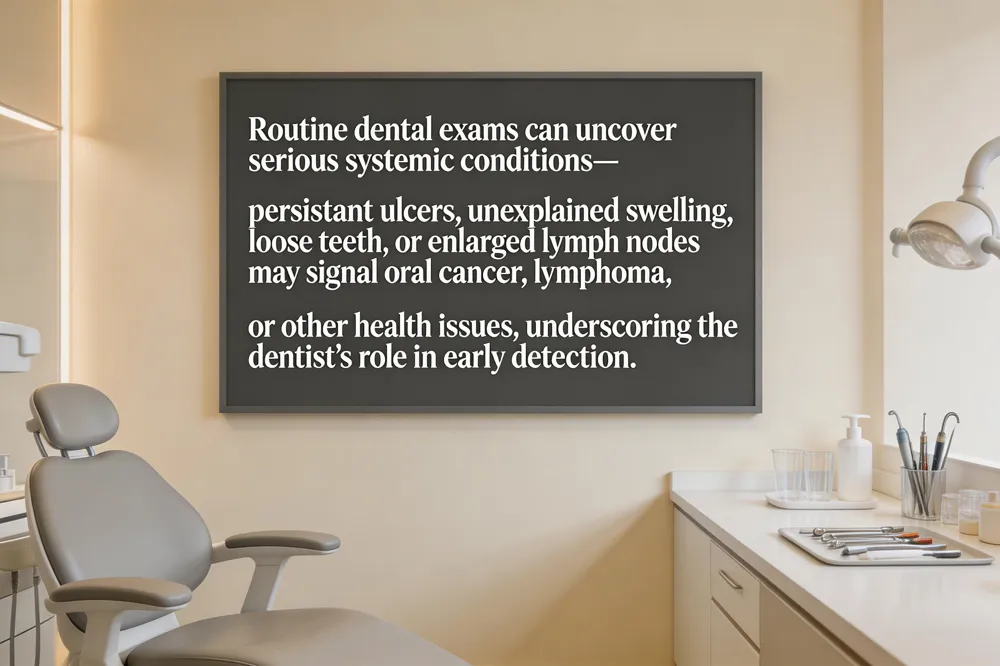 Dental professionals play a vital role in uncovering serious health conditions that first appear in the mouth. During a routine oral exam, a dentist evaluates soft tissues, gums, and surrounding structures, looking for warning signs of oral cancer, lymphoma, and other systemic illnesses. Persistent ulcers, unexplained swelling of the palate or gums, loose teeth without trauma, and painless enlarged neck lymph nodes can all point toward lymphoma. Because these findings can mimic common dental problems, a thorough oral cancer screening is essential; any suspicious tissue changes prompt a biopsy or referral to a medical specialist for definitive diagnosis. Early detection through regular dental visits greatly improves treatment outcomes. In addition, gum disease has been linked to systemic conditions such as diabetes, heart disease, hypertension, and stroke, underscoring the importance of periodontal health for overall well‑being. Dentists therefore serve as frontline detectors of both oral and systemic disease, ensuring timely intervention and coordinated care. Dr. Burns and her team are trained to recognize these red‑flag findings and will guide patients promptly when a lymphoma is suspected.
Financial and Insurance Considerations
 Understanding the cost of dental care and how your insurance works can make scheduling a visit much less stressful. To verify whether you have dental insurance, start by checking your employee benefits portal or the insurance card you received; the plan name, member ID, and a customer‑service number are usually listed. If the information isn’t online, contact your HR department or call the insurer directly. When you book an appointment, the office staff can also confirm coverage on the spot and provide a personalized estimate.
In Midland, Texas, a routine exam and professional cleaning typically falls between $150 and $200, often including a set of diagnostic X‑rays. Most dental plans cover 70‑80 % of the allowed amount, leaving insured patients with an out‑of‑pocket cost of roughly $60‑$80. Uninsured patients can benefit from office discounts, payment plans, or dental savings memberships.
Common procedures vary: fillings range $150‑$250 per tooth, root‑canal therapy $800‑$1,200, crowns $1,200‑$1,800, and implants $3,000‑$4,500. Prices depend on material, case complexity, and insurance coverage, so always ask the practice for a detailed quote before treatment.
Personalized Care and Recall Intervals
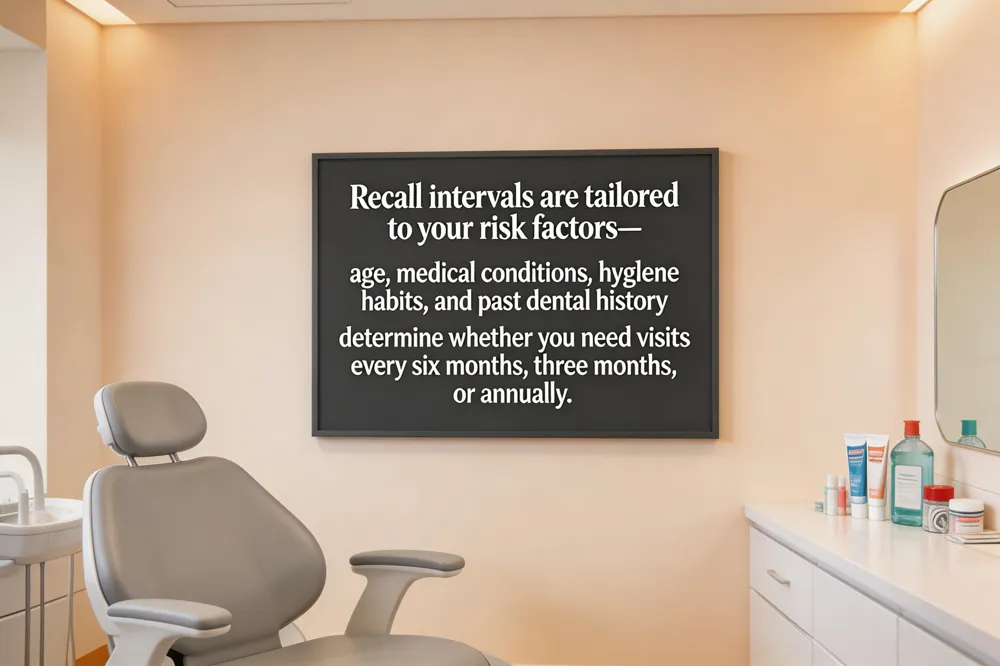 Risk‑based scheduling tailors recall intervals to each patient’s profile rather than a universal rule. Age, medical conditions (diabetes, heart disease, Sjögren’s), hygiene habits, past cavities or gum disease, smoking, and dry‑mouth medications help determine six‑month, three‑month, or annual visits.
What are the four main causes of tooth decay? The four contributors are: (1) plaque bacteria that produce acid from sugars; (2) fermentable foods and drinks that feed them; (3) frequent snacking that limits saliva’s neutralizing action; and (4) a susceptible tooth lacking fluoride, dried out, or with weakened enamel. Together they cause acid‑driven demineralization.
What is the recommended components of a dental exam? A comprehensive exam includes a health history review, visual inspection of teeth and soft tissue, periodontal probing, X‑rays, and oral‑cancer screening, followed by a discussion of findings and a preventive plan.
How often should you visit the dentist for a routine check‑up and cleaning? The ADA and most clinicians advise at least two visits per year. High‑risk patients—those with cavities, gum disease, smoking, diabetes, or pregnancy—may need quarterly appointments. Regular cleanings remove tartar that brushing cannot, preserving oral health.
Take Control of Your Oral Health Today
If you notice any warning signs—persistent tooth pain or sensitivity, bleeding or swollen gums, chronic bad breath, loose teeth, or unusual sores—schedule a dental appointment promptly rather than waiting for your routine six‑month visit. In the meantime, follow the 3‑3‑3 rule: brush for three minutes, floss for three minutes, and rinse with an antimicrobial mouthwash for three seconds after each meal to keep plaque at bay. Use your dental insurance benefits wisely; most plans cover two preventive exams and cleanings per year, and many offer discounts on additional visits if you have high‑risk factors such as diabetes, smoking, or a history of cavities. For a personalized, preventive approach, trust Dr. Ashley Burns. Her patient‑centered care combines the latest technology with education, ensuring you receive the right frequency of exams, cleanings, and treatments to maintain optimal oral health.