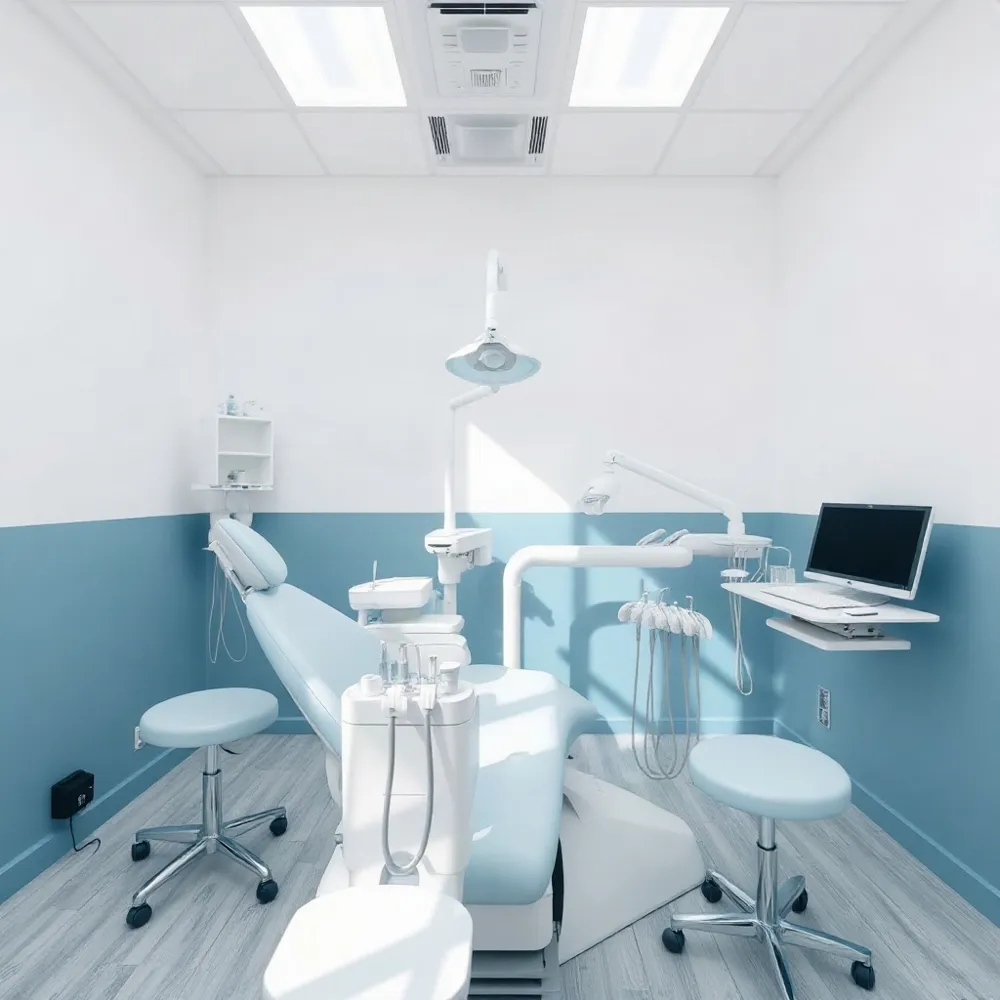
Why Preventive Care Matters
Regular preventive dental visits empower clinicians to spot cavities, gum inflammation and oral cancer at their earliest stages, when treatment is simple and inexpensive. By catching disease before it spreads, patients avoid costly procedures such as root canals, crowns, extractions or emergency room visits, saving thousands of dollars over a lifetime. The mouth is a gateway to the body: untreated periodontal disease can fuel chronic inflammation, raising the risk of heart disease, diabetes complications, stroke and even cognitive decline. Maintaining healthy teeth and gums therefore supports overall systemic health and reduces medical expenses beyond dentistry. Moreover, a clean, functional smile enhances confidence, improves nutrition through better chewing, and lowers social anxiety, contributing to a higher quality of life. Consistent at‑home hygiene combined with biannual professional cleanings and fluoride or sealant applications creates a foundation for lifelong oral wellness. These preventive habits also foster stronger patient‑dentist relationships, encouraging ongoing engagement in oral health.
The Importance of Preventive Dental Care
Key Benefits of Preventive Dental Care
| Benefit | Description |
|---|---|
| Early Detection | Spot decay, gum inflammation, oral cancer before they become painful or need extensive treatment |
| Cost Savings | Avoid invasive procedures (fillings, crowns, root canals, extractions) and reduce emergency visits |
| Reduced Cavity Risk | Plaque removal + fluoride can lower cavity risk by up to 60 % |
| Lower Periodontal Disease | Decreases incidence, reducing systemic inflammation linked to heart disease, diabetes, respiratory infections |
| Improved Quality of Life | Boosts confidence, nutrition, overall well‑being |
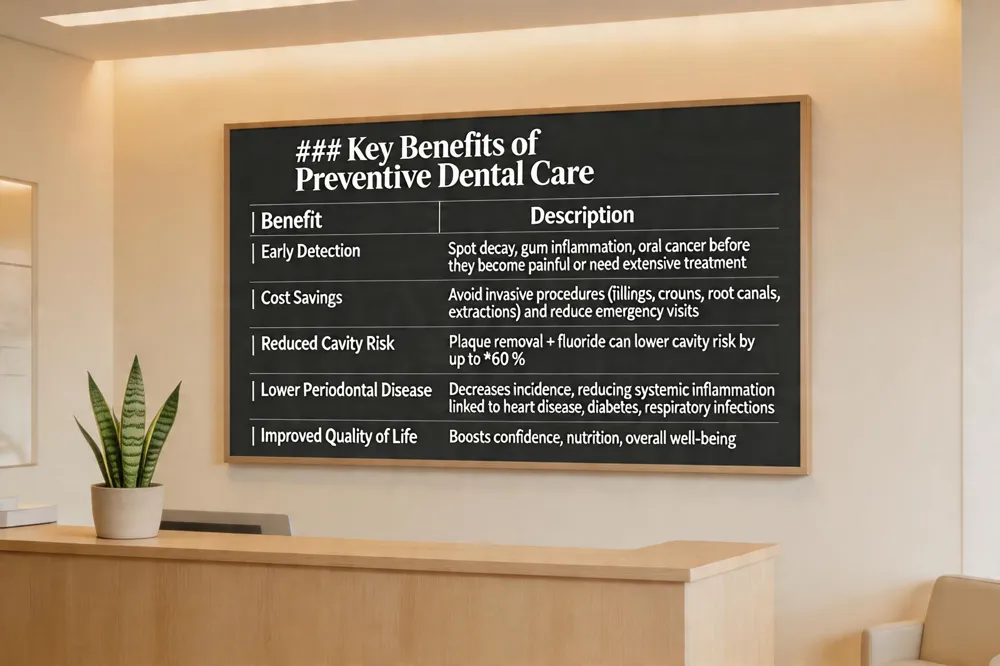 Preventive dental care is essential because routine exams, cleanings, fluoride applications, and sealants allow dentists to spot early signs of decay, gum inflammation, and oral cancer before they become painful or require extensive treatment. By intervening early, patients avoid invasive, costly procedures such as fillings, crowns, root canals, or extractions, and emergency visits drop dramatically. Regular plaque removal and fluoride strengthen enamel, reducing cavity risk by up to 60% and lowering periodontal disease incidence, which in turn lessens systemic inflammation linked to heart disease, diabetes, and respiratory infections. Maintaining a healthy mouth also boosts patient confidence, improves nutrition, and enhances overall quality of life.
Why is preventive dental care important? It enables early detection of oral disease, prevents progression to invasive treatments, saves money, and supports systemic health, leading to a healthier smile and better well‑being.
What services are included in preventive dental care? Comprehensive exams, professional cleanings (prophylaxis), fluoride treatments, dental sealants, diagnostic X‑rays, oral cancer screenings, and personalized home‑care education.
Understanding Preventive Dentistry
Core Strategies & Economic Impact
| Strategy | Typical Frequency | Primary Goal |
|---|---|---|
| Comprehensive Exam | Twice yearly | Detect early disease |
| Professional Cleaning (Prophylaxis) | Twice yearly | Remove plaque & tartar |
| Fluoride Treatment | Every 6‑12 months | Strengthen enamel, remineralize early lesions |
| Sealant Placement | Once per year (as needed) | Protect pits & fissures on molars |
| Oral‑Hygiene Counseling | At each visit | Educate on brushing, flossing, diet |
Economic Return
- Every dollar spent on prevention saves $8–$50 in future treatment costs.
- Long‑term reduction of cavities & periodontitis by up to 60 %.
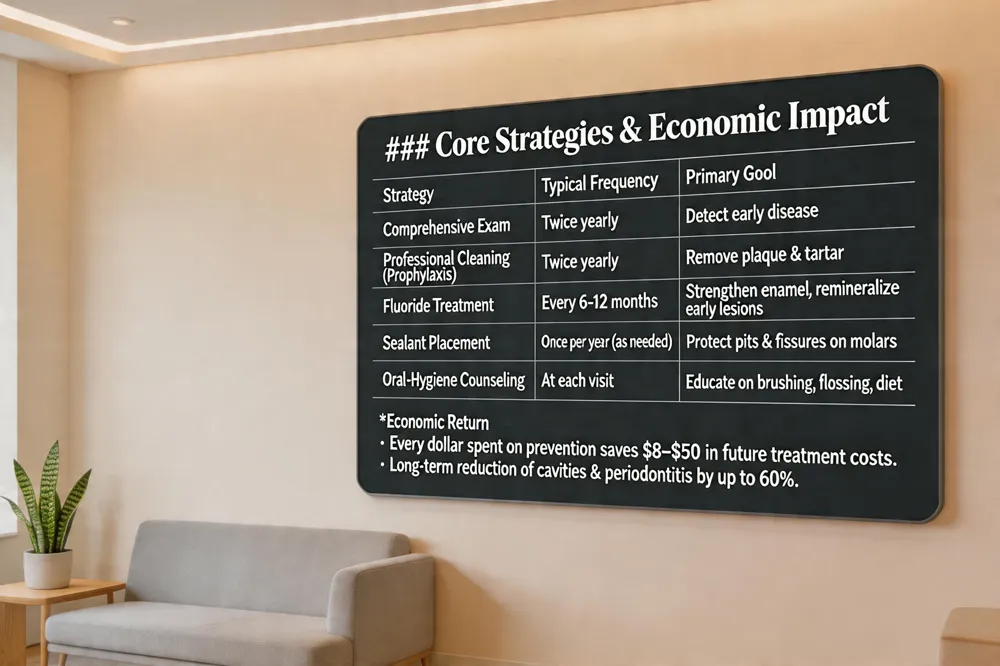 Preventive dentistry is a branch of dental care that focuses on maintaining oral health and avoiding disease before it develops. It combines regular professional examinations and cleanings with patient education on proper home hygiene, nutrition, and lifestyle choices that affect the teeth and gums. Core strategies include biannual exams, thorough scaling and root planing, and personalized oral‑hygiene counseling. Early‑intervention tools such as topical fluoride varnish, silver‑diaminate fluoride (SDF) applications, and dental sealants create protective barriers that halt decay and can reverse early enamel lesions. By detecting cavities, gum inflammation, or oral‑cancer precursors early, clinicians can employ minimally invasive treatments, thus preserving natural tooth structure. Over the long term, consistent preventive care reduces the incidence of cavities and periodontitis by up to 60 %, lowers systemic inflammation linked to heart disease and diabetes, and saves patients $8–$50 for each dollar spent on prevention. Ultimately, preventive dentistry promotes lasting oral health, lower treatment costs, and a higher quality of life.
Common Dental Diseases and Their Prevention
Diseases & Preventive Tools
| Disease | Primary Cause | Preventive Tools |
|---|---|---|
| Dental Caries (Cavities) | Acid from plaque bacteria demineralizing enamel | Fluoride toothpaste, fluoride varnish, sealants, regular cleanings |
| Gingivitis | Plaque buildup → inflammation | Daily brushing & flossing, professional scaling |
| Periodontitis | Untreated gingivitis → bone loss | Early detection, scaling & root planing, good home care |
| Oral Thrush (Candidiasis) | Overgrowth of Candida fungi | Good oral hygiene, antifungal treatment if needed |
| Oral Cancer | Tobacco, alcohol, HPV, chronic irritation | Oral cancer screenings, risk‑factor reduction |
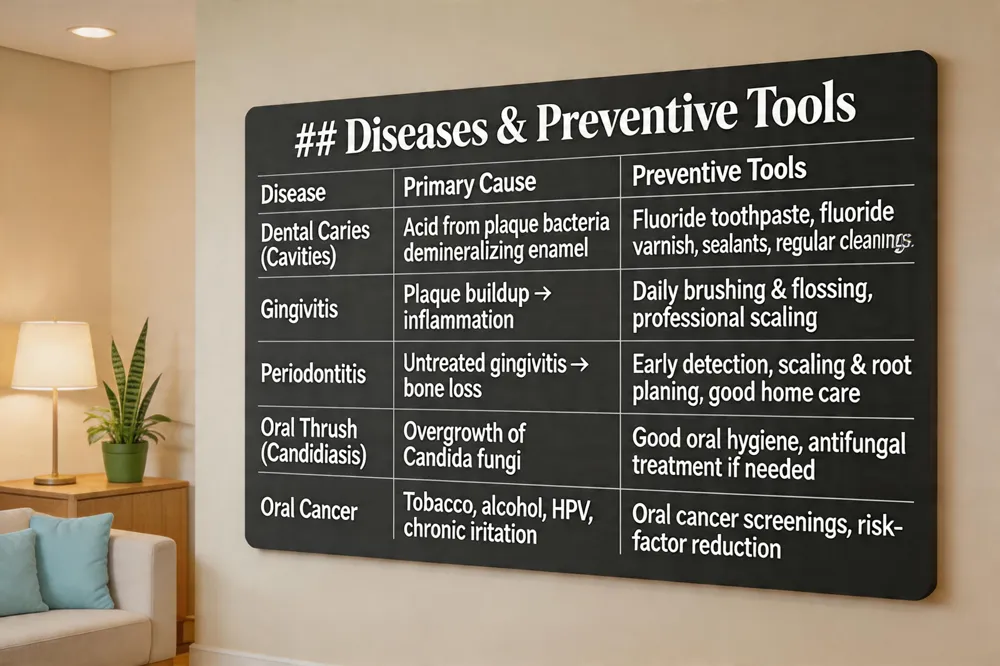 The two most common dental diseases are dental caries (cavities) and periodontal disease. Caries arise when plaque bacteria produce acid that demineralizes enamel; if unchecked they can lead to pain, infection, and tooth loss. Periodontal disease begins as gingivitis—gum disease that can progress to periodontitis, damaging supporting bone and potentially causing tooth mobility. Cavities affect a large proportion of children and adults, while gum disease prevalence rises with age and poor oral‑hygiene habits.
Five ways to take care of your teeth at home: (1) Brush twice daily for two minutes with fluoride toothpaste to remove plaque and strengthen enamel. (2) Floss or use interdental cleaners daily to clean between teeth where a brush cannot reach. (3) Limit sugary and acidic foods and drinks that erode enamel and promote decay. (4) Rinse with an ADA‑approved fluoride mouthwash if recommended by your dentist. (5) Keep up with regular dental check‑ups and professional cleanings to complement home care and catch problems early.
Preventive tools such as fluoride treatments, dental sealants, and routine professional cleanings target both caries and gum disease, reducing the need for invasive, costly treatments and supporting overall systemic health.
Fluoride: The Tooth’s Best Defense
Fluoride Function & Effectiveness
| Function | How It Works |
|---|---|
| Enamel Strengthening | Replaces hydroxyl with fluoride → calcium fluorapatite (more acid‑resistant) |
| Remineralization | Fluoride ions diffuse into softened enamel, redeposit calcium & phosphate |
| Bacterial Metabolism Interference | Reduces acid production by plaque bacteria |
Clinical Impact
- Regular fluoride use cuts new caries by 25‑40 % across ages.
- Combined with sealants, can prevent up to 80 % of molar cavities.
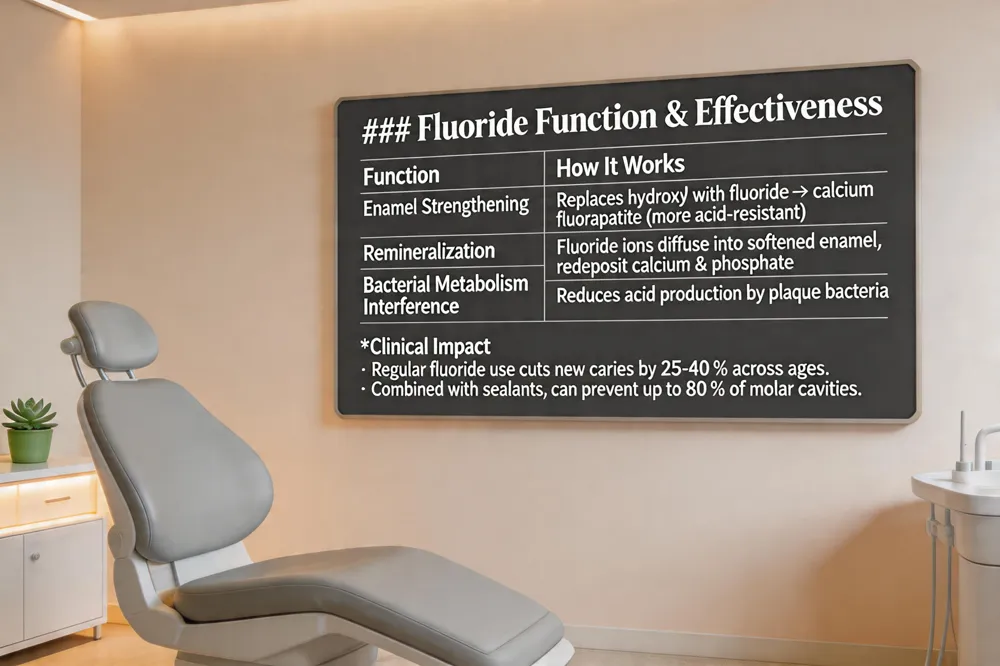 Fluoride works by replacing the mineral hydroxyl in hydroxyapatite with fluoride ions, forming calcium fluorapatite, which is far more resistant to the acid attacks of plaque bacteria. This chemical change strengthens enamel and makes it less prone to demineralization. When early lesions appear, fluoride promotes remineralization: saliva‑borne fluoride ions diffuse into the softened enamel, redeposit calcium and phosphate and repairing microscopic damage before a cavity forms. Fluoride can be delivered topically—via toothpaste, gels, varnishes, or in‑office fluoride varnish applications—or systemically through community water fluoridation and dietary supplements; both methods maintain a fluoride‑rich environment in the oral cavity. Clinical studies consistently show that regular fluoride use reduces new caries incidence by 25‑40 % in children and adults, and that sealants combined with fluoride can prevent up to 80 % of cavities on molar chewing surfaces.
What is the function of fluoride in dental care? Fluoride incorporates into enamel as calcium fluorapatite, enhances remineralization of early lesions, interferes with bacterial metabolism, and, delivered topically or systemically, provides continuous protection that markedly lowers cavity risk.
What are five common oral health diseases? 1. Dental caries (cavities); 2. Gingivitis; 3. Periodontitis; 4. Oral thrush (candidiasis); 5. Oral cancer.
Home Care, Costs, and Insurance Coverage
Typical Costs & Insurance Details (U.S.)
| Service | Average Cost (USD) | Insurance Coverage |
|---|---|---|
| Exam | $50‑$150 | 100 % preventive (no deductible) |
| Professional Cleaning | $75‑$200 | 100 % preventive (no deductible) |
| Fluoride Treatment | $20‑$50 per application | 100 % preventive |
| Sealant (per tooth) | $30‑$60 | 100 % preventive |
| Diagnostic X‑ray | $20‑$100 | 100 % preventive |
Plan Highlights
- Annual maximum benefits: $1,000‑$2,000.
- Most plans cover preventive services before deductible, often with no copayment.
- Modest coinsurance may apply for extra‑frequency services.
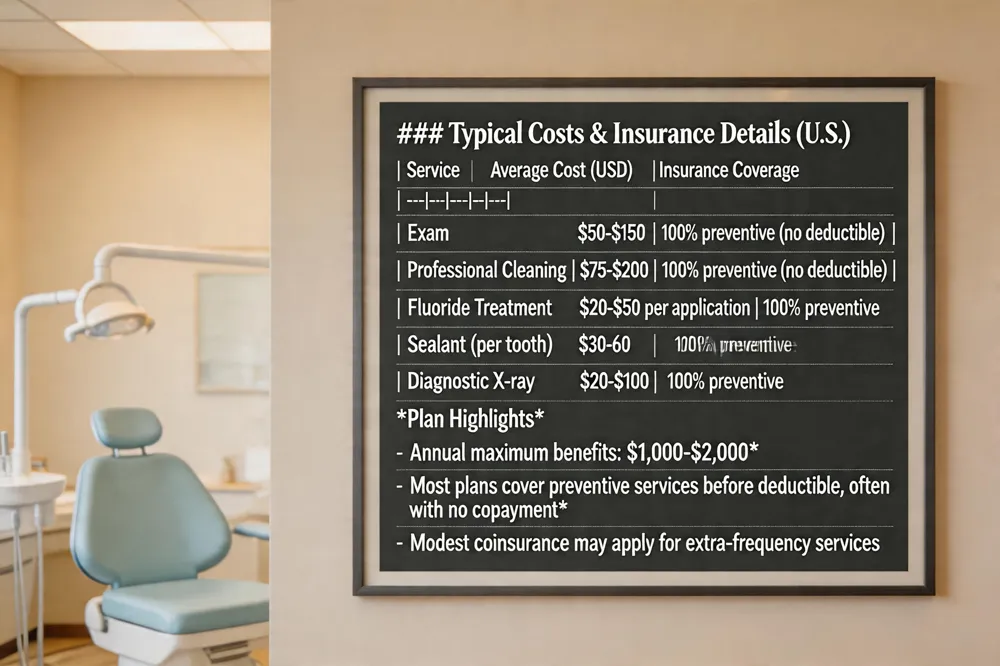 Daily oral hygiene best practices include brushing twice a day with fluoride toothpaste, flossing daily, and limiting sugary snacks. A typical preventive dental visit in the United States costs $50‑$150 for an exam and $75‑$200 for a professional cleaning; fluoride treatments run $20‑$50 and sealants $30‑$60 per tooth. Most dental insurance plans classify exams, cleanings, X‑rays, fluoride, and sealants as preventive and cover them at 100 % before the deductible, often with no copayment. Annual maximum benefits range $1,000‑$2,000, and some plans may apply a modest coinsurance for extra‑frequency services. A comprehensive preventive program begins with a risk assessment, followed by personalized home‑care instruction, routine prophylaxis cleanings, topical fluoride, sealant placement on vulnerable pits, nutrition and lifestyle counseling, and scheduled diagnostic imaging for early detection. These components together lower the incidence of cavities, gum disease, and costly restorative work, while preserving overall health.
Long‑Term Benefits and Community Impact
Community & Lifetime Benefits
| Benefit | Description |
|---|---|
| Systemic Health | Reduced inflammation → lower risk of cardiovascular disease, better diabetes control, fewer respiratory infections |
| Economic ROI | Community sealant & water‑fluoridation programs yield $20‑for‑$1 return, saving billions in treatment costs |
| Reduced ER Visits | Preventive care cuts >2 million U.S. dental ER trips annually, saving productivity loss |
| Quality of Life | Better chewing, speech, aesthetics → higher confidence, nutrition, overall well‑being from childhood to senior years |
 Preventive dentistry does far more than protect teeth; it supports systemic health by lowering inflammation that can trigger cardiovascular disease, worsen diabetes control, and increase respiratory infection risk. Community‑wide sealant and water‑fluoridation programs amplify these effects, preventing up to 80 % of cavities in molars and delivering a $20‑for‑$1 return on investment that saves billions in treatment costs. By catching decay, gum disease, and oral cancer early, routine exams cut the need for costly emergency dental visits, which currently account for over 2 million U.S. ER trips annually and cause significant productivity loss through missed school days and work hours. Over a lifetime, patients who follow a preventive schedule enjoy better chewing function, speech, and aesthetics, leading to higher confidence, better nutrition, and an overall higher quality of life from childhood through senior years.
Your Path to a Healthier Smile
Preventive dentistry stops decay before it starts, lowers gum‑disease risk, and reduces costly restorative work. Regular cleanings, fluoride varnish, and sealants cut new cavities by up to 80 % and keep inflammation low, which also protects heart, diabetes, and respiratory health. At Ashley E. Burns, DDS in Midland, Texas, each patient receives a tailored schedule of bi‑annual exams, digital X‑rays, and personalized oral‑hygiene coaching. Our team adapts fluoride and sealant protocols to your age, diet, and medical history, ensuring lasting, healthy smiles for every stage of life. We also offer tele‑health consults for guidance.