Understanding Implant-Supported Dentures: Benefits and Basics
Definition and Structure of Implant-Supported Dentures
Implant-supported dentures are dental prosthetics anchored directly to the jawbone using small titanium posts called dental implants. These implants act as sturdy roots for the dentures, providing a stable and secure foundation. Unlike traditional dentures, which rest on the gums, implant-supported dentures integrate with the bone, helping to preserve jawbone density.
Advantages Over Traditional Dentures
These dentures offer several benefits including greater stability and comfort. They eliminate issues like slippage and irritation common with traditional dentures. Implant-supported dentures also improve chewing efficiency and speech clarity. Because the implants stimulate the jawbone similarly to natural tooth roots, they help prevent bone loss, promoting long-term oral health.
Types: Removable Versus Fixed
Implant-supported dentures come in two main types. Removable dentures snap onto the implants and can be taken out daily for thorough cleaning. Fixed dentures are permanently attached to the implants and can only be removed by a dental professional. The choice depends on factors such as jawbone health, personal preference, and lifestyle.
Importance of Proper Maintenance
Maintaining implant-supported dentures is crucial for their longevity. Daily cleaning with a soft-bristled toothbrush and denture-friendly products, along with soaking removable dentures overnight, helps prevent plaque buildup and infection. Regular dental visits allow for monitoring implant health, adjusting fit, and professional cleaning, all contributing to the durability and function of implant-supported dentures.
Daily Cleaning and Maintenance Practices

How should implant-supported dentures be cleaned and maintained?
Cleaning implant-supported dentures properly is critical for maintaining their function and your oral health. You should clean your dentures at least twice daily, preferably after meals. Removable dentures need to be soaked overnight in a denture cleansing solution or plain water to prevent drying and warping. Fixed dentures must be brushed thoroughly using a soft-bristled toothbrush combined with nonabrasive toothpaste to minimize damage.
Additionally, pay close attention to cleaning around the dental implants and implant abutments. Using specialized tools like proxabrushes or water flossers helps remove food debris and plaque from hard-to-reach areas between the denture and jawbone, which ordinary floss may not reach.
What types of brushes and toothpaste are recommended for cleaning implant-supported dentures?
Use a soft-bristled toothbrush designed for dentures or sensitive teeth to avoid scratching or damaging the appliance and implants. Fluoride toothpaste is recommended as it strengthens teeth and aids in maintaining gum health. Avoid abrasive toothpaste and whitening agents as these can scratch the denture surface and wear down delicate components.
Incorporating an antibacterial mouthwash twice daily further supports a healthy oral environment by reducing plaque and bacterial buildup around the implants and gums. This helps prevent infections and inflammation, enhancing the longevity of your dentures.
Why is soaking removable dentures overnight important?
Soaking dentures overnight keeps them hydrated and maintains their proper shape, preventing brittleness or warping that can cause discomfort or fitting problems. Use plain water or a denture-approved cleaning solution as hot water can damage the prosthesis.
Regular dental visits every six months are essential to assess the fit, check implant stability, and professionally clean your dentures. Following these daily cleaning routines will help ensure your implant-supported dentures remain comfortable, functional, and long-lasting.
Professional Care and Regular Follow-Up
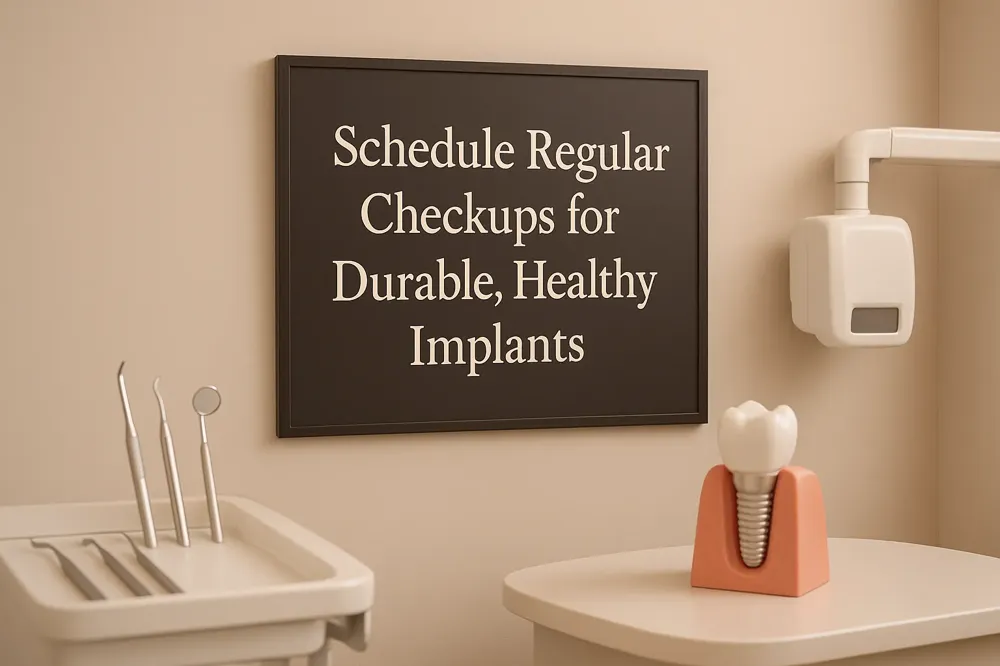
Frequency of Dental Checkups Post-Implant Placement
Patients receiving implant-supported dentures are advised to attend follow-up appointments every 3 to 6 months initially. This schedule allows dental professionals to closely monitor the healing process, check implant integration, and address any early complications.
Transition to Maintenance Visits Every 6 to 12 Months
Once the implants have stabilized and the patient maintains good oral health, the follow-up interval can be extended to every 6 to 12 months. This ongoing care supports sustained implant health over time.
Importance of Professional Cleaning and Evaluations
Professional cleaning during these visits is critical for removing biofilm and plaque that daily home care may miss. Dentists use specialized instruments safe for implants to minimize bacterial buildup, limit inflammation, and reduce risks of peri-implant diseases.
Comprehensive Dental Examinations
Dental examinations include visual inspections of the soft tissue surrounding implants, assessment of gum tissue health, and measurements of probing depths. Radiographic imaging such as X-rays is used to evaluate bone density and detect any bone loss or implant mobility early.
Preventing Complications Through Maintenance
Regular professional maintenance plays a vital role in preventing complications like peri-implantitis and bone loss. Early identification of inflammation or mechanical issues allows timely intervention, preserving both implant function and supporting jawbone integrity.
Adjustments, Relines, and Screw Replacement
During follow-ups, dentists may adjust the fit of the denture or perform relines to maintain comfort and function. Additionally, the screws securing implant-supported dentures may be replaced approximately every six months or as needed to ensure prosthesis stability and longevity.
By adhering to a structured follow-up and maintenance program, patients can maximize the lifespan and performance of their implant-supported dentures while supporting optimal oral health.
Protecting the Dentures and Supporting Oral Health

Why Soaking Dentures is Crucial
Soaking dentures overnight nightly in plain water or a denture cleanser prevents them from drying out and warping. This keeps the dentures pliable and maintains their shape, avoiding brittleness that could lead to cracks or breaks.
Avoiding Hot Water
Hot or boiling water should never be used to soak dentures as it can cause distortion of their shape. Always use lukewarm or cool water to protect the integrity of the dentures.
Dietary Considerations
Limiting consumption of hard or sticky foods reduces excessive wear and stress on implant-supported dentures. Additionally, avoiding deeply pigmented foods and beverages like coffee, red wine, and tobacco helps prevent staining and discoloration.
Use of Denture Adhesives
While adhesives can improve retention, overusing them—especially those containing zinc—can pose health risks. Patients should follow product instructions carefully and use adhesives moderately as a supplement, not a substitute, for proper denture fit.
Daily Cleaning of Oral Tissues
After removing dentures, it’s important to clean the gums, tongue, and palate thoroughly with a soft brush. This removes plaque and food debris, stimulates circulation, and helps maintain healthy oral soft tissues.
Preventing Plaque and Biofilm Around Implants
Using water flossers and interdental brushes effectively cleans hard-to-reach areas around implant abutments. These tools prevent biofilm buildup, reducing risks of gum inflammation and infection.
Adopting these practices enhances the longevity of implant-supported dentures and supports overall oral health.
Managing Discomfort and Recognizing Warning Signs

Post-Surgical Recovery Tips
After receiving Implant Supported Dentures Aftercare, rest is crucial to facilitate healing. Patients are advised to avoid strenuous activities and use cold compresses or ice packs intermittently to reduce swelling and discomfort. A soft-food diet including soups, mashed potatoes, smoothies, and yogurt helps minimize pressure on implant sites and supports gentle healing.
Common Causes of Discomfort
Discomfort often arises from ill-fitting dentures or gum irritation around implants. Poorly adjusted dentures can cause soreness, swelling, and sometimes pain. Infections such as peri-implantitis may develop if bacteria accumulate due to inadequate cleaning.
Strategies to Ease Pain
Warm saltwater rinses effectively reduce inflammation and promote healing during recovery. Over-the-counter NSAIDs, like ibuprofen, provide relief from mild to moderate pain. Ensuring a Proper denture fit importance is vital; if dentures feel loose or cause irritation, prompt dental evaluation is necessary.
Importance of Timely Dental Visits
Patients should seek immediate dental care if they experience persistent swelling, severe pain, fever, bleeding, infection, or looseness of dentures. Early intervention can prevent complications such as implant failure.
Role of Good Hygiene
Maintaining rigorous oral hygiene prevents biofilm buildup and peri-implant infections. Brushing twice daily with a Using soft-bristled toothbrushes with dentures, using antimicrobial mouthwash, and cleaning hard-to-reach areas with floss or a water flosser reduce bacterial risks, promoting long-term implant success.
Maximizing Longevity of Implant-Supported Dentures

Dietary Recommendations to Support Jawbone Health
Consuming foods rich in calcium and vitamin D is crucial for maintaining jawbone strength, which supports the stability of dental implants. A balanced diet helps ensure the bone remains dense and healthy, promoting long-term implant success.
Avoidance of Smoking and Harmful Behaviors
Smoking can adversely affect oral health and impair healing around implants. Additionally, behaviors such as clenching or grinding teeth accelerate wear and stress on dentures, potentially causing damage. Using protective appliances and avoiding these habits is advised.
Regular Monitoring of Denture Fit
Implant supported dentures should be checked regularly for signs of looseness, rocking, or uneven pressure. Early detection and adjustment can prevent discomfort and further damage, maintaining comfort and functionality.
Careful Handling to Prevent Damage
Handling dentures by the base rather than the teeth reduces stress and risk of breakage. Avoiding hard, sticky foods also prevents wear and extends the prosthesis lifespan.
Benefits of Professional Cleaning and Adjustment
Scheduling professional dental cleanings at least twice a year helps remove harmful bacteria and stains. Dentists also assess denture fit and implant health, allowing timely repairs or reline, which prolongs the life of the dentures.
Lifespan of Implants and Dentures
With proper care, dental implants can last a lifetime. The overdentures typically require replacement every 15 to 20 years, depending on maintenance and material wear. Adhering to daily hygiene routines and professional care optimizes durability and function.
Long-Term Success with Implant-Supported Dentures
Maintaining Implant-Supported Dentures for Lasting Benefits
Proper long-term care is essential to ensure the success and durability of implant-supported dentures. Patients should embrace daily cleaning routines using soft-bristled brushes and nonabrasive denture cleansers to prevent plaque and bacterial buildup, especially around the implants and attachment points.
Equally important are regular dental checkups every 3 to 6 months. These visits allow professionals to assess implant stability, fit, gum health, and perform necessary cleanings or adjustments to avoid complications.
Adherence to these combined daily and professional care practices supports enhanced comfort, improved chewing and speaking function, and helps preserve the natural aesthetics of the dentures.
By committing to these guidelines, patients can expect their implant-supported dentures to offer superior performance and greater oral health longevity.