Why Full Mouth Rehabilitation Matters
Full mouth rehabilitation is a comprehensive, personalized treatment plan that restores or replaces every tooth in the upper and lower arches, often using crowns, bridges, implants, veneers, and gum therapy. It is typically recommended for patients with multiple missing, failing, cracked, or severely worn teeth, chronic gum disease, or functional problems such as difficulty chewing, speaking, or a misaligned bite. By addressing these issues in a coordinated, phased approach, the rehabilitation restores normal bite mechanics, improves nutrition, and eliminates pain. The functional gains are matched by a dramatic boost in confidence—patients report being able to bite into apples or steak, smile without hesitation, and perform daily activities (including music or public speaking) with renewed self‑esteem. Modern sedation, digital imaging, and CAD/CAM technology make the process comfortable and precise, turning a once‑overwhelming problem into a lasting, life‑changing solution.
From Fragile Nubs to Confident Performances
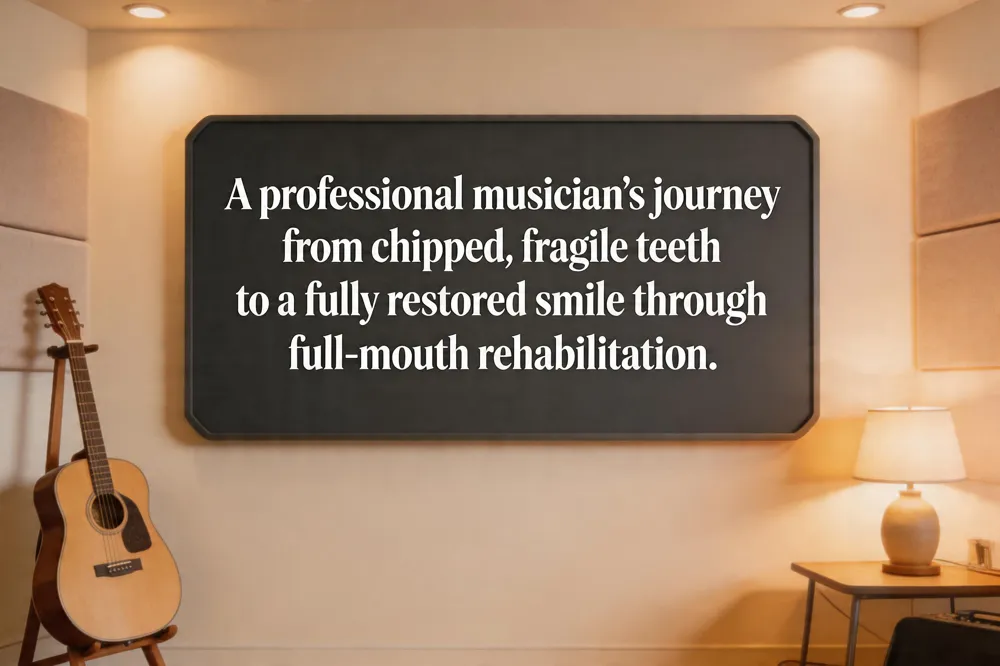 At Argyle Dental & Prosthodontics in Centennial, CO, a professional musician and music teacher arrived with chipped, capped, and infected teeth that left him with fragile tooth nubs. He could not bite into an apple, play his instrument comfortably, or smile on stage. Dr. Ava Khodakhast, a diplomate of the American Board of Prosthodontics, designed a step‑by‑step full‑mouth rehabilitation: first, compromised teeth were extracted; then, bone was reshaped to create a stable foundation; next, crowns and bridges restored the upper arch; and extensive gum care stabilized the lower teeth. The result was a “young again” feeling—he regained the ability to chew steak, perform without fear, and smile confidently.
How long does full mouth rehabilitation take? The timeline varies widely; simple crown‑and‑bridge cases may finish in a few months, while implant‑based plans often require 6–12 months to allow for surgery, healing, and prosthetic placement.
What are the negatives of full mouth dental implants? High cost (often $40‑100k), lengthy treatment time, strict candidacy criteria, and the need for lifelong maintenance are the primary drawbacks, with a modest risk of peri‑implantitis and future crown replacement.
Understanding the Timeline: What to Expect
 Full mouth rehabilitation follows a phased approach: first, stabilization of urgent issues (extractions, infection control), then restoration with crowns, bridges, implants, or grafts, and finally cosmetic finishing such as veneers or gum contouring. Appointments are spaced to allow laboratory turnaround (often 1‑2 weeks per restoration) and healing intervals—typically 2‑3 months after bone grafts before implant placement, and another 3‑6 months for osseointegration before the final prosthesis.
What are the worst days after oral surgery? The most uncomfortable period is the first three days. Day 1 brings throbbing as anesthesia fades; day 2 sees peak swelling; day 3 is often reported as the most painful. Symptoms then subside, with significant relief by the end of week one.
What is the most painful part of getting a dental implant? The postoperative recovery, especially the first 48‑72 hours, is usually the most painful phase. Swelling, throbbing, and pressure around the site peak during this time, then gradually ease as the tissue heals and the implant integrates.
Overall, patients can expect a gradual return to normal activities within a few weeks after the final restoration, with regular check‑ups to monitor healing milestones.
Implants and Dentures: How Many Are Needed?
 Full‑arch (full mouth) dentures are typically anchored by four to six implants per jaw. The popular All‑on‑4 protocol uses four strategically placed implants to support a fixed bridge, while a six‑implant approach adds two extra posts for added stability, especially in cases of lower bone density or extensive grafting. When a removable implant‑supported denture is chosen, as few as two to three implants can provide adequate retention, but fixed restorations generally rely on the four‑to‑six‑implant range.
Fixed vs. Removable Prostheses
Fixed implant‑supported bridges are permanently attached, eliminating the need for daily removal and offering a more natural feel. Removable dentures, on the other hand, snap onto the implants and can be taken out for cleaning, which may be preferable for patients with dexterity concerns or limited bone.
Bone Density Considerations
The lower jaw usually has denser bone, allowing four implants to provide sufficient support. The upper arch often requires five or six implants, particularly when sinus anatomy or reduced bone volume is present, to ensure long‑term stability.
Answering Common Questions
How many implants are needed for full mouth dentures? A full‑arch denture typically uses four to six implants per jaw; All‑on‑4 relies on four, while six‑implant protocols add extra posts for enhanced stability. Removable options may need only two to three implants.
What are the negatives of full mouth dental implants? High cost ($40,000‑$100,000+), lengthy treatment timelines (5‑12 months), strict candidacy criteria, and the need for diligent oral hygiene are major drawbacks. Risks include peri‑implantitis (≈12% of patients) and the eventual replacement of visible teeth every 10‑15 years.
Financing and Accessibility in Midland, TX
 Full‑mouth rehabilitation is an extensive, multi‑step treatment that can range from $20,000 to $60,000 or more, depending on the number of crowns, bridges, implants and bone‑grafting procedures required. Most dental insurance plans cover a portion of the restorative work—typically 50‑80 % of crowns, bridges and implant surgery—while the remaining balance is billed to the patient. To bridge the gap, many Midland practices offer flexible financing options, including CareCredit, in‑house payment plans, and zero‑interest promotional periods that allow patients to spread costs over 12 to 36 months.
Local providers such as Dr. Ashley E. Burns, DDS in Midland, Argyle Dental & Prosthodontics in Centennial, CO (serving nearby patients), and other regional specialists routinely work with patients to create personalized financial solutions. These offices often provide free consultations, detailed cost estimates, and assistance with insurance verification, making Full‑mouth rehabilitation more attainable for those seeking to restore function, aesthetics, and confidence without compromising their budget.
Post‑Treatment Care and Long‑Term Success
 After completing a full‑mouth rehabilitation, a soft‑food diet (yogurt, smoothies, mashed potatoes, scrambled eggs, and applesauce) for the first 1‑2 weeks protects healing implants, crowns, and graft sites while minimizing pain and swelling. Patients should then resume meticulous oral hygiene—brushing twice daily with a soft‑bristled brush, flossing once a day, and using an antimicrobial mouthwash—to keep bacteria away from surgical sites and newly placed restorations. Regular six‑month check‑ups are essential for evaluating the integrity of crowns, bridges, and implants; during these visits the dentist can assess bite stability, adjust occlusion, and prescribe night‑guards to guard against bruxism that could fracture restorations. Monitoring for peri‑implantitis—signs of redness, swelling, bleeding, or radiographic bone loss—is critical, as early intervention prevents implant failure.
Is restorative dentistry worth it? Absolutely. It repairs damage before it escalates into gum disease, tooth loss, or systemic health issues, preserving function, aesthetics, and confidence while often avoiding more costly, invasive procedures later.
What is the 3‑3‑3 rule in dentistry? It advises taking three 200 mg ibuprofen tablets every three hours, for a maximum of three days, to control inflammation and post‑operative pain.
Your Journey to a Restored Smile
If you’re experiencing cracked, missing, or worn‑down teeth, the first step toward reclaiming your confidence is a comprehensive dental exam. Dr. Ashley E. Burns, DDS in Midland, Texas, offers a thorough evaluation that includes digital imaging, 3‑D scans, and a personalized treatment plan tailored to your functional and aesthetic goals. To schedule your appointment, call (254) 666‑1686 or visit the practice’s website for an online booking option. During the consultation, the team will discuss financing solutions—such as CareCredit, dental insurance coordination, and flexible payment plans—to make full‑mouth rehabilitation affordable. Together you’ll prioritize the necessary procedures, whether they involve crowns, implants, or gum therapy, and map out a phased timeline that fits your schedule. Taking these steps now puts you on the path to a healthier bite, a brighter smile, and a renewed quality of life.