Why Simple Habits Matter
Good oral health is not an isolated concern; it mirrors and influences overall health. Plaque‑driven gum disease can increase inflammation, contributing to heart disease, stroke, diabetes complications, and even adverse pregnancy outcomes. Across the lifespan, adults face recurring challenges: cavities, gum disease, tooth loss, and heightened oral‑cancer risk, especially after age 40, during pregnancy, or when chronic conditions such as diabetes or arthritis are present. Daily choices shape these outcomes. Brushing twice a day with fluoride toothpaste, flossing each day, and using a soft‑bristled brush remove plaque before it hardens. Limiting sugary and acidic foods, staying well‑hydrated, and avoiding tobacco or excessive alcohol reduce acid attacks and cancer risk. Regular dental visits enable early detection of decay, gum disease, and oral cancer, reinforcing that simple, consistent habits are the foundation for a healthy mouth and a healthier body.
Daily Oral Hygiene Routine
Daily Oral Hygiene Routine Summary
| Step | How to Perform | Key Details |
|---|---|---|
| Brush | Soft‑bristled brush, 45° angle to gumline, gentle circular motions | 2 minutes, cover all surfaces, fluoride toothpaste; ** rinsing immediately after |
| Floss | C‑shaped motion, slide gently below gumline | Daily; can use interdental brushes or water flosser if dexterity limited |
| Mouthwash | Alcohol‑free antimicrobial, 30‑60 seconds | Reduces bacterial load, freshens breath |
| Tongue Clean | Scraper or tongue‑cleaning edge of brush | Removes microbes that cause bad breath |
| Lifestyle | Stay hydrated, limit sugary/acidic foods, adequate calcium/vitamin D | Supports enamel remineralization and saliva flow |
| Professional Care | Dental check‑up & cleaning at least yearly (ideally twice) | Early detection & removal of hardened plaque |
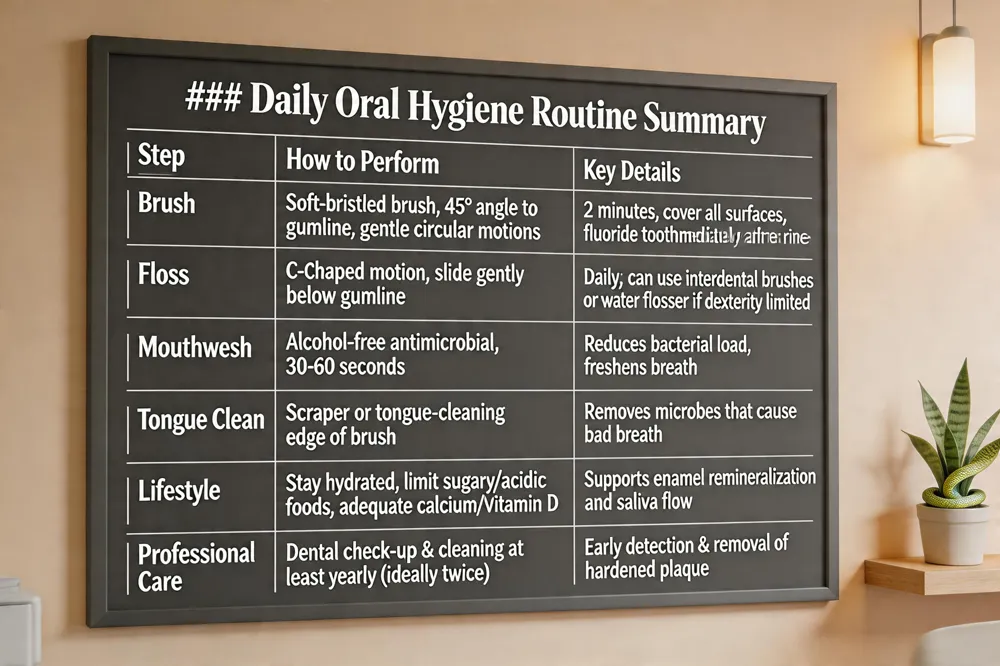 A solid daily oral‑care routine begins with proper brushing technique and timing. Use a soft‑bristled brush, place the bristles at a 45‑degree angle to the gumline, and employ gentle circular motions for two minutes, covering all surfaces. Fluoride toothpaste strengthens enamel and helps neutralize acids; avoid rinsing with water immediately after brushing so the fluoride can remain on the teeth.
Next, interdental cleaning removes plaque that a brush cannot reach. Floss daily (or use interdental brushes or a water flosser if dexterity is limited) with a C‑shaped motion, sliding gently below the gumline to disrupt biofilm and prevent gum inflammation.
After flossing, rinse with an alcohol‑free antimicrobial mouthwash for 30‑60 seconds. This step reduces bacterial load, freshens breath, and reaches areas missed by brushing and flossing. Follow the rinse by cleaning the tongue with a scraper or the brush’s tongue‑cleaning edge to eliminate lingering microbes that cause bad breath and contribute to plaque.
Oral hygiene routine order: brush → floss → mouthwash → tongue cleaning. This sequence maximizes plaque removal and promotes optimal oral health.
Naturally improve oral hygiene: stay well‑hydrated, limit sugary and acidic foods, eat a nutrient‑rich diet (calcium, vitamin D, vitamin C), and avoid tobacco and excessive alcohol. Regular dental visits for professional cleanings and early detection complete the home‑care regimen.
Nutrition & Lifestyle for Healthy Teeth
Nutrition & Lifestyle Essentials
| Nutrient | Primary Food Sources | Oral‑Health Benefit |
|---|---|---|
| Calcium | Dairy, leafy greens, fortified plant milks, almonds | Strengthens enamel and teeth |
| Vitamin D | Fatty fish, fortified eggs, sunlight exposure | Enhances calcium absorption |
| Phosphorus | Meat, dairy, nuts, beans | Works with calcium for remineralization |
| Vitamin C | Citrus, strawberries, bell peppers | Supports gum health and collagen synthesis |
| Water (fluoridated) | Tap water, fluoridated bottled water | Continuous low‑level fluoride exposure |
| Sugar‑Free Gum | Xylitol‑sweetened gum | Stimulates saliva, neutralizes acids |
| Hydration | Water throughout the day | Keeps saliva flow, washes away debris |
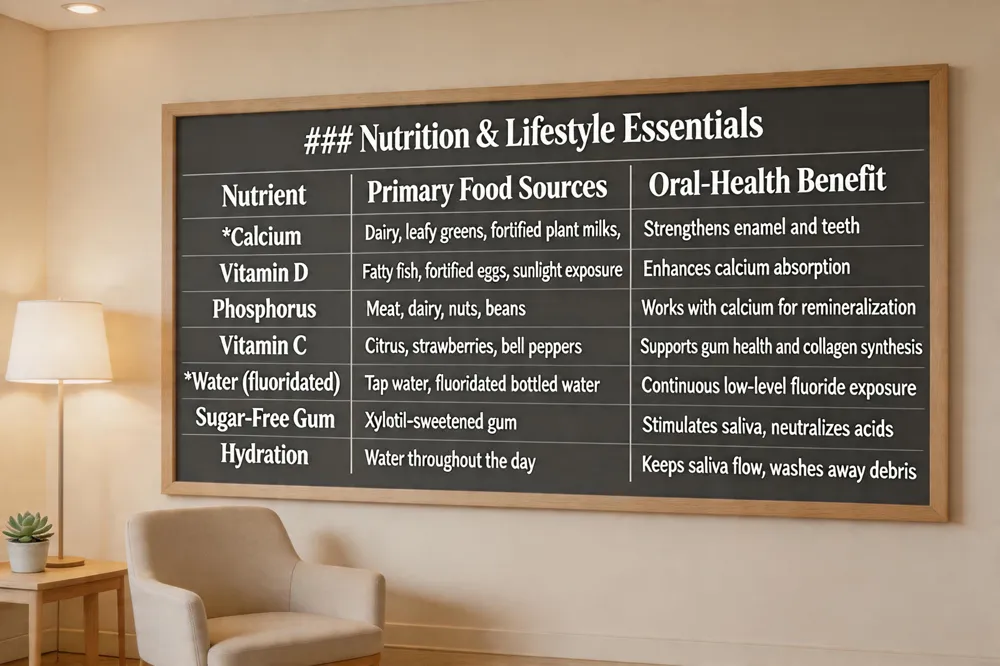 A balanced diet rich in calcium, vitamin D, and phosphorus cornerstone dairy, leafy greens, nuts, and fish, supports enamel remineralization and strong gums. Limiting sugary and acidic foods and drinks reduces fermentable carbohydrates that fuel plaque‑forming bacteria and protect enamel from erosion. Fluoridated tap water and fluoride toothpaste provide continuous low‑level fluoride exposure, strengthening enamel and preventing decay. Staying well‑hydrated and chewing sugar‑free gum stimulate saliva, which naturally washes away food debris, neutralizes acids, and supplies calcium and phosphate for remineralization.
10 ways to keep your teeth healthy
- Brush twice daily with fluoride toothpaste, angling bristles toward the gumline.
- Floss daily and use an antimicrobial mouthwash.
- Limit sugary and acidic foods and stay hydrated with water.
- Eat a calcium‑ and vitamin D‑rich diet.
- Avoid tobacco, replace your toothbrush every 3‑4 months, and see your dentist regularly.
How to keep teeth healthy naturally Maintain consistent brushing and flossing, choose calcium‑ and vitamin D‑rich foods, stay hydrated, chewing sugar‑free gum, consider weekly oil pulling, and avoid tobacco.
What are the five good oral habits?
- Brush twice a day with fluoride toothpaste.
- Floss daily.
- Use an antimicrobial mouthwash or fluoride mouthwash.
- Eat a balanced, low‑sugar diet.
- Schedule regular dental check‑ups.
5 ways to take care of your teeth
- Brush twice a day with fluoride toothpaste.
- Floss daily.
- Rinse with an antimicrobial mouthwash.
- Follow a calcium‑rich, low‑sugar diet.
- Visit your dentist regularly.
Teeth care tips at home Brush for two minutes, floss daily, rinse with fluoride mouthwash, clean your tongue, limit sugary/acidic foods, sip water, and schedule professional cleanings.
Managing Risk Factors
Key Modifiable Risk Factors & Mitigation
| Risk Factor | Mitigation Strategy | Expected Benefit |
|---|---|---|
| Tobacco & Alcohol | Quit smoking, limit alcohol intake | Reduces gum disease, oral‑cancer risk |
| HPV | Get HPV vaccination | Lowers risk of oropharyngeal cancers |
| Diabetes | Tight glycemic control, regular dental cleanings | Decreases plaque‑induced inflammation |
| Dry Mouth | Increase water intake, chew sugar‑free gum, avoid tobacco/alcohol | Improves saliva flow, reduces cavity risk |
| Pregnancy | Brush twice daily, floss, schedule dental visit before delivery | Controls hormonal gum inflammation |
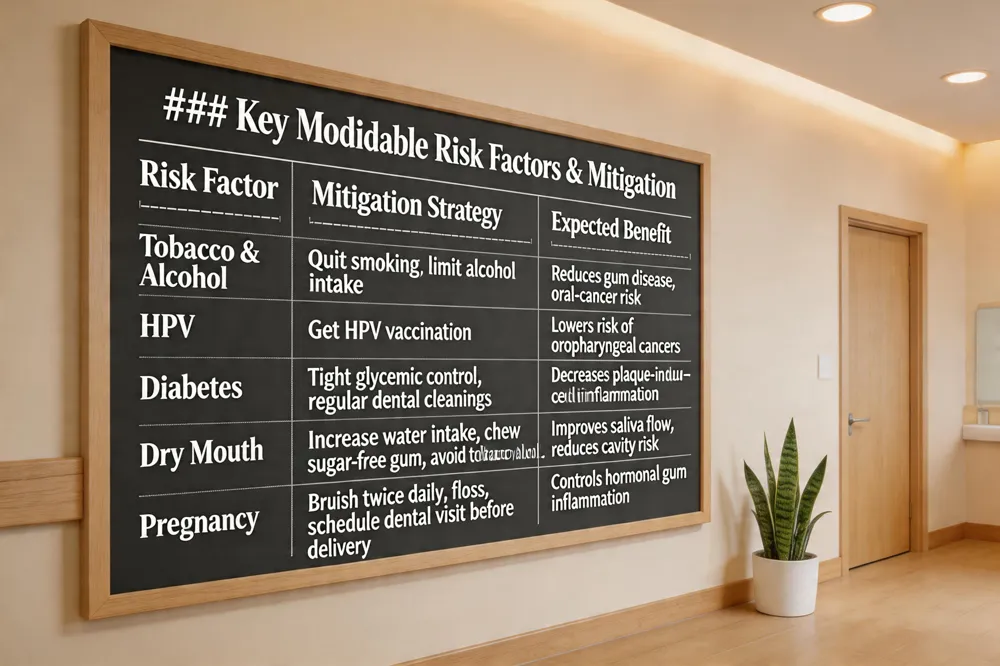 Adults face several modifiable risk factors that can undermine oral health. Tobacco and alcohol use – Smoking and heavy drinking dramatically increase gum disease, tooth loss, and oral‑cancer risk; quitting and limiting alcohol restore gum healing and lower cancer incidence. HPV vaccination – Receiving the HPV vaccine reduces the chance of HPV‑related throat and oropharyngeal cancers, a key preventive step for adults of all ages. Diabetes and chronic disease management – Poor glycemic control fuels plaque‑induced inflammation; diligent blood‑sugar management, regular dental cleanings, and antimicrobial mouthwash help keep gingivitis at bay. Dry mouth and hydration – Medications and reduced saliva raise cavity risk; drinking plenty of water, chewing sugar‑free gum, and avoiding tobacco/alcohol keep the mouth moist and enamel protected. Pregnancy considerations – Hormonal shifts heighten gum inflammation; pregnant adults should brush twice daily with fluoride toothpaste, floss daily, and schedule a dental visit before delivery to protect maternal and infant health.
Oral health tips for adults – Brush twice a day for at least two minutes with a soft‑bristled brush angled 45° toward the gum line, floss daily, limit sugary and acidic foods, stay well‑hydrated, and see a dentist at least once a year for screening and cleaning.
How to improve gum health quickly – Adopt the brushing technique above, use an antimicrobial mouthwash, replace sugary snacks with anti‑inflammatory foods, quit smoking, and schedule a professional scaling to reduce inflammation promptly.
Professional Care & Resources
Recommended Professional Care
| Service | Frequency | Primary Purpose |
|---|---|---|
| Dental Exam & Cleaning | At least once a year (ideally twice) | Early detection of cavities, gum disease, oral cancer |
| Fluoride Treatment | In‑office varnish or sealants as needed | Strengthens enamel, prevents decay |
| Sealants | Applied to molar pits/fissures, especially in high‑risk patients | Physical barrier against bacterial invasion |
| Custom Mouthguard | For sports participants | Prevents dental trauma |
| Patient Education PDFs | Available on patient resources page | Empowers self‑care and caregiver guidance |
 Regular dental visits are the cornerstone of oral health. The CDC advises adults to see a dentist at least once a year for early detection of cavities, gum disease, and oral cancer, while many patients benefit from twice‑yearly cleanings to remove hardened plaque and apply preventive treatments. Fluoride treatments—whether through fluoridated tap water, fluoride toothpaste, or in‑office varnish—strengthen enamel and lower decay risk, and sealants on molars provide an extra barrier for high‑risk pits and fissures.
For those who play contact sports or engage in high‑impact activities, a custom‑fitted mouthguard protects teeth and soft tissues from trauma; the CDC notes that wearing a mouthguard dramatically reduces dental injuries. Patient education materials, such as printable PDFs on oral‑hygiene routines, flossing techniques, and nursing oral‑care procedures, empower individuals and caregivers to maintain daily plaque control.
How do I improve my oral health? Brush twice daily with a fluoride toothpaste and angle bristles 45° toward the gumline, floss or use interdental brushes each day, limit sugary foods, stay hydrated, and schedule regular dental check‑ups. Oral hygiene PDF – download the free, step‑by‑step guide from our website’s Patient Resources page. Oral care Nursing procedure pdf – a systematic protocol outlining assessment, cleaning, fluoride application, and documentation is available for staff and caregivers. Types of oral hygiene – mechanical (brushing, flossing), chemical (antimicrobial or fluoride rinses), and professional care (cleanings, sealants, fluoride varnish) work together to prevent disease. Is Healthy Mouth discontinued? No; the product line remains on the VOHC Accepted Products list and is expected to return to market shortly.
Special Populations & Age‑Specific Tips
Tailored Oral‑Care Guidelines
| Population | Specific Recommendations |
|---|---|
| Pregnant Women | Brush & floss twice daily; schedule dental visit before delivery |
| Older Adults / Denture Wearers | Clean dentures daily, remove at night, stay hydrated, consider adaptive tools |
| Children | Begin brushing at first tooth, pea‑sized fluoride toothpaste, supervise until age 7‑8 |
| Chronic Conditions (e.g., diabetes, arthritis) | Tight plaque control, more frequent dental visits, balanced nutrition |
| General | Watch for bad breath, visible plaque, bleeding/swollen gums, cavities, sensitivity |
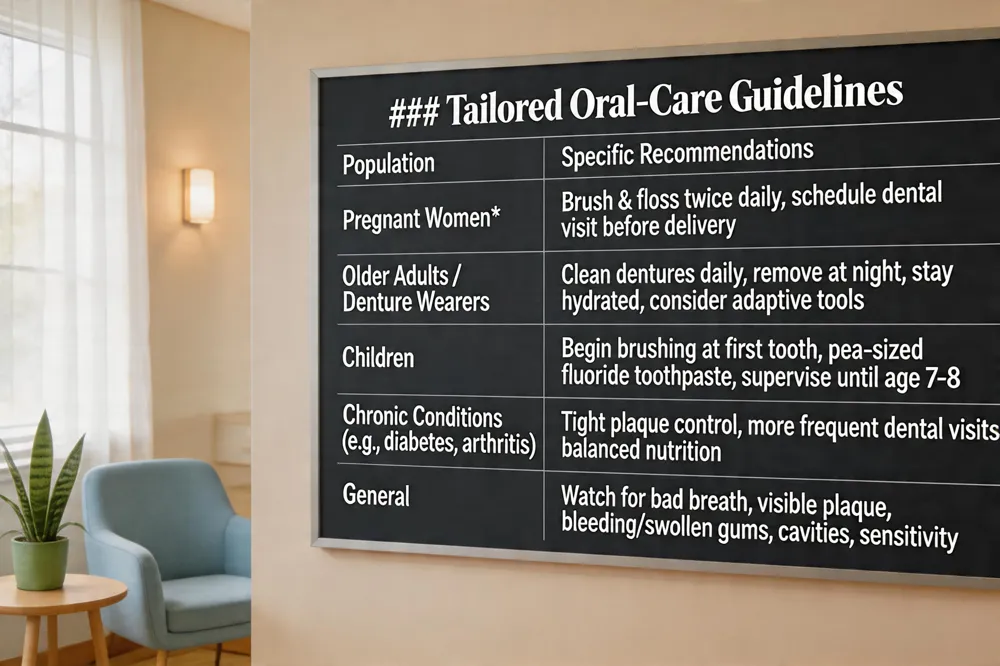 Oral care is the comprehensive set of daily habits and professional services that keep the teeth, gums, and entire oral cavity healthy. It includes brushing twice daily with fluoride toothpaste, daily flossing or interdental cleaning, a regular dental check‑ups to remove plaque, prevent cavities, and avoid gum disease.
Pregnant women should brush twice daily, floss daily, and schedule a dental visit before delivery; hormonal changes increase gum inflammation and the risk of cavities that can affect both mother and baby.
Older adults and denture care: clean dentures daily, remove them at night, stay well‑hydrated, and consider caregiver assistance or adaptive tools for limited dexterity; dry mouth from medications can be mitigated by sugar‑free gum and water.
Children and supervised brushing: begin brushing as soon as the first tooth appears, use a pea‑sized fluoride toothpaste, and supervise until they can brush properly (usually age 7–8) to establish lifelong habits.
Patients with chronic conditions (diabetes, arthritis, heart disease) need tighter plaque control, more frequent dental visits, and good nutrition; effective diabetes management lowers gum disease risk.
Signs of poor oral hygiene include bad breath, visible plaque, bleeding or swollen gums, cavities, and tooth sensitivity. Maintaining good oral hygiene daily removes plaque, supports speech, chewing, and confidence, and reduces systemic disease risk. The five basics of oral health are brushing, flossing, proper nutrition, regular dental visits, and healthy habits such as not smoking.
Quick Answers & FAQs
Quick FAQ Highlights
| Question | Brief Answer |
|---|---|
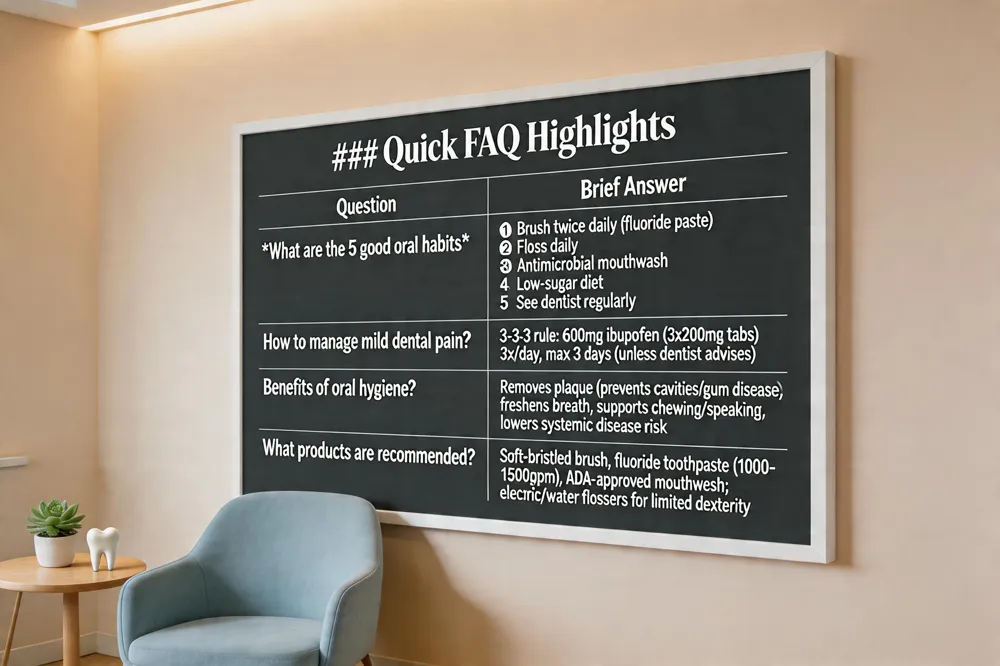
| What are the 5 good oral habits? | 1️⃣ Brush twice daily with fluoride toothpaste 2️⃣ Floss daily 3️⃣ Use antimicrobial/fluoride mouthwash 4️⃣ Eat a low‑sugar, balanced diet 5️⃣ See dentist regularly |
| How to manage mild dental pain? | 3‑3‑3 rule: 600 mg ibuprofen (three 200 mg tablets) three times a day, not exceeding three days, unless dentist advises otherwise |
| Benefits of oral hygiene? | Removes plaque (prevents cavities & gum disease), freshens breath, supports chewing/tasting/speaking, lowers systemic disease risk |
| What products are recommended? | Soft‑bristled brush, fluoride toothpaste (1,000‑1,500 ppm), ADA‑approved antimicrobial mouthwash; electric brushes/water flossers for limited dexterity |
 Common product inquiries
Adults benefit most from a soft‑bristled toothbrush, fluoride toothpaste (1,000‑1,500 ppm), and an ADA‑approved antimicrobial mouthwash. Electric brushes and water flossers are especially helpful for those with limited dexterity or braces.
Dental pain management
For mild to moderate pain, the 3‑3‑3 rule is often recommended: take a total of 600 mg ibuprofen (three 200 mg tablets) three times daily, but not for more than three days, unless directed otherwise by a dentist. This regimen reduces inflammation and provides relief while you await professional care.
General oral‑health FAQs
Benefits of oral hygiene: Good oral hygiene removes dental plaque, the primary cause of cavities and gum disease, helping you keep your teeth strong and healthy. Brushing twice daily with fluoride toothpaste and flossing daily protects enamel, prevents decay, and reduces bad breath. Clean teeth and gums also support proper chewing, tasting, and speaking, allowing you to enjoy nutritious foods and communicate clearly. Consistent oral care has been linked to lower risks of systemic conditions such as heart disease, diabetes, and certain infections, promoting overall well‑being.
What is the 3‑3‑3 rule in dentistry?: It refers to taking 600 mg of ibuprofen (usually three 200 mg tablets) three times a day for no more than three days to manage dental pain and inflammation.
Putting It All Together
A healthy smile is built on a handful of evidence‑based habits. Start by brushing twice daily with a soft‑bristled brush and fluoride toothpaste, flossing every day, and limiting sugary or acidic foods and drinks. Stay well‑hydrated, chew sugar‑free gum when appropriate, and choose calcium‑rich, vitamin‑D‑rich foods to support enamel remineralization. Avoid tobacco and excessive alcohol, and consider the HPV vaccine to lower oral‑cancer risk. Regular dental visits—at least once a year for most adults and twice a year for higher‑risk patients—allow early detection of cavities, gum disease, and oral cancer, while professional cleanings keep plaque under control. Our clinic offers a suite of patient resources, including dietary guides, smoking‑cessation support, and personalized oral‑care kits. We invite you to schedule a personalized consultation so we can tailor a prevention plan that fits your lifestyle and health goals. Take the next step toward lifelong oral health today.