Introducing Implant‑Supported Dentures
Implant‑supported dentures are prosthetic teeth anchored to titanium implants that are surgically placed into the jawbone. The implants act as artificial tooth roots, fusing with bone through osseointegration, and provide a stable foundation for a removable overdenture or a fixed hybrid denture. Compared with traditional tissue‑supported dentures, they eliminate slipping, improve chewing efficiency, preserve jawbone height, and restore a natural appearance without the need for adhesives. Treatment options include bar‑retained or ball‑retained removable overdentures and fixed hybrid prostheses, often using two to six implants per arch; the All‑on‑4® technique can support an entire arch with just four implants. Ideal candidates have sufficient bone density, good overall health, and are committed to regular oral hygiene—bone grafting may be required when bone volume is limited.
What Implant‑Supported Dentures Are and Why They Matter
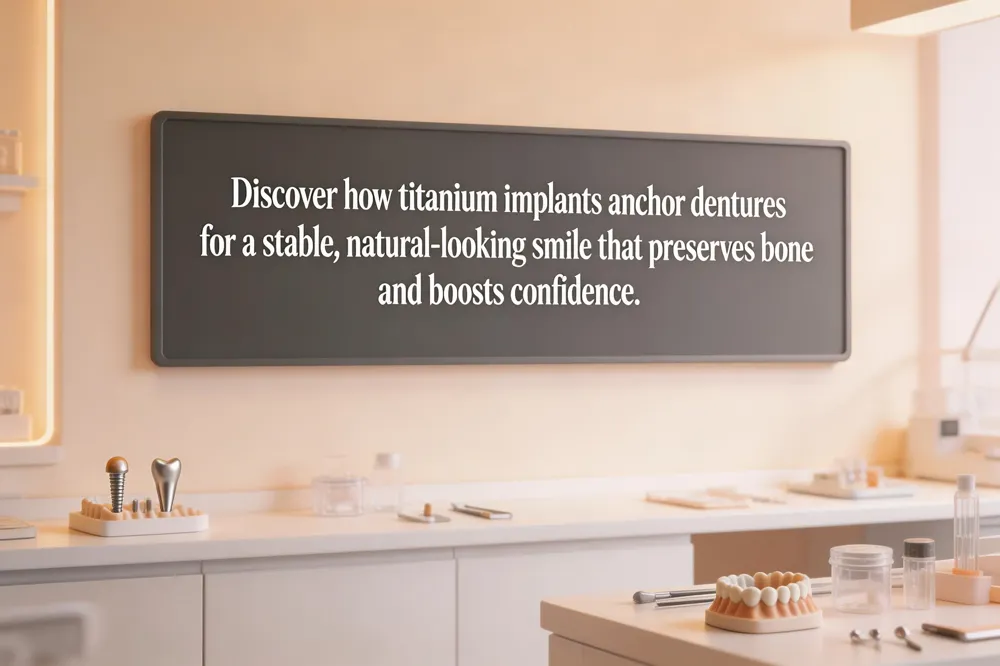 Implant‑supported dentures are prosthetic teeth that are anchored to titanium dental implants surgically placed into the jawbone. Once the implants fuse with bone through osseointegration, they act as artificial tooth roots providing a stable foundation that eliminates the slipping and wobbling common with traditional dentures. Two main attachment designs are used: bar‑retained systems, which connect the denture to a thin metal bar cemented across several implants, and ball‑retained (or locator) systems, which employ individual ball‑shaped attachments for each implant. Both designs offer secure, removable or fixed options while allowing easy cleaning.
Because the implants stimulate the jawbone, they help preserve bone density and maintain facial structure, preventing the bone loss and facial “sunken” appearance that often follows extensive tooth loss. This preservation supports healthier gums and a more youthful profile.
Clinically, implant‑supported dentures dramatically improve chewing efficiency, speech clarity, and overall confidence. Patients can enjoy a broader range of foods without fear of denture movement, speak more clearly, and experience a natural‑looking smile that enhances self‑esteem. The combined benefits of stability, bone preservation, and functional improvement make implant‑supported dentures a compelling choice for those seeking a durable, comfortable, and aesthetically pleasing tooth‑replacement solution.
Step‑by‑Step Treatment Process
 A comprehensive evaluation begins with a detailed medical history, intra‑oral exam and 3‑D imaging (CBCT) to assess bone density, nerve and sinus anatomy, and to design a personalized plan. If the jaw lacks sufficient bone, a graft or sinus lift may be performed before implant placement.
During surgery, titanium implants are placed into the healed bone under local anesthesia. The number of implants varies—two to six per arch for removable overdentures, four to six for a fixed prosthesis such as All‑on‑4. After placement, a healing cap is fitted and the site is allowed to osseointegrate for three to six months, during which the bone fuses with the implant and provides natural‑root stimulation that prevents resorption.
Once integration is complete, an abutment is attached to each implant. Final impressions are taken, and a custom denture (removable snap‑on or fixed hybrid) is fabricated in the lab. The prosthesis is then secured to the abutments using bar‑ or ball‑type attachments, and minor adjustments are made for optimal fit, speech and chewing.
Dental implant process step by step – consultation → imaging → extraction/grafting (if needed) → implant placement → 3‑6‑month osseointegration → abutment placement → denture fabrication → final attachment.
Implant‑supported denture cost near me – in Midland, TX, prices range from $3,000 to $7,000 per arch, depending on implant count, grafting needs and prosthetic material; many offices offer financing and partial insurance coverage.
Step‑by‑step dental implant procedure photos – pre‑op CBCT scans, extraction and graft photos, implant placement images, temporary crown snapshots, healed implant photos, abutment placement, and final denture in function provide patients a clear visual roadmap of the transformation.
Types, Comparisons, and Clinical Choices
 Implant‑supported dentures come in two basic designs: removable “snap‑on” overdentures that patients can take out for cleaning, and fixed hybrid prostheses that are permanently attached and require professional removal. Removable options often use bar‑retained (thin metal bar), ball‑retained (ball‑shaped connectors), or locator attachments; bar systems employ a thin metal bar that clips to the denture, ball‑retained (ball‑shaped connectors) use individual spherical connectors, and locators provide low‑profile plastic caps that snap into place.
When comparing All‑on‑4 with traditional multi‑implant solutions, All‑on‑4 uses four strategically angled implants to support a fixed full‑arch prosthesis, often allowing same‑day loading and reducing the need for bone grafts. Traditional multi‑implant dentures typically use five to eight implants per arch for a removable overdenture, offering a customizable fit but requiring more surgical sites and appointments.
Implant‑supported dentures vs. implant‑retained dentures – Implant‑supported dentures are fully anchored to six to eight (or more) implants, transferring all chewing forces to the bone for a bite that feels closest to natural teeth. Implant‑retained dentures rely on two to four implants that clip onto the denture, sharing load with gum tissue and remaining removable. The former offers greater stability and permanence but at higher cost; the latter is a cost‑effective option with slightly less bite force.
Implant‑supported dentures vs. traditional fixed implants – Overdentures combine a few implants with a removable prosthesis, preserving bone while allowing nightly cleaning. Fixed implants replace each tooth or an entire arch with permanent crowns or bridges, delivering the most natural function but requiring more implants, higher expense, and no daily removal.
What are the three types of dental implants? The primary types are endosteal (placed directly into the jawbone), subperiosteal (situated on top of the bone beneath the gum), and zygomatic (anchored in the cheekbone for severe upper‑jaw bone loss). Each type is selected based on bone quantity, health, and restorative goals.
Cost, Financing, and Insurance Considerations
 Dental implant cost – A single titanium implant in the United States averages $4,150 (range $3,700‑$6,200) and includes the post, abutment and custom crown. Prices rise with additional implants, bone grafts, or premium materials such as zirconia.
Cost of fixed implant dentures – Fixed (hybrid) dentures run $8,000‑$13,000 per arch (average ≈ $8,100). A full‑mouth restoration can reach $15,000‑$30,000 depending on implant number and material quality. Some offices list fixed‑secure solutions starting at $12,995.
Implant‑supported denture cost – Removable overdentures or snap‑in dentures cost $5,700‑$13,000 per arch (average ≈ $8,100). Single‑tooth or snap‑in solutions may be $2,700‑$5,995, while comprehensive all‑in‑one dentures begin around $12,995.
Insurance coverage and Medicaid acceptance – Most dental plans treat implant‑supported dentures as a major prosthetic and cover 20‑50 % of fees; out‑of‑pocket costs often fall to $4,000‑$7,000 per arch. Many Midland practices (e.g., Familia Dental, Midland Dentistry 4 Kids) accept Medicaid and Tricare, though verification is advised.
Financing options and membership discounts – Practices frequently offer CareCredit, CareCare or Low interest‑rate plans, and membership programs that reduce prosthetic fees by 5‑15 %. Transparent, itemized estimates and flexible payment schedules help patients of a sustainable, long‑term smile solution.
Patient‑Centred FAQs and Practical Guidance
 Candidacy, bone grafting, smoking & health – Ideal candidates have adequate jawbone density, good overall health, and are non‑smokers. Bone grafting may be required if bone volume is insufficient. Uncontrolled diabetes, recent chemotherapy, or bisphosphonate use can delay treatment.
Dietary adjustments & eating steak – After healing (3‑6 months), steak can be enjoyed in small pieces, chewing on the side opposite the restoration. Soft proteins are recommended during early healing.
Walk‑in & emergency care in Midland – Dr. Ashley E. Burns, DDS, offers convenient walk‑in appointments for urgent issues such as severe toothaches, broken teeth, or gum infections. Same‑day emergency dentistry is available at her Midland office.
Cleaning & maintenance of permanent implant dentures – Brush the denture and surrounding gums twice daily with a soft‑bristled brush and non‑abrasive paste. Use interdental brushes or a water flosser around implant sites. Removable dentures should be soaked nightly in a denture‑cleanser. Schedule professional cleanings every three months.
Common problems with snap‑in dentures – Attachments can wear after 6‑12 months, requiring replacement. Cracks or chips may occur if dropped. Poor hygiene can cause plaque buildup, gum inflammation, or peri‑implantitis.
Worst part of getting a dental implant – The high cost, multiple visits, and the healing period with possible soreness are the most challenging aspects. Complications such as infection or nerve irritation, though rare, add stress.
Family & best dentist in Midland – Dr. Ashley E. Burns, DDS, is a trusted family dentist offering comprehensive preventive, restorative, and implant services with patient‑centered care. She provides walk‑in emergency appointments and is widely regarded as the best dentist in Midland, TX.
Your Path to a Stable, Natural Smile
Implant‑supported dentures give you the stability of fixed teeth while preserving jawbone health. Whether you choose a removable snap‑on overdenture or a fixed hybrid prosthesis, the titanium implants fuse with bone through osseointegration, eliminating the need for adhesives, preventing bone loss, and restoring chewing power, speech clarity, and confidence. Most patients benefit from two‑to‑six implants per arch, with bar‑retained or ball‑retained attachment options tailored to bone volume and lifestyle. If you have adequate bone density—or can be safely grafted—Dr. Jonathan Burns can create a personalized treatment plan using digital imaging and minimally invasive techniques. Financing options, CareCredit, and many dental‑insurance plans are accepted to make care affordable. Schedule a consultation today to discuss your candidacy, explore the best denture design for you, and learn how to finance your new, lasting smile.