Welcome to Your Comprehensive Dental Visit
Why a comprehensive exam matters: An evaluation detects cavities, gum disease, oral cancer and even systemic conditions such as diabetes or heart disease before they become costly or painful. Early detection preserves natural teeth, reduces treatment complexity, and supports health.
Overall flow of the appointment: The visit begins with a review of medical and dental history, followed by a professional cleaning that removes plaque and tartar. The dentist then performs a tooth‑by‑tooth visual inspection, digital X‑rays, periodontal probing, bite and TMJ assessment, and a routine oral‑cancer screen. Findings are discussed, and a personalized preventive plan is created.
Patient‑centered approach at Dr. Ashley E. Burns, DDS: Dr. Burns uses digital imaging, intra‑oral cameras and communication to explain each step, tailors oral‑hygiene advice to the patient’s lifestyle, and offers financing options, care remains affordable.
Step‑by‑Step Walkthrough of the Exam
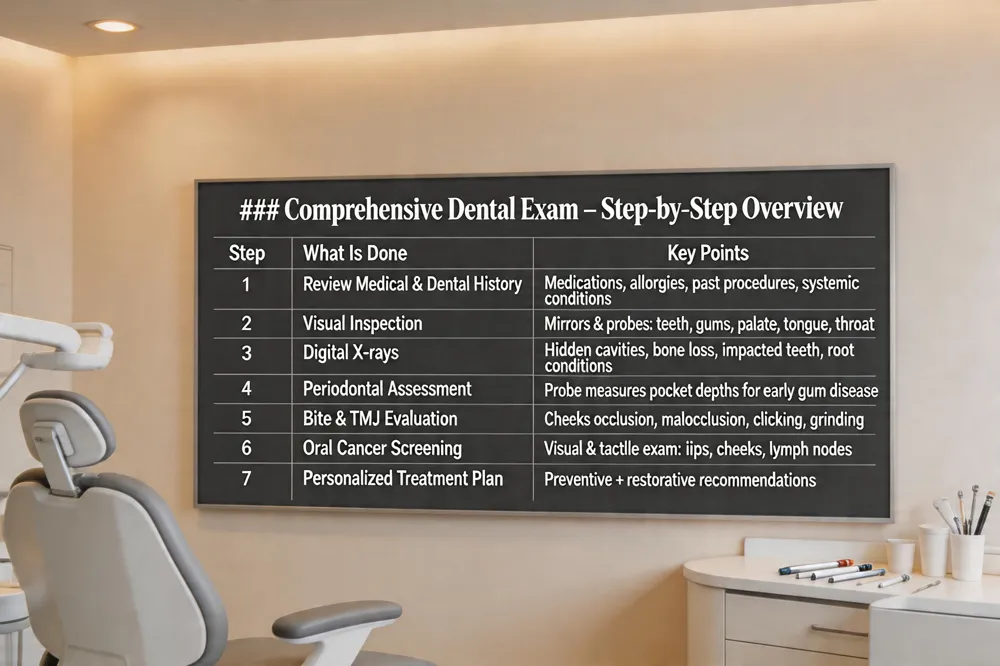
Comprehensive Dental Exam – Step‑by‑Step Overview
| Step | What Is Done | Key Points |
|---|---|---|
| 1 | Review Medical & Dental History | Medications, allergies, past procedures, systemic conditions |
| 2 | Visual Inspection | Mirrors & probes used to examine teeth, restorations, gums, palate, tongue, throat, neck |
| 3 | Digital X‑rays (bitewings, periapical, panoramic, CBCT) | Detect hidden cavities, bone loss, impacted teeth, root conditions |
| 4 | Periodontal Assessment | Probe measures pocket depths around each tooth for early gum disease |
| 5 | Bite & TMJ Evaluation | Checks occlusion, malocclusion, clicking, grinding |
| 6 | Oral Cancer Screening | Visual & tactile exam of lips, cheeks, tongue, floor of mouth, lymph nodes |
| 7 | Personalized Treatment Plan | Preventive (fluoride, sealants) + restorative (fillings, crowns) recommendations |
 A comprehensive dental examcomprehensive dental exam begins with a thorough review of your medical and dental historymedical and dental history. The dentist records any medications, illnesses, allergies, and past procedures that could influence oral health, a practice standard in U.S. offices such as Schultz Family DentalSchultz Family Dental and Ashley E. Burns, DDSAshley E. Burns, DDS. Next comes a detailed visual inspectionvisual inspection of every tooth, existing restorations, gums, palate, tongue, throat, and neck. Using a mirror and probe, the clinician looks for decay, cracks, gum inflammation, recession, and any abnormal soft‑tissue findings.
Digital X‑raysDigital X‑rays (bitewings, periapical, panoramic, or 3‑D cone‑beam) are taken as needed. These low‑radiation images reveal hidden cavities, bone loss, impacted teeth, and the condition of tooth roots—detecting problems the naked eye cannot see. The periodontal assessmentperiodontal assessment follows, where a probe measures pocket depths around each tooth to identify early gum disease. Simultaneously, the dentist evaluates bite (occlusion) and TMJ function, checking for malocclusion, clicking, or grinding.
An oral cancer screeningoral cancer screening is performed by visual and tactile examination of the lips, cheeks, tongue, floor of the mouth, and neck lymph nodes. Early detection can save lives, as highlighted by the 7,500 U.S. deaths each year from oral cancer.
After gathering all findings, the dentist creates a personalized treatment planpersonalized treatment plan—ranging from preventive measures like fluoride or sealants to restorative work such as fillings or crowns—and discusses it with you. This step‑by‑step approach ensures early detection, targeted care, and a healthier smile.
What is done at a comprehensive dental exam? Review medical history, visual inspection, periodontal probing, bite assessment, digital imaging, oral cancer screen, and personalized plan.
What does a full dental exam consist of? Same as above, with added focus on soft‑tissue and systemic health.
Dental exam vs cleaning – Exam diagnoses; cleaning removes plaque/tartar.
Dental check‑up meaning – Routine evaluation, cleaning, X‑rays, and oral cancer screen.
What is a regular dental check‑up called? A routine or periodic dental exam (prophylaxis).
Understanding Costs, Insurance, and Financing
Costs, Insurance & Financing Summary
| Service | Typical Out‑of‑Pocket Cost (No Insurance) | Insurance Coverage | Financing / Payment Options |
|---|---|---|---|
| Comprehensive Exam + Cleaning + Basic X‑rays | $125‑$200 | Preventive exams usually 100 % covered; small co‑pay $20‑$50 | CareCredit, Sunbit, sliding‑scale, membership plans |
| Full Exam with Advanced Imaging (CBCT, Panoramic) | $50‑$350 (depends on imaging) | Varies by plan; often 80‑100 % for diagnostic fees | Same as above |
| Fluoride Treatment / Sealants | $20‑$60 per visit | Usually covered as preventive | Same as above |
| Dental Implants (including Teeth‑In‑An‑Hour™) | $1,500‑$4,000 per implant | Limited coverage; often considered major restorative | In‑house financing, CareCredit, insurance reimbursements |
| Walk‑in Emergency Visit | $100‑$250 (depends on procedure) | Emergency care may be partially covered | Same as above |
 Without insurance, patients can expect to pay $125‑$200 for a comprehensive exam, cleaning and basic X‑rays. Many offices offer cash‑price bundles as low as $29 for new patients, while a full exam with X‑rays may run $50‑$350 depending on services needed. Adding fluoride, sealants or extra imaging typically adds $20‑$60 per visit.
Most dental plans cover preventive exams and cleanings at 100 %, leaving only a small co‑pay ($20‑$50). Medicaid is accepted by many Midland practices, including Dr. Ashley Burns, DDS, through the HHSC STAR program. For patients without coverage, financing options such as CareCredit, Sunbit, or sliding‑scale fees are available, and many offices provide membership plans that reduce out‑of‑pocket costs. These flexible payment solutions help keep annual oral‑health expenses predictable and affordable.
If you are concerned about early detection, ask your dentist about an oral cancer screening.
Pain Management, Emergencies, and Quick Relief Tips
Pain Management & Emergency Quick‑Reference
| Situation | Immediate Action | Recommended Pain Relief |
|---|---|---|
| Severe toothache (post‑procedure) | 3‑3‑3 rule: 3 × 200 mg ibuprofen every 8 h (max 3 days) | Ibuprofen 600 mg total per dose; avoid aspirin if allergic |
| Post‑extraction swelling | Ice packs 15 min on/15 min off for first 24 h; keep head elevated | Acetaminophen or ibuprofen as directed |
| Dry socket suspicion | Contact dentist immediately; may need medicated dressing | Prescription pain meds; avoid smoking |
| Knocked‑out tooth | Place tooth in milk or saline; see dentist within 30 min | No medication needed; urgent care required |
| Chipped tooth | Rinse mouth, avoid chewing on that side, schedule ASAP | Over‑the‑counter pain reliever if needed |
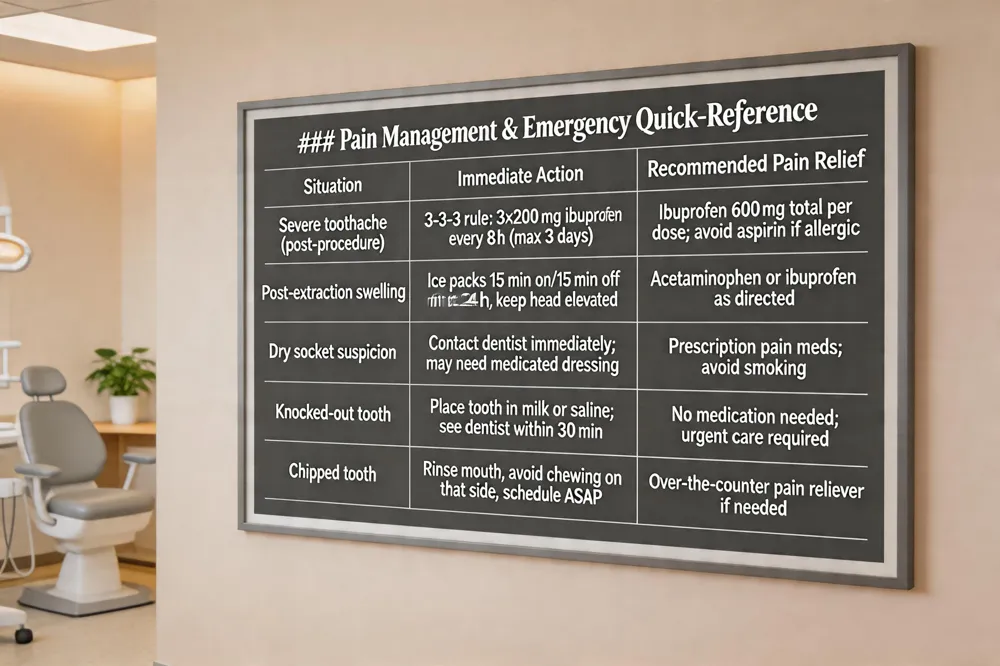 A comprehensive dental exam also identifies potential sources of pain, but when discomfort arises, understanding the most painful procedures and how to handle them is essential.
What's the most painful dental procedure? Impacted wisdom‑tooth extraction is widely regarded as the most painful dental procedure because it often requires cutting gum tissue, removing bone, and working on a tooth that is trapped or infected. The dense lower‑jaw bone and inflammation can make anesthesia less effective, leading to swelling, jaw stiffness, and moderate‑to‑severe pain for several days. Proper pain management—ice packs, prescribed analgesics, and post‑operative instructions—helps keep discomfort manageable.
Walk‑in dentist Midland, TX At Ashley E. Burns, DDS we welcome walk‑in patients for urgent issues such as severe tooth pain, knocked‑out or chipped teeth, and swelling. Call ahead so we can prepare the appropriate treatment room; same‑day appointments are offered when possible.
What is the 3‑3‑3 rule in dentistry? It is an informal guideline for short‑term toothache relief: take three 200 mg ibuprofen tablets (600 mg total) every eight hours for up to three days. This reduces inflammation while you arrange a dental visit, but it should not replace professional care.
Post‑operative care after extractions Follow the dentist’s instructions: keep the gauze pad in place for the first hour, use ice packs for swelling, eat soft foods, avoid smoking, and gently rinse with warm salt water after 24 hours. Contact the office if pain worsens, pus appears, or you suspect a dry socket.
Specialty Services: Implants, Family Care, and School Exams
Specialty Services Overview
| Service | Description | Financing Options | Who Benefits |
|---|---|---|---|
| Teeth‑In‑An‑Hour™ Implants | Computer‑guided 3‑D imaging, placement and crown in one visit | In‑house financing, CareCredit, insurance (partial) | Adults needing single‑tooth replacement |
| Family Dentistry (Preventive & Restorative) | Cleanings, exams, fillings, crowns, cosmetic work for all ages | Membership plans, sliding‑scale fees | Children, teens, adults, seniors |
| School‑Required Exams | Visual inspection, optional X‑rays, fluoride/sealants for K, 3rd, 7th grades | Often covered by school health programs or parental insurance | School‑age children |
| Oral Cancer Screening (Head‑and‑Neck) | Visual & tactile exam of oral tissues and lymph nodes | Covered as preventive service | All patients, especially high‑risk groups |
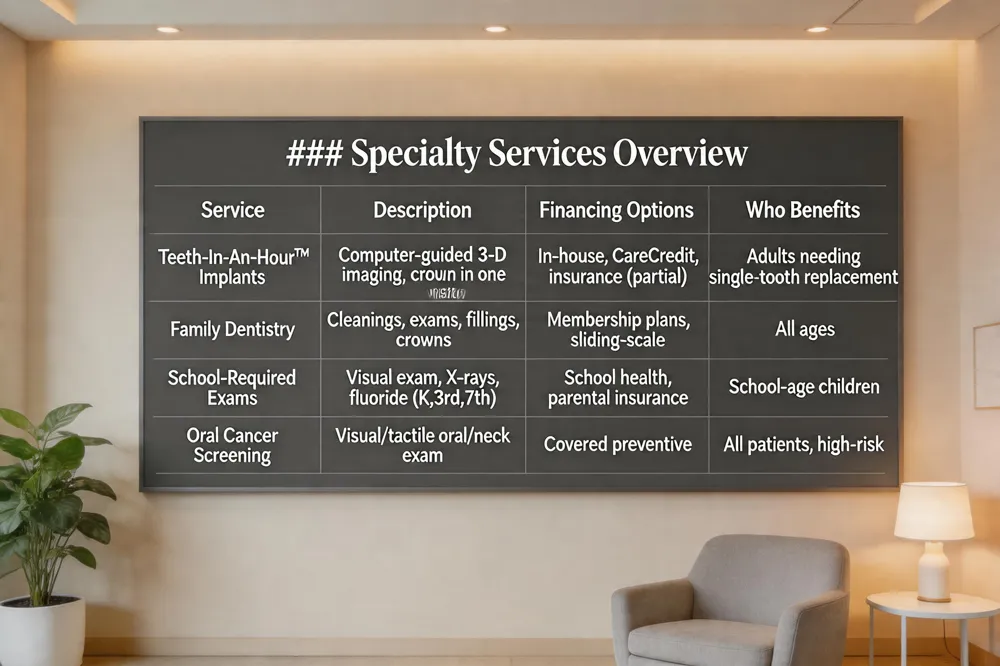 In Midland, TX, Dr. Ashley E. Burns, DDS offers state‑of‑the‑art dental implants, including the Teeth‑In‑An‑Hour™ technique, where computer‑guided 3‑D imaging allows precise placement and a functional crown in a single visit. Financing options make these restorations affordable for qualifying patients. The same practice provides comprehensive family dentistry for all ages—preventive cleanings, exams, restorative work, and cosmetic services—delivered with gentle, patient‑centered care and flexible scheduling.
School‑required dental exams are typically performed in kindergarten, third, and seventh grades, involving a visual inspection of teeth and gums, and, when needed, X‑rays, fluoride, or sealants. Results are recorded on a standardized “Proof of School Dental Examination” form and are often covered by school health programs or parental insurance.
During a routine head‑and‑neck exam, dentists can detect abnormal oral lesions or enlarged lymph nodes that may indicate lymphoma. While they cannot diagnose the disease, they promptly refer patients for medical evaluation, making the dental exam a critical early‑detection step.
Everyday Oral‑Health Habits and Prevention
Daily Oral‑Health Habit Checklist
| Habit | Frequency | Primary Benefit |
|---|---|---|
| Brush with fluoride toothpaste | Twice daily (morning & night) | Removes plaque, strengthens enamel |
| Floss or use interdental cleaners | Once daily (preferably night) | Cleans between teeth, prevents gum disease |
| Limit sugary drinks & snacks | Ongoing | Reduces acid exposure, lowers cavity risk |
| Drink green/black tea (unsweetened) | 1–2 cups per day | Catechins inhibit Streptococcus mutans, reduce plaque |
| Use antimicrobial mouthwash | Once daily (after brushing) | Reduces bacterial load, freshens breath |
| Professional cleaning & exam | Every 6 months (or as advised) | Removes tartar, early detection of issues |
| Apply fluoride treatment or sealants (if high‑risk) | As recommended by dentist | Provides extra protection against decay |
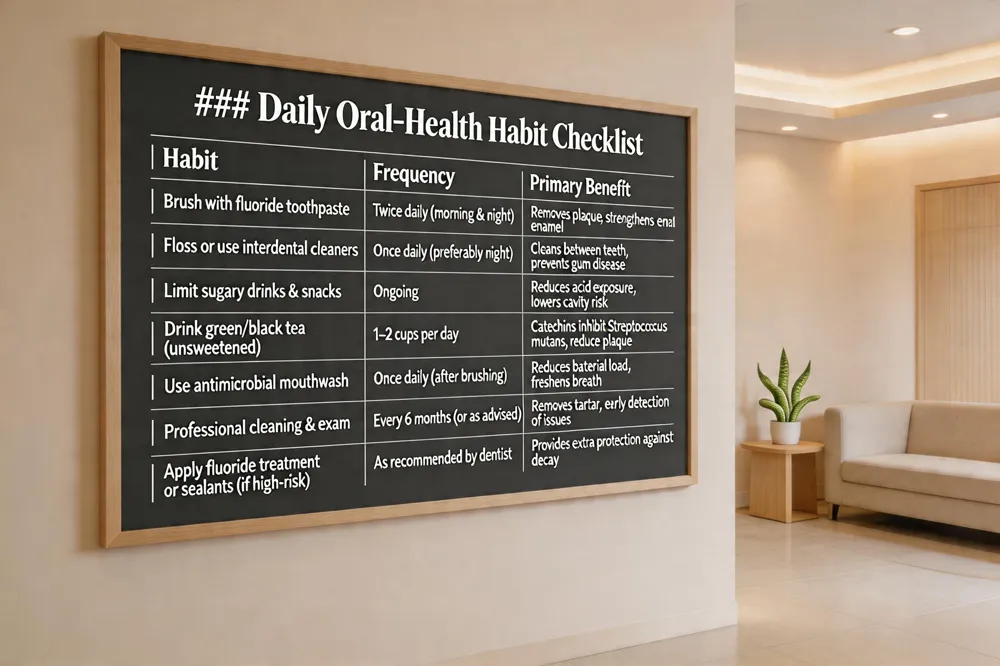 Maintaining a healthy smile starts with brushing twice daily with fluoride toothpaste, daily flossing, and limiting sugary drinks. Green tea (or black tea) is one of the most effective drinks for reducing harmful oral bacteria; its catechins inhibit Streptococcus mutans and help control plaque. Fluoride treatments, dental sealants, and antimicrobial rinses further protect enamel and prevent cavities, especially in high‑risk patients. Regular comprehensive exams—ranging from routine check‑ups to full‑mouth X‑ray and oral‑cancer screenings—provide a baseline for early detection of decay, gum disease, and systemic links such as diabetes or heart disease. During a dental check‑up at Ashley E. Burns, DDS, you’ll complete a brief questionnaire, receive a professional cleaning, and undergo a thorough visual and radiographic exam. A printable dental‑examination PDF is available on the practice website to guide you through each step and help you prepare for your visit.
Your Path to a Healthier Smile Starts Here
A comprehensive dental exam begins with a review of your medical and dental history, followed by a professional cleaning that removes plaque and tartar. The dentist then performs a tooth‑by‑tooth visual inspection, takes digital X‑rays to reveal hidden decay or bone loss, measures gum pocket depths, and conducts a painless oral‑cancer screening. This thorough assessment establishes a baseline for your oral health and guides personalized preventive care. Because early detection prevents costly, invasive treatment, regular visits—at least twice a year or more often if you have risk factors—are essential for maintaining a bright, healthy smile. Ready to protect your oral health? Schedule your comprehensive exam today and experience the confidence of a well‑cared‑for smile.