Understanding Full‑Mouth Rehabilitation
Full‑mouth rehabilitation (FMR) is a comprehensive, personalized treatment plan that restores the health, function, and appearance of most or all teeth in both arches. When severe dental decay, extensive gum disease, or multiple missing teeth affect large portions of the dentition, isolated fillings or single‑tooth crowns are insufficient; a coordinated, multidisciplinary approach—often involving prosthodontists, periodontists, endodontists, orthodontists, and oral surgeons—ensures that disease control, bone preservation, bite alignment, and aesthetic design are addressed in a logical sequence. The primary goals of FMR are to re‑establish stable occlusion for comfortable chewing, eliminate infection and pain, and create a uniform, natural‑looking smile that enhances facial harmony and patient confidence. Patients also benefit from improved speech clarity and easier maintenance of oral hygiene.
Key Indicators That You May Need Full‑Mouth Rehabilitation
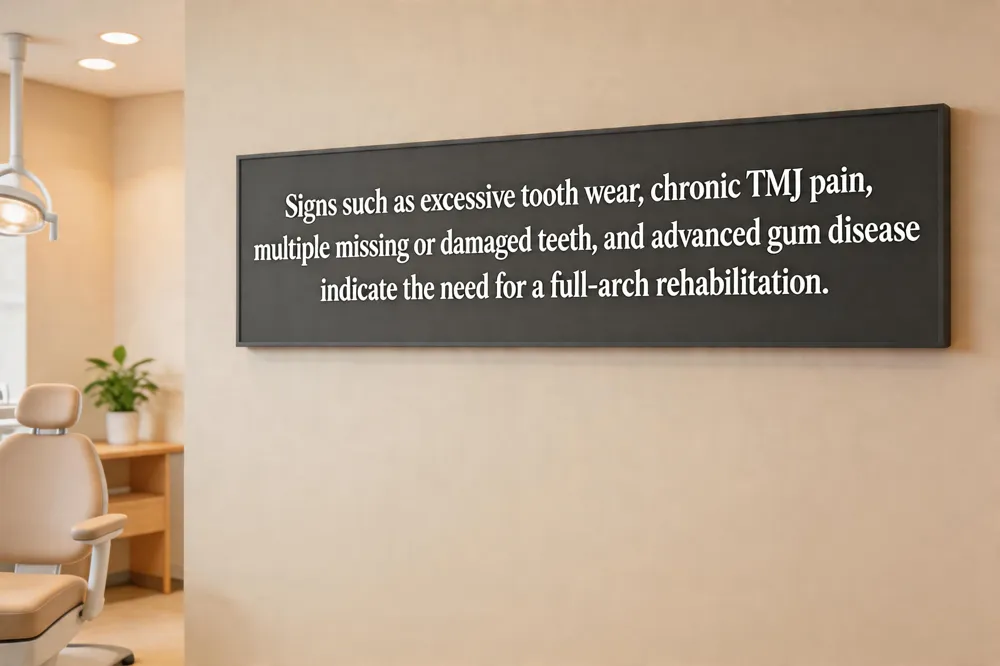 Full‑mouth rehabilitation is needed when isolated work cannot give a stable, pain‑free bite. Excessive wear, chronic TMJ pain, multiple missing or damaged teeth, and advanced gum disease all point to a full‑arch solution.
Who needs full mouth rehabilitation? Patients with several missing, broken, severely worn or decayed teeth, bite misalignment, chronic jaw pain, or advanced gum disease.
What are the 4 causes of tooth decay? Bacteria, fermentable sugars, prolonged acid exposure, and vulnerable enamel.
What is the best option for badly decayed teeth? A full‑coverage crown, or if not viable, extraction with implant or bridge replacement.
Full mouth rehabilitation steps PDF? Begin with a comprehensive exam and 3‑D imaging, place provisional restorations, adjust occlusion, then fabricate definitive crowns, bridges or implants; a detailed PDF guide is available.
Full mouth reconstruction before and after? Before‑and‑after images show the conversion of uneven, missing or worn teeth into a harmonious, functional smile with all‑ceramic crowns and implant‑supported prostheses.
Insurance, Costs, and Financing Options
 Full‑mouth rehabilitation can range from $15,000 for modest work to $80,000 or more for extensive cases that include implants, bone grafts, crowns, veneers, and orthodontic corrections. Insurance typically classifies these procedures as "major services" and may cover a small portion—often up to the annual maximum of $1,500–$2,000—if the work is deemed medically necessary (e.g., restoring function after severe decay, trauma, or periodontal disease). Purely cosmetic upgrades are usually excluded, and many plans treat implant posts as cosmetic, limiting reimbursement to the final prosthetic crowns or bridges. To minimize out‑of‑pocket costs, patients should obtain a detailed, pre‑authorized treatment plan and stay in‑network. Financing options are widely available: in‑office plans with low‑ or interest‑free interest (12‑ to 36‑month terms), third‑party dental financing such as CareCredit® or Sunbit, and dental discount programs. Dr. Ashley Burns, DDS in Midland, TX offers transparent pricing, cash‑pay discounts, and personalized payment schedules to help patients manage the investment while restoring oral health and function.
Choosing the Right Provider in Midland
 Local expertise and technology are essential for high‑quality dental care. Dr. Ashley E. Burns, DDS utilizes digital X‑rays, intra‑oral scanners, and CAD/CAM milling to diagnose and restore teeth with precision, ensuring accurate full‑mouth rehabilitation plans.
Walk‑in and emergency services are readily available at the Midland office on 5016 Briarwood Ave. Urgent cases such as severe toothaches, knocked‑out or chipped teeth, and infection‑related pain can often be seen the same day, minimizing discomfort and preventing complications.
Family‑ and pediatric‑focused care creates a comfortable environment for patients of all ages. Routine cleanings, exams, fluoride treatments, sealants, and orthodontic evaluations are provided with a gentle, child‑first approach that builds lifelong oral‑health habits.
Affordability and patient‑centered communication are core to the practice. Transparent cost estimates, financing options, and personalized treatment plan empower patients to make informed decisions.
FAQ
- Best dentist in Midland, TX: Dr. Ashley E. Burns, DDS – top dentist offering comprehensive preventive, restorative, and cosmetic services.
- Walk in dentist Midland, TX: Same‑day urgent care at 5016 Briarwood Ave.
- Family dentist Midland, TX: Full‑spectrum family dentistry for all ages.
- Kids dentist Midland, TX: Gentle, child‑focused care with preventive and orthodontic services.
- Midland dentist: Dr. Burns combines modern technology with comfortable, personalized treatment.
- Common dental emergencies in Midland, TX: Severe throbbing toothaches, broken or knocked‑out teeth, and lost or displaced restorations.
Treatment Options and Clinical Steps
 A full‑mouth rehabilitation begins with a comprehensive exam and digital imaging—clinical inspection, 3‑D CBCT scans, and intra‑oral photos to map occlusion, vertical dimension, bone loss, and any endodontic or orthodontic needs. Restorative procedures such as crowns, bridges, and veneers rebuild damaged teeth and re‑establish a harmonious smile. When teeth are missing or non‑savable, implant placement and bone grafting provide a permanent, bone‑anchored foundation for custom bridges or dentures; grafts rebuild lost ridge height before implant insertion. Periodontal therapy (scaling, root planing, gum surgery) stabilizes the supporting tissue, while orthodontic integration aligns the arches to achieve a balanced bite before final prosthetics.
Full mouth rehabilitation near me – Dr. Ashley Burns, DDS offers personalized full‑mouth rehab in Midland, TX, using crowns, bridges, veneers, implants, dentures, bone grafts, and gum‑disease treatment.
Full mouth rehabilitation implant – Implants replace an entire arch of damaged teeth, acting like natural roots to support a custom bridge or denture.
Full mouth rehabilitation steps PDF – The protocol starts with diagnostics, creates a treatment plan (often Pankey‑Mann‑Schuyler or three‑step adhesive), tests a provisional VDO increase, then delivers definitive crowns, veneers, implants, grafts, orthodontics, gum contouring, and, if needed, orthognathic surgery.
Prevention, Home Care, and Managing Early Decay
 Early detection of tooth decay is essential. A white‑spot lesion on enamel signals mineral loss that can be reversed with diligent oral hygiene. Brush twice daily with a fluoride or hydroxyapatite toothpaste, use a soft‑bristled brush in gentle circles, and floss every night. Rinse with an alcohol‑free, antimicrobial mouthwash or try oil‑pulling with coconut oil for 10‑15 minutes to lower bacterial load. Limit sugary snacks and acidic drinks, and include calcium‑rich dairy and vitamin‑D foods to strengthen enamel.
Self‑treatment of established decay is unreliable; only a dentist can safely remove damaged tissue and place a restoration. Once a cavity reaches dentin or pulp, professional care—fillings, crowns, root canals, or extraction—is required.
Decay progresses through four stages: (1) white‑spot demineralization, (2) enamel erosion with yellow‑brown discoloration, (3) dentin involvement forming a dark cavity, and (4) pulp infection causing pain and possible abscess.
Four causes of decay are: cariogenic bacteria, fermentable carbohydrates, prolonged acid exposure, and a vulnerable tooth surface.
Take the Next Step Toward a Healthier, Confident Smile
If you notice any of the classic warning signs—excessive tooth wear, chronic jaw pain or TMJ symptoms, multiple missing or severely damaged teeth, traumatic injury, or advanced gum disease—full‑mouth rehabilitation can restore function, comfort, and aesthetics. The comprehensive, multidisciplinary approach not only repairs damage but also re‑establishes a stable bite, improves chewing efficiency, prevents further decay, and enhances facial harmony. At Dr. Ashley E. Burns’ Midland office, we combine state‑of‑the‑art imaging, CAD/CAM technology, and personalized treatment planning to create durable, natural‑looking results. Schedule a one‑on‑one consultation today to discuss your unique needs and begin a coordinated, patient‑centered journey toward a healthier, more confident smile.