Understanding the Role of Listening in Dental Care
Active listening is the cornerstone of high‑quality dental care. When clinicians give patients their full attention, they uncover concerns, cultural factors, and anxiety that would otherwise be missed, leading to more accurate diagnoses and personalized treatment plans. This attentiveness builds trust; patients who feel heard are more likely to follow recommendations, attend follow‑up visits, and recommend the practice. Patient‑centered communication—combining open‑ended questions, empathetic verbal and non‑verbal cues, and clear, jargon‑free explanations—creates a collaborative environment where shared decision‑making thrives. By integrating active listening into every encounter, dental teams enhance satisfaction, reduce anxiety, and improve oral‑health outcomes while fostering long‑term loyalty.
Foundations of Patient‑Centred Dental Care
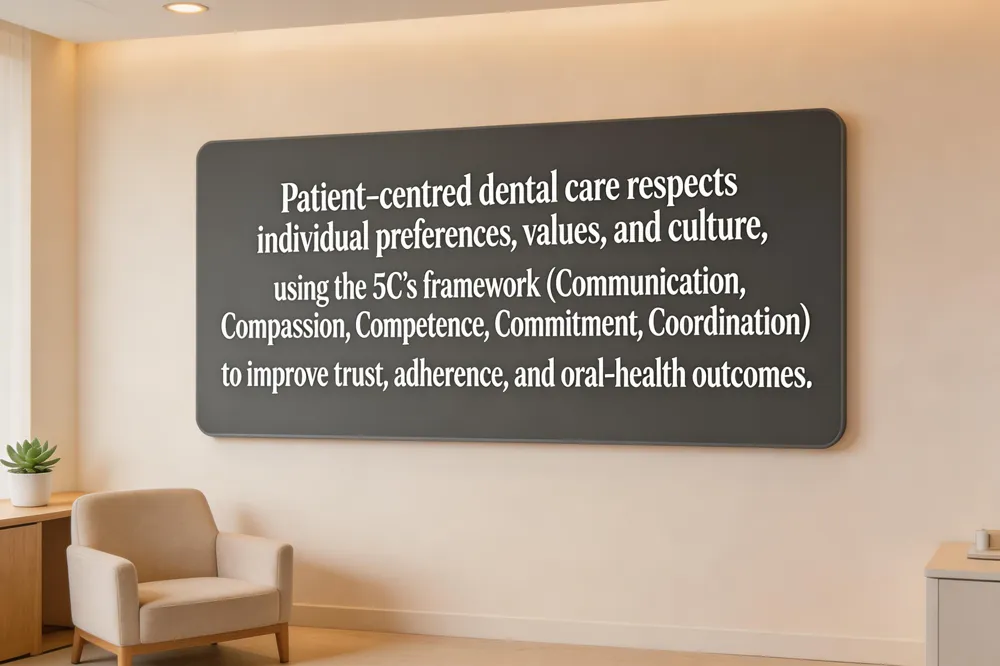 Patient‑centred care in dentistry delivers treatment that respects each patient’s preferences, values, and culture while fostering open, compassionate communication. Clinicians explain procedures, risks, and benefits in plain language, involve patients in shared decision‑making, and address anxieties, literacy gaps, and cost concerns. Attentive listening gathers accurate histories, reduces dental anxiety, and tailors plans—findings supported by Al Turki (2022) and Ho et al. (2024). The 5 C’s framework—Communication, Compassion, Competence, Commitment, and Coordination—guides every interaction. Clear dialogue and empathy build trust; competence ensures accurate diagnosis; commitment reflects dedication to outcomes; coordination links preventive, restorative, and specialty services. This framework steers decisions: clinicians prioritize patient‑reported symptoms, adjust options to fit lifestyle and budget, and verify understanding before proceeding, leading to better adherence, satisfaction, and oral‑health results. Training programs for dental students and staff embed active‑listening modules, so the team can recognize verbal and non‑verbal cues. Surveys help refine communication and sustain loyalty. Evidence shows that practices prioritizing listening have fewer malpractice claims and higher appointment retention.
Active Listening: Why It Matters
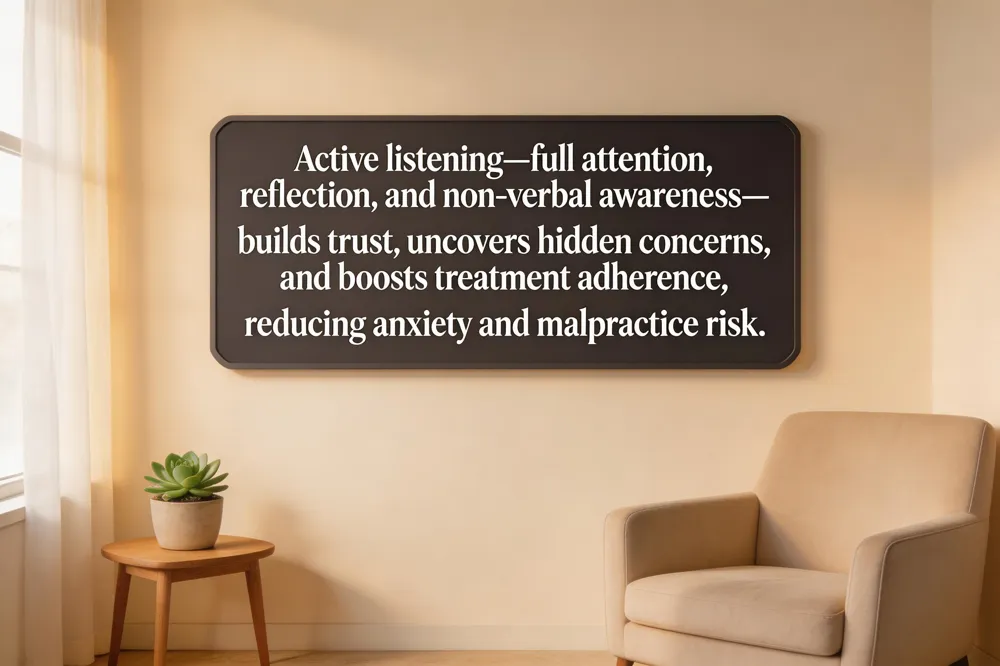 Active listening is more than hearing; it involves full attention, confirming understanding, reflecting, and noticing non‑verbal cues. By using open‑ended questions, paraphrasing, and allowing pauses, clinicians capture both verbal and emotional information. The benefits are clear: patients feel respected, anxiety drops, and adherence to treatment rises. Studies across medicine and dentistry show that patients who are heard are 30‑50 % more likely to follow recommendations, experience lower pain, and return for follow‑up visits. Research by Al Turki (2022) and Ho et al. (2024) links active listening to higher satisfaction, reduced malpractice risk, and improved diagnostic accuracy.
Why is active listening important in healthcare? It builds trust, uncovers hidden concerns, and prevents errors. Five reasons include trust building, deeper understanding, psychological safety, precise feedback, and cultural modeling. In social care, listening to understand creates a safe space, respects autonomy, and tailors care. For dental patients, listening validates self‑knowledge, reduces anxiety, and guides treatment plans.
Communication Skills for Dental Professionals
 Effective communication is the backbone of high‑quality dental care. When dentists listen actively and empathetically, patients feel heard, anxiety declines, and diagnostic accuracy improves (Al Turki, 2022; Ho et al., 2024). Active listening—maintaining eye contact, nodding, allowing pause time, and paraphrasing concerns—builds trust and encourages patients to share vital medical history, preferences, and financial constraints (StatPearls, 2021; Al Turki, 2022). Clear, jargon‑free language combined with visual aids such as intra‑oral photos and digital smile‑design models helps patients understand diagnoses and treatment options, leading to higher adherence and reduced malpractice risk (Ho et al., 2024; ADA, 2022). Non‑verbal cues—open posture, gentle touch, and calm tone—reinforce verbal messages and reduce perceived pain (British Dental Journal, 2020). Open‑ended questions and reflective statements uncover underlying anxieties, cultural factors, and cost concerns, enabling shared decision‑making and personalized care plans (Al Turki, 2022; Ho et al., 2024. Together, these skills foster patient‑centered care, improve satisfaction scores, and support the long‑term success of the dental practice.
Addressing Patient Concerns and Emotional Support
 Effective dental care begins with addressing patient concerns and providing emotional support. Dental anxiety, reported by up to 20 % of adults, can be mitigated through empathetic listening, calm explanations, and options such as nitrous‑oxide sedation or distraction techniques. Emotional support reduces fear, improves pain perception, and encourages adherence to post‑procedure instructions, thereby enhancing oral‑health outcomes. A strong patient‑dentist relationship rests on mutual trust, open communication, and shared decision‑making; patients feel safe sharing histories, preferences, and anxieties when clinicians listen attentively and validate feelings. Practical active‑listening examples include pausing to paraphrase a patient’s description of pain, using open‑ended questions about oral‑hygiene habits, maintaining eye contact and nodding, and summarizing the treatment plan before the patient leaves. These strategies not only gather accurate information but also build rapport, lower anxiety, and increase satisfaction, ultimately supporting a therapeutic, patient‑centered dental experience and long‑term oral health.
Practical Resources and Patient Options
 Effective communication and accessible care are cornerstones of modern dental practice. Seniors seeking denture solutions can often receive them at no cost or reduced price through Medicaid, Dental Lifeline Network, or dental‑school clinics; eligibility hinges on income, insurance and state programs. Continuing‑education courses in dental communication teach clinicians active listening, open‑ended questioning, and empathetic non‑verbal cues, improving trust and treatment adherence while offering CE credits. A downloadable “Communication in Dentistry” PDF outlines six core patient needs—friendliness, empathy, efficiency, control, options, information—and provides scripts and visual aids for clear dialogue. Written communication, from appointment reminders to detailed treatment plans, must be concise, jargon‑free and documented to enhance patient understanding, reduce anxiety and protect both patient and practice. Consistent use of these written tools also supports legal compliance and facilitates follow‑up coordination.
Empowering Patients Through Participation
 Myths about brushing schedules, such as the popular 3‑3‑3 rule (brush three times a day for three minutes and avoid food for three hours before bedtime), are not evidence‑based; professional guidelines recommend brushing twice daily for two minutes with proper technique. Addressing these myths through clear, patient‑centered communication empowers individuals to adopt realistic, effective oral‑care routines.
Listening as the Cornerstone of Quality Dental Care
Active listening is the foundation of patient‑centered dentistry. By giving full attention to verbal and non‑verbal cues, clinicians gather more accurate medical histories, uncover hidden concerns such as anxiety or financial barriers, and tailor treatment plans to each individual's values and lifestyle. This collaborative approach boosts diagnostic accuracy, reduces procedural anxiety, enhances adherence to oral‑health regimens, and strengthens trust—factors linked to higher satisfaction scores, lower malpractice risk, and improved oral‑health outcomes. At our practice we prioritize these listening skills in every encounter. We invite you to experience a warm, empathetic environment where your voice guides your care and your oral health thrives.