Digital Workflow Overview
Intra‑oral scanners capture the patient’s dentition in seconds, creating a high‑resolution 3‑D mesh that replaces traditional impression trays and eliminates material distortion. The resulting STL file is imported into CAD software, where the clinician or technician virtually designs crowns, bridges, orthodontic appliances or surgical guides, adjusting margins, occlusion and shade in a simulated environment. Integrated digital workflows then send the finalized design directly to a 3‑D printer—most commonly SLA, DLP or material‑jetting machines—where layer‑by‑layer photopolymerization or metal sintering produces a precise, patient‑specific restoration. Post‑processing steps such as support removal, UV curing and polishing ensure biocompatibility and surface smoothness. This seamless chain from scan to print shortens turnaround from weeks to a single appointment, reduces material waste by up to 90 %, and improves fit accuracy, ultimately enhancing patient comfort and clinical efficiency. Patients appreciate the ability to see a virtual preview before the final piece is fabricated, fostering informed consent and higher satisfaction.
Key 3D Printing Technologies
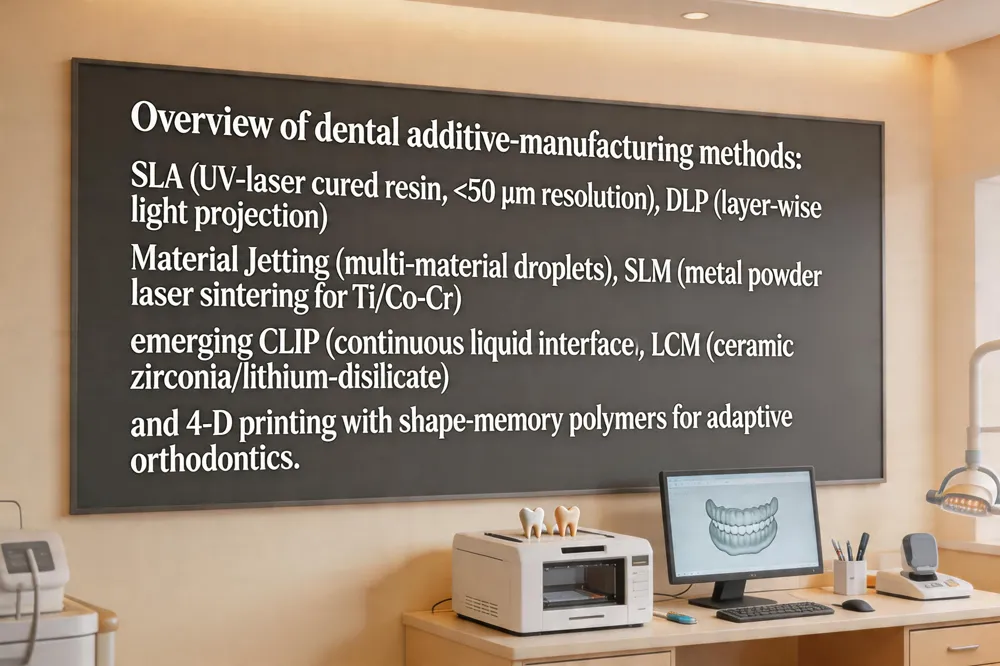 Three‑dimensional (3D) printing is reshaping modern dentistry through a suite of additive‑manufacturing methods. Stereolithography (SLA) uses a UV laser to cure photopolymer resin layer‑by‑layer, delivering sub‑50 µm resolution and excellent surface finish. Digital Light Processing (DLP) projects a patterned light image to cure an entire layer at once, offering speed comparable to SLA with similar accuracy. Material Jetting (MJ) deposits droplets of photopolymer via ink‑jet heads, enabling multi‑material, multi‑color prints ideal for aesthetic prostheses and educational models. Selective Laser Melting (SLM) fuses metal powder with a laser to produce titanium or cobalt‑chrome frameworks for implants, abutments, and partial denture bases. Emerging processes such as Continuous Liquid Interface Production (CLIP) eliminate the peeling step, dramatically increasing speed, while Lithography‑Based Ceramic Manufacturing (LCM) enables direct printing of zirconia and lithium‑disilicate ceramics. 4‑D printing adds stimuli‑responsive shape‑memory polymers for adaptive orthodontic devices.
Advantages and disadvantages of 3D printing in dentistry – High precision, complex geometry capability, reduced waste, and rapid turnaround are balanced by upfront cost, a steep learning curve, and a narrower material palette than traditional milling.
CAD/CAM vs. 3D printing – CAD/CAM mills a solid block (subtractive), producing dense parts; 3D printing builds objects layer‑by‑layer (additive), enabling internal lattices and using up to 90 % less material.
Materials used – Biocompatible photopolymer resins, zirconia‑filled ceramics, titanium or cobalt‑chrome metal powders, and emerging shape‑memory polymers.
New technology – CLIP, LCM, and 4‑D printing bring faster production, ceramic compatibility, and stimulus‑responsive behavior to dental workflows.
Recommended book – 3D Printing in Dentistry: Technology that Transforms Patient Experience by Dr. Chris Griffin offers science, clinical protocols, and case studies for modern practice.
Economic Impact and Practice Investment
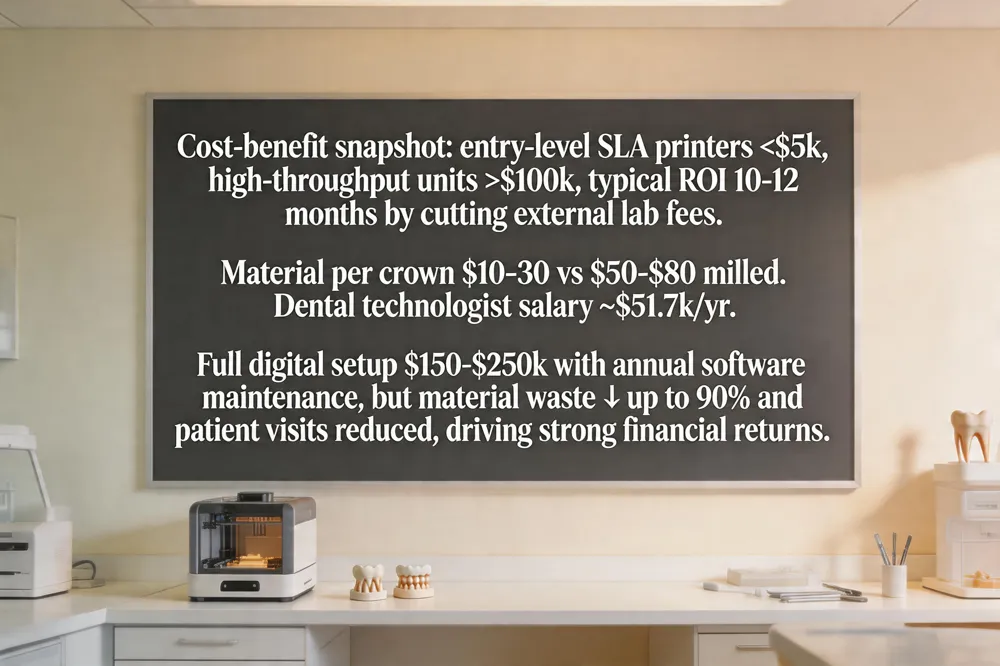 Adopting 3D printing in a dental practice requires a clear view of costs and returns.
Printer cost – Entry‑level desktop SLA machines now start under $5,000, while high‑throughput units suitable for busy labs can exceed $100,000. Many offices recover the expense of a $20,000–$30,000 printer within 10‑12 months by eliminating external lab fees.
Material cost – A single printed crown typically costs $10‑$30 in resin or ceramic‑filled material, far less than the $50‑$80 cost of a milled or cast restoration. Bulk purchasing and efficient design (e.g., internal lattices) further drive material savings.
Dental technology salary – U.S. dental technologists earn an average of $51,740 per year ($24.88 per hour). Entry‑level salaries are around $38,529, while senior technologists can earn $57,714, with modest bonuses and a projected 13% growth rate.
ROI – Initial digital‑dentistry setup (scaners, CAD/CAM software, printers) ranges $150‑$250 k, plus annual software, training, and maintenance costs. However, the rapid on‑site production of crowns, bridges, and surgical guides reduces lab turnaround, cuts material waste by up to 90%, and shortens patient visits—factors that boost practice efficiency, increase case acceptance, and generate a strong return on investment.
Advantages of 3D printing in dentistry – Faster same‑day restorations, lower labor and material waste, higher accuracy, and the ability to fabricate complex, patient‑specific geometries all improve workflow efficiency and patient satisfaction, making the technology a financially sound investment for modern dental practices.
Clinical Applications & Patient Outcomes
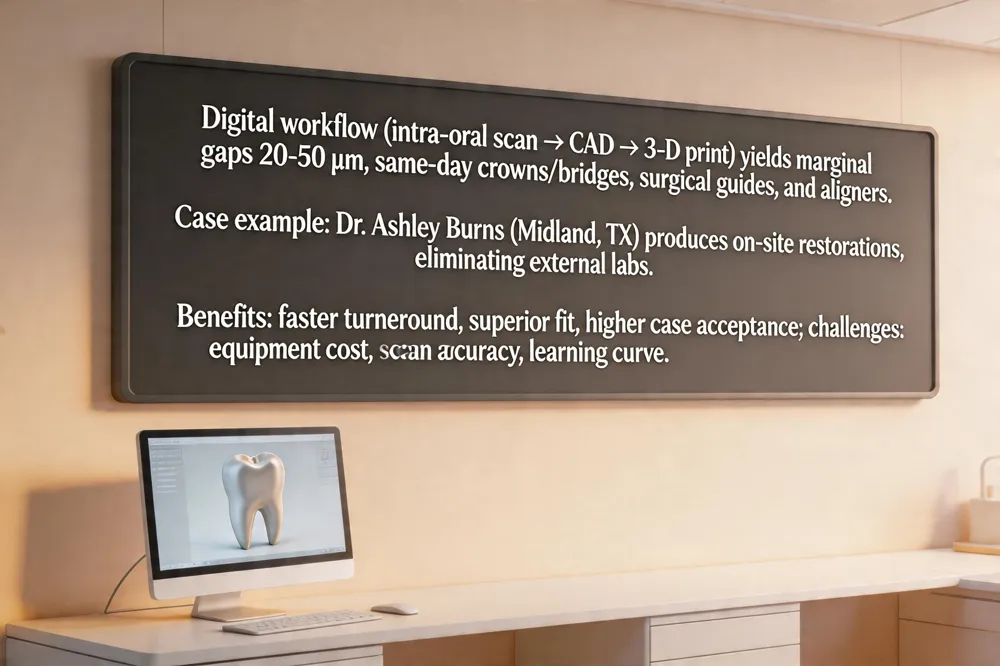 Digital dentistry transforms prosthodontics, crowns, bridges, and implant‑supported prostheses by capturing intra‑oral scans, designing in CAD, and fabricating with 3‑D printers. This workflow yields marginal gaps of 20‑50 µm, superior fit, and chair‑time reduced to a single visit. Many practices—including Dr. Ashley E. Burns, DDS in Midland, TX—now house in‑office printers that produce surgical guides, temporary crowns, bridges, and orthodontic aligners on demand, eliminating the need for external labs. Patients in Midland can experience same‑day restorations through a seamless digital workflow that integrates scanning, design, and printing. While 3‑D‑printed dentures offer precise fit and faster turnaround, disadvantages include high equipment costs, potential scan errors in soft‑tissue capture, and a learning curve that may require adjustments. Digital smile design (DSD) uses photos, scans, and software to preview outcomes, enhancing communication and case acceptance. Integrated digital solutions streamline diagnosis, design, and fabrication, cutting visits, errors, and overall cost. Breakthroughs such as cone‑beam CT, AI‑driven diagnostics, chair‑side printing, and bioactive materials are reshaping the field, moving toward same‑day, patient‑centered care and predictable outcomes. Recent scholarly articles (e.g., Dentistry Journal 2023) discuss SLA, DLP, material jetting, and clinical workflows that make chair‑side printing efficient and evidence‑based.
Educational Resources & Professional Development
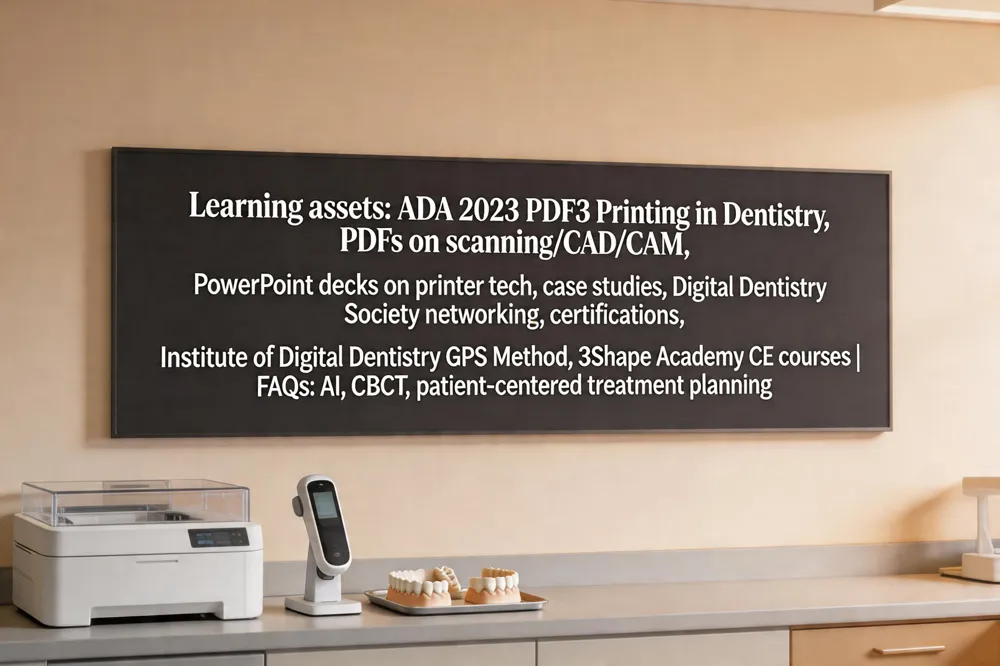 Dental professionals seeking to deepen their digital expertise can tap a range of high‑quality resources. PDF guides such as a downloadable overview of intra‑oral scanning, CAD/CAM design, 3D printing, and electronic record integration illustrate patient benefits and streamline workflow efficiency. The ADA’s 2023 3D Printing in Dentistry PDF delivers step‑by‑step protocols, material selection charts, and safety standards for office‑based printing. For visual learners, PowerPoint decks cover printer technologies, material science, and clinical case studies, highlighting reduced waste and faster turnaround ("3D Printing in Dentistry PPT"), while a broader "Digital Dentistry PPT" contrasts traditional impressions with modern scanners, CAD/CAM, and additive manufacturing. Professional societies like the Digital Dentistry Society (DDS) provide global networking, certifications, and research on scanners, 3D printing, and AI‑driven diagnostics. Continuing‑education courses—including the Institute of Digital Dentistry’s GPS Method and 3Shape Academy—offer hands‑on training and CE credit for same‑day workflows. Frequently asked questions are addressed: AI will automate routine analysis but will not replace skilled technicians; advancing cone‑beam CT, digital impressions, and rapid 3D printing enhance diagnosis, lessen invasiveness, and enable patient‑centered treatment planning.
Emerging Directions & Regenerative Approaches
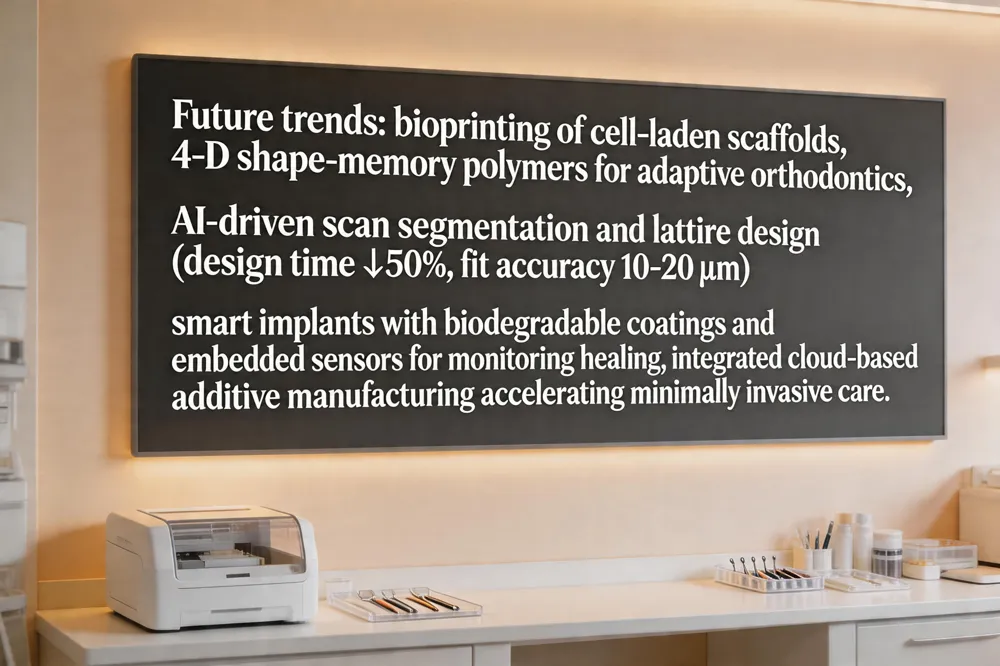 The next wave of dental innovation is being driven by bioprinting, 4D printing adds a time dimension: shape‑memory polymers respond to moisture or temperature, creating orthodontic appliances that adapt as the mouth heals. AI‑powered software now automatically segments intra‑oral scans, designs optimal internal lattice structures, and predicts mechanical performance, reducing design time by up to 50 % and improving fit accuracy to within 10‑20 µm. Smart implants equipped with biodegradable, cell‑laden coatings and embedded sensors are being trialed to monitor healing and stimulate natural tissue integration, turning a static prosthesis into a dynamic, regenerative platform. Together, these digital dental solutions—scanners, CAD, cloud‑based workflow management, and additive manufacturing—deliver faster, more accurate, minimally invasive care, positioning the future of dentistry as a patient‑focused, regenerative, and technology‑rich discipline.
Putting the Future into Practice
Modern digital dentistry places the patient at the centre of every decision. Intra‑oral scanners capture a painless, high‑resolution impression that is instantly transformed into an STL file, eliminating the discomfort of traditional trays and reducing distortion. The file drives a CAD design that, after a brief verification step, is sent directly to a chair‑side 3‑D printer. SLA or DLP printers can fabricate a provisional crown, bridge, or surgical guide in under an hour, allowing clinicians to place a finished restoration during the same visit—often referred to as "same‑day dentistry." This rapid, in‑office workflow not only shortens treatment time but also cuts material waste by up to 90 % compared with subtractive milling, supporting a more sustainable practice. By integrating digital scanning, AI‑assisted design, and additive manufacturing, dental teams deliver precise, personalised solutions while reducing appointments, costs, and environmental impact, ultimately enhancing patient comfort and satisfaction.