Replacing Missing Teeth
Replacing a missing tooth can help restore chewing and speaking, keep nearby teeth from shifting toward the gap, and support facial shape. The right approach depends on your oral health, priorities, and the condition of the teeth around the space.
A bridge fills the gap with an artificial tooth supported by crowns on neighboring teeth. An implant-supported crown works differently: a small post is placed in the jawbone to support the replacement tooth, without using healthy neighboring teeth as anchors. Bridges are often completed more quickly, while implants involve surgery and a healing period. A comparison of bridges and implants outlines these general trade-offs.
At Ashley E. Burns, DDS in Midland, treatment recommendations begin with an assessment of the individual patient’s needs. An examination lets the dentist review the gap, surrounding teeth, gums, and jawbone, then discuss which options may be suitable and what each treatment involves. No single replacement is right for everyone.
Crowns Bridges and Implants
 A crown, bridge, and implant serve different purposes, even though they can all be part of restorative dental care. Knowing what each one supports helps clarify which options may fit a particular tooth or gap.
A dental crown is a custom covering placed over a damaged or weakened tooth that is still present. It protects and restores that tooth, but a crown by itself does not replace a missing one. For a closer look at how crowns, bridges, and implants differ, see this guide to crowns, bridges, and implants.
A traditional dental bridge fills a gap with one or more artificial teeth. Crowns attached to the teeth beside the gap hold the bridge in place, so those neighboring teeth provide its support. Some bridges are supported by implants instead, which can avoid relying on natural teeth as anchors.
A dental implant is a post placed in the jawbone that serves as an artificial tooth root. Once it bonds with the bone, it can support a crown, bridge, or denture. Implants are the only option among these three that replaces the root as well as the visible part of the tooth, which helps preserve jawbone and keeps neighboring teeth untouched. For more detail on the implant process, see this guide to dental implants.
Comparing Bridges and Implants
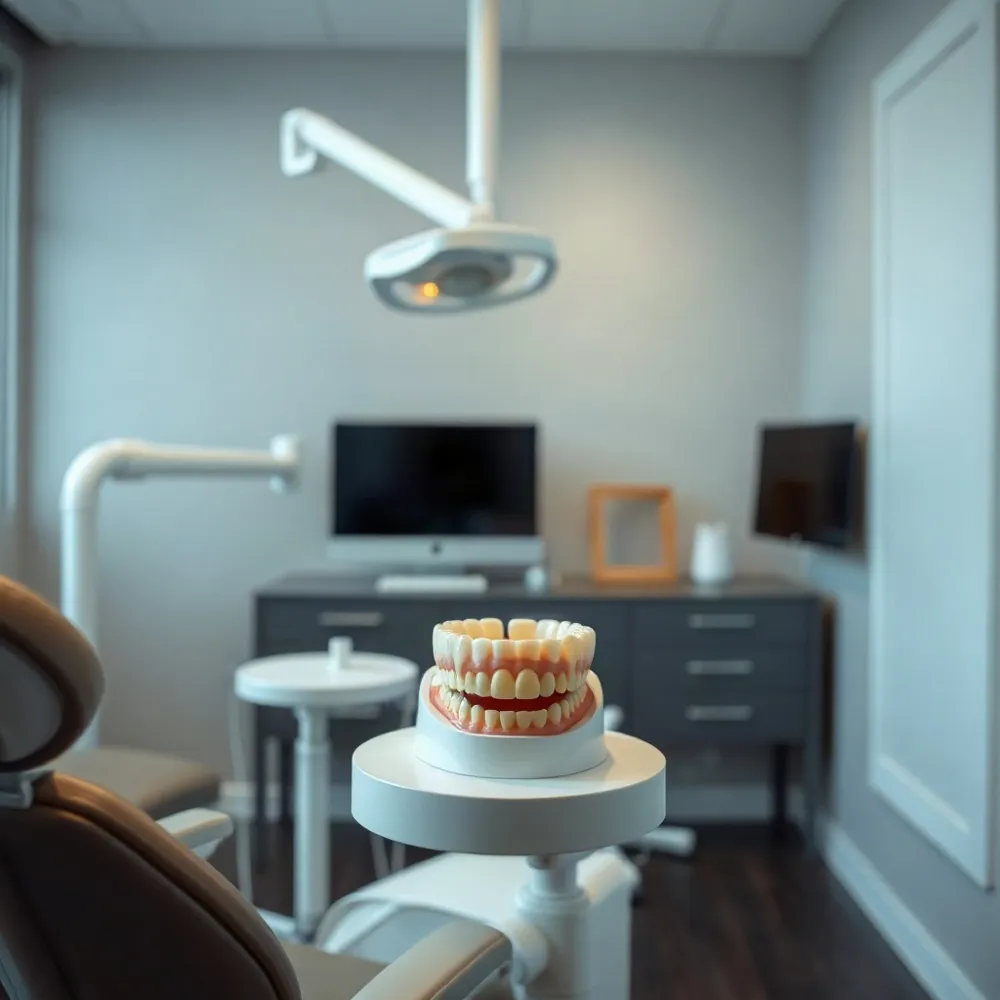 A bridge may suit someone looking for a fixed replacement without implant surgery. Treatment is often completed sooner, and the initial cost is often lower than an implant. A traditional bridge fills the gap with an artificial tooth supported by crowns on nearby teeth.
That support comes with a trade-off: preparing neighboring teeth usually means removing some natural tooth structure. Those teeth may become more vulnerable to decay or damage, and problems with a supporting tooth can affect the bridge. The Healthline comparison of bridges and implants describes these differences, while noting that costs and treatment details vary.
An implant is placed in the jawbone and supports a crown without relying on healthy neighboring teeth. Because it replaces the tooth root, it can help maintain bone at the implant site. Ashley E. Burns, DDS, in Midland, evaluates the condition of the surrounding teeth and oral health when discussing whether an implant or bridge may be appropriate.
Implants involve surgery and a healing period before the final crown can be attached. Adequate bone and general health matter, and some people may need additional evaluation or treatment before implant placement. Bridges avoid that surgical step, but their suitability depends in part on whether nearby teeth can support them.
Neither option is right for everyone. A dental evaluation can consider the health of the gums, jawbone, and neighboring teeth, along with treatment preferences and budget. The choice is best made with a dentist who can explain the likely benefits, limitations, and care needs of each approach.
Factors That Guide the Choice
 Choosing a bridge or implant involves more than comparing the replacement teeth. A dentist considers the condition of nearby teeth, gum health, jawbone support, medical history, number of missing teeth, budget, insurance benefits, and how soon you want treatment. At ashleyburnsdds.com, treatment planning is grounded in an examination of the patient’s oral health and needs, rather than a one-size-fits-all recommendation.
How do you choose between a dental bridge and an implant to replace a missing tooth?
A bridge may be practical when neighboring teeth already need crowns, or when avoiding implant surgery and completing treatment sooner are priorities. It relies on those teeth for support, so they usually need to be reshaped. An implant stands independently and may help preserve bone at the missing-tooth site, but it requires suitable bone and gums, surgery, and time for healing. Healthline’s comparison of bridges and implants can help you weigh the options for your situation.
Understanding Treatment Costs
Price is one part of the decision, but a useful comparison starts with the full treatment plan rather than a single advertised fee. As an example, a traditional three-unit bridge may cost roughly $2,100–$4,500, while a single implant may be around $4,000. These are estimates, not universal prices, and local fees can differ. Examples of bridge and implant treatment costs offer further context.
An implant-supported bridge can also cost several thousand dollars. The total may rise if treatment includes preparation such as bone grafting or extraction. The Healthline comparison of implant and bridge costs gives a separate estimate for single implants and notes that costs vary with location, materials, and procedure complexity.
Your estimate may depend on how many teeth need replacement, the restoration materials, the complexity of treatment, and whether additional procedures are needed. Insurance benefits also vary by plan, so ask what is covered and whether coverage applies to each part of treatment. Comparing written estimates can help clarify what is included, such as examinations, temporary restorations, and follow-up care.
At ashleyburnsdds.com, Dr. Burns can review your oral health and options before providing a personalized estimate. Bring questions about insurance and possible added procedures to that discussion, so you can compare the expected costs and treatment steps for your circumstances.
What Treatment May Feel Like
The experience differs because a traditional bridge and an implant are placed in different ways. A bridge does not involve implant surgery, while implant placement is a surgical procedure in which local anesthesia is used to numb the area.
With a bridge, preparing the supporting teeth may leave them temporarily sensitive or sore. Implant placement may be followed by tenderness or swelling as the area heals. These are possible short-term effects, not a reliable measure of which treatment will feel easier for every patient.
There is no universal answer to which treatment is more painful. Discomfort can vary with a person’s health, the extent of treatment, and individual sensitivity. An implant plan that includes bone grafting may involve different recovery expectations than implant placement alone.
At Ashley E. Burns, DDS, treatment planning is based on a patient’s oral health and the procedure being considered, rather than assuming everyone will have the same experience. Ask your dental professional what you may feel during recovery and which pain relief is appropriate for your circumstances.
Longevity and Bridge Care
A traditional dental bridge may last about 5 to 15 years, but this is a general estimate, not a guarantee. Lifespan varies with the materials used, the bridge’s position in the mouth, daily care, and the condition of the teeth and gums that support it. A dentist can monitor these factors and advise if repair or replacement is needed.
Careful cleaning matters because food and plaque can collect beneath the replacement tooth and around the supporting crowns. Brush twice a day and clean beneath the bridge daily with a floss threader, interdental brush, or another aid recommended for its design. Regular checkups let your dentist assess the bridge and the supporting teeth.
Avoid chewing ice and other hard objects, which can damage a restoration. If you grind or clench your teeth, ask your dentist whether a night guard may help protect the bridge. Guidance on dental bridge care and lifespan is available in the related article.
Replacing Several Missing Teeth
A dental bridge can replace one missing tooth or several teeth in a row. The number it can span depends on the gap’s location and the strength of the teeth or implants that will support it.
A traditional bridge rests on neighboring teeth, which are prepared to hold crowns. This can be practical when several consecutive teeth are missing, but the supporting teeth and gums must be healthy enough to bear the load. The number of missing teeth and condition of nearby teeth are among the considerations a dentist weighs when comparing replacement options.
An implant-supported bridge is anchored to dental implants rather than to neighboring teeth. Multiple implants can support a larger restoration, and a separate implant is not necessarily needed for each missing tooth. The number and placement of implants depend on the gap, available bone, bite, and overall treatment plan.
At Ashley E. Burns, DDS in Midland, the evaluation considers the condition of the teeth and gums as well as the size and location of the gap. The right approach depends on the specifics of each patient’s situation, and the dentist will discuss the options that fit the treatment plan.
Considering Dentures as an Alternative
A removable partial denture offers another way to replace one or several missing teeth, especially when nearby teeth may not be strong enough to support a traditional bridge. Unlike a fixed bridge or implant restoration, it can be taken out for cleaning. A dentist can compare these options after assessing your teeth, gums, and jawbone.
A bridge stays in place and typically uses crowns on neighboring teeth for support. An implant is also fixed, but anchors in the jawbone and does not rely on adjacent teeth. Implant treatment involves surgery and healing, while a partial denture avoids implant surgery. These differences in support and care are outlined in this comparison of bridges, implants, and dentures.
Partial dentures are generally less expensive than bridges or implants, but they may feel less comfortable or stable. They can affect eating or speaking, and they need daily cleaning. A fixed option may feel more secure, though a bridge can require reshaping supporting teeth, and implant suitability depends on bone health and overall circumstances.
The right choice depends on oral health, personal preferences, and budget. During an evaluation at ashleyburnsdds.com, Ashley E. Burns, DDS can discuss the practical differences and help clarify which options may suit your needs.
A Personalized Treatment Plan
A bridge and an implant-supported crown can both replace a missing tooth, but they rely on different supports. A bridge attaches to neighboring teeth, while an implant is anchored in the jawbone. Their treatment steps, timelines, and care needs differ, too.
Before choosing, ask your dentist to explain what the examination shows about the gap, nearby teeth, gums, and jawbone. Discuss your priorities, such as preserving healthy teeth, avoiding surgery, or completing treatment sooner, along with cleaning needs and possible future maintenance.
Request an estimate that covers the proposed treatment and any additional care, and ask how long each option is likely to take in your circumstances. At Ashley E. Burns, DDS in Midland, Texas, treatment discussions can be grounded in an evaluation of your oral health and individual goals, rather than a one-size-fits-all choice.