Introduction to Laser Dentistry and Its Significance in Modern Practice
What is Laser Dentistry?
Laser dentistry employs focused beams of light to perform precise dental procedures. Approved by the FDA, this technology has been safely integrated into dental practices since the late 1990s. It offers an innovative alternative to traditional mechanical tools by targeting specific tissues with a high level of accuracy.
Common Applications
Laser dentistry is versatile, addressing a range of dental needs including:
- Removal of tooth decay
- Gum reshaping and contouring
- Treatment of periodontal disease
- Teeth whitening
- Soft tissue biopsies These procedures often replace more invasive techniques.
Benefits of Minimally Invasive Techniques
Using lasers allows for less bleeding, swelling, and discomfort during treatments. Many patients experience reduced or no need for anesthesia, faster healing, and a lower risk of infection. This minimally invasive approach enhances patient comfort and improves clinical outcomes.
Understanding Laser Dentistry: Technology and Applications
What is laser dentistry?
Laser dentistry is a modern dental technique utilizing focused light energy beams to perform precise oral procedures. Approved by the FDA since the late 1980s, this technology treats both soft tissues, such as gums, and hard tissues like teeth. Unlike traditional drills, laser dentistry often reduces or eliminates the need for anesthesia and mechanical tools, resulting in less discomfort, minimal bleeding, and faster healing. Common applications include early cavity detection, cavity removal, gum reshaping, periodontal disease treatment, and teeth whitening. By minimizing invasiveness and promoting quicker recovery times, laser dentistry offers an efficient and comfortable alternative that enhances overall patient care.
What types of dental lasers are commonly used in dentistry?
Dental lasers vary based on their wavelength and clinical purpose. The most commonly used types are:
- CO2 Lasers (around 10,600 nm): Ideal for soft tissue surgeries such as gingivectomy and frenectomy. They offer precise cutting with minimal bleeding due to their excellent coagulation properties.
- Diode Lasers (810–980 nm): Versatile lasers often used for soft tissue procedures, periodontal therapy, and disinfection during root canal treatments. Their accuracy and minimal thermal damage improve patient comfort.
- Erbium Lasers (Er:YAG at 2940 nm): Suitable for both hard and soft tissues, effective in cavity preparation and gum reshaping. Their ability to ablate tissue reduces the need for anesthesia.
- Nd:YAG Lasers (1064 nm): Primarily used for periodontal treatments and soft tissue surgeries, promoting healing and reducing patient discomfort.
Common procedures using lasers
Laser dentistry procedures support a broad range of dental treatments:
- Cavity Detection and Removal: Lasers can detect early decay through fluorescence diagnostics and precisely remove only the infected tissue, preserving more healthy tooth structure.
- Gum Reshaping and Contouring: Soft tissue lasers sculpt and reshape gums to improve aesthetics with minimal pain and downtime.
- Periodontal Therapy: Lasers effectively remove plaque, bacteria, and diseased tissue, promoting faster healing.
- Teeth Whitening: Laser activation accelerates whitening processes, delivering faster results.
- Biopsies and Frenectomies: Precise removal of tissue with reduced bleeding and swelling.
How laser technology works on hard and soft tissues
Laser dentistry operates by focusing intense light beams to target specific oral tissues:
- On Hard Tissues: Erbium lasers use a process called ablation, where the laser energy vaporizes microscopic water within the enamel and dentin, gently cutting through the tooth structure without excessive heat or vibration.
- On Soft Tissues: Lasers coagulate blood vessels as they cut, reducing bleeding and sterilizing the treatment area. This cauterizing effect minimizes swelling and infection risk while enhancing healing.
Through selective targeting, lasers spare healthy surrounding tissues, leading to improved clinical outcomes, enhanced patient comfort, and decreased recovery time.
| Aspect | Details | Benefit to Patients |
|---|---|---|
| Laser Types | CO2, Diode, Erbium, Nd:YAG | Tailored treatment options |
| Applications | Cavity removal, gum reshaping, etc. | Minimally invasive, efficient care |
| Tissue Interaction | Ablation on hard tissue; coagulation on soft tissue | Less bleeding, faster healing |
| Patient Experience | Less pain, reduced anesthesia | Comfortable, lower anxiety (Benefits of laser dentistry) |
Patient Advantages: Benefits of Laser Dentistry in Modern Care
What are the benefits of laser dentistry?
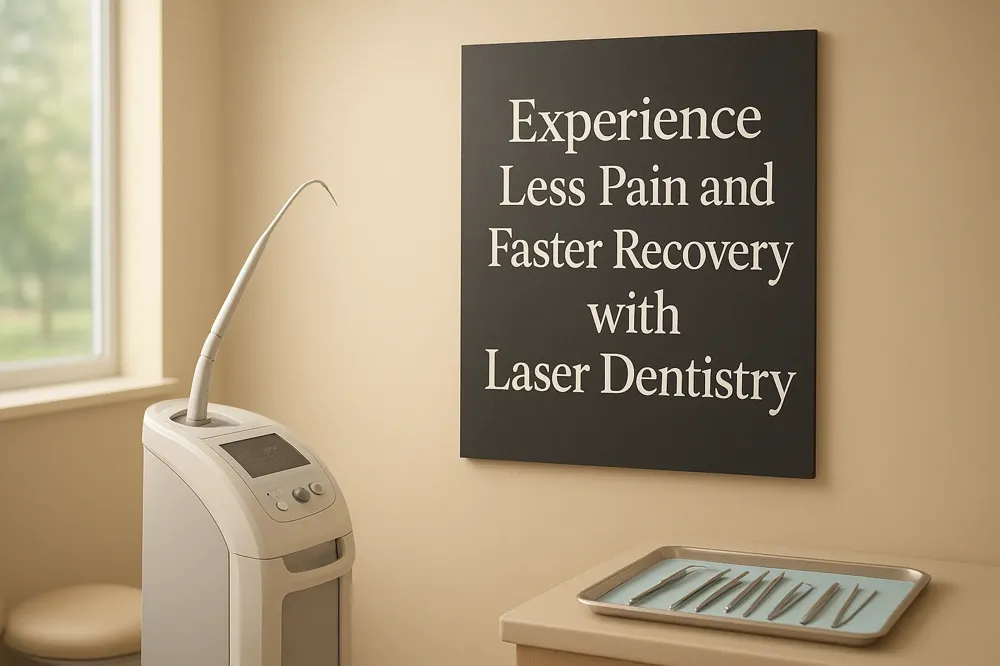
Laser dentistry offers several notable benefits that enhance the overall patient experience. One of the primary advantages is precision; lasers allow for targeted treatment that preserves healthy tissue while effectively addressing issues like decay or gum disease. This precision lowers the risk of damage to surrounding areas and improves clinical outcomes.
Patients undergoing laser dentistry procedures often report reduced discomfort compared to traditional methods. This is because laser dentistry with minimal anesthesia and cause minimal pain. The technology also minimizes bleeding and swelling by cauterizing tissues as it works, which leads to a cleaner surgical area and fewer complications.
Furthermore, laser dentistry and healing times promotes faster healing times. The focused light sterilizes the treatment site, reducing the chance of infection and facilitating quicker recovery. This enables patients to return to their daily routines sooner.
Is laser dentistry safe and does it cause pain?
Laser dentistry is FDA-approved and considered safe when performed by experienced professionals. There are specialized lasers designed for various dental needs, including soft tissue procedures like gum reshaping and hard tissue applications such as cavity removal.
The procedures are virtually painless because laser beams seal nerve endings and blood vessels, decreasing discomfort during and after treatment. This sealing effect also results in less bleeding and swelling, which further enhances comfort.
Additionally, the sterilizing effect of the laser reduces infection risks, making Benefits of Laser Dentistry a reliable option for patients. The minimally invasive nature of these treatments significantly appeals to patients who experience dental anxiety or sensitivity, offering a gentler alternative to drills and scalpels.
Overall, advanced laser technology in dentistry improves patient comfort, safety, and outcomes, representing a modern, patient-friendly approach to dental care.
Clinical Applications: Laser Dentistry in Treating Gum and Tooth Conditions
How does laser dentistry aid in treating gum disease?
Laser dentistry has revolutionized gum disease management by precisely targeting and removing infected gum tissue and bacteria without harming healthy areas. This precision leads to less bleeding, reduced inflammation, and faster healing compared to traditional surgical approaches. Since lasers minimize trauma, many treatments avoid the use of scalpels and sutures, resulting in less discomfort and quicker recovery. Additionally, laser therapy sterilizes the treatment site, reducing infection risk and promoting tissue regeneration. This minimally invasive method can also address benign lesions and cosmetic gum improvements, making it versatile for both health and aesthetic needs.
Can laser treatments be used for cavities and tooth infections?
Laser dentistry effectively detects and treats early cavities by using hard tissue lasers that remove decay with remarkable accuracy. This approach preserves more of the healthy tooth structure and significantly reduces patient discomfort, often eliminating the need for anesthesia. The laser also sterilizes the cavity, which helps lower bacterial presence and supports healing. While lasers assist in managing soft tissue infections by killing bacteria and promoting healing, they are not a standalone treatment for all cases of tooth infections or existing large cavities. Additionally, preventative benefits include enamel strengthening and facilitating remineralization through specific laser applications.
Is laser teeth cleaning effective and what are its side effects?
Laser teeth cleaning offers a precise and gentle alternative for removing plaque and bacteria, especially beneficial in treating gum disease. Compared to conventional cleaning, laser treatments minimize gum irritation, bleeding, and post-procedure sensitivity, creating a more comfortable experience especially for anxious patients. The sterilizing effect of lasers further contributes to healthier gums by eliminating pathogens during treatment. Mild side effects such as temporary gum sensitivity or tissue irritation can occur but are usually short-lived and manageable. When performed by experienced professionals, laser cleaning promotes better oral health through effective plaque reduction and enhanced tissue healing.
Considerations and Challenges in Laser Dentistry
What are the disadvantages or cons of laser dentistry?
While laser dentistry provides notable benefits such as minimized discomfort, faster healing, and reduced infection risk, it does have some disadvantages. One major challenge is the higher cost of laser treatments compared to traditional dental methods. This increased expense is largely due to specialized equipment and training requirements. Additionally, laser dentistry is not appropriate for all dental situations. For example, large or complex cavities and certain restorative work, like crowns or bridges, may not be suited for laser procedures. Not all dental practices offer laser care because practitioners need specific training and certification to use the technology effectively and safely. Furthermore, although many laser treatments can be done without anesthesia, some cases still require it. The success of laser dentistry also depends heavily on the type and severity of the dental issue being addressed.
Is laser dentistry more expensive than traditional dental treatments?
Laser dentistry tends to be more costly, with procedure prices generally ranging from $200 to $400 or more depending on complexity and location. Despite the higher initial cost, many patients find laser dentistry cost-effective in the long term. This is because it often reduces healing time, discomfort, and the number of follow-up visits, which can offset upfront expenses. Most dental insurance plans cover the treatment itself rather than the technology used, so coverage of laser dentistry depends largely on the procedure rather than the laser method specifically.
Are laser dentistry procedures typically covered by dental insurance?
Insurance coverage for laser dentistry varies widely. Many plans cover traditional procedures like deep cleanings but may limit or partially cover specialized laser treatments such as Laser-Assisted New Attachment Procedure (LANAP) for gum disease. Laser gum therapies, in particular, can be expensive—ranging from $1,000 to $4,000 per quadrant—with limited reimbursement from insurers in some cases. It is crucial for patients to thoroughly review their insurance policies or confirm coverage details with their provider before laser treatment to avoid unexpected costs.
What typical side effects or risks are associated with dental laser treatments?
Side effects from laser dentistry are generally mild and temporary. Patients might experience some swelling, sensitivity, redness, or discomfort that resolves within a few days. Serious complications are rare when procedures are performed by skilled, trained dentists. Potential risks primarily involve incorrect laser use, which can cause thermal injury or burns to gums or tooth pulp. Strict safety measures, including protective eyewear for both patient and practitioner, are essential to prevent accidental eye damage from laser exposure. Overall, laser dentistry is considered a safe and minimally invasive option, often associated with fewer side effects than traditional dental treatments.
What training and expertise are required for practitioners?
Using dental lasers requires advanced training and certification beyond general dental education. Dentists must complete specialized courses to operate laser devices effectively, understand safety protocols, and select appropriate laser types for each procedure. This ensures patient safety and maximizes treatment success. As a result, not every dental office can offer laser services, and patients should seek care from professionals with demonstrated laser dentistry expertise.
Integrating Laser Dentistry with Modern Dental Technologies and Practices
What modern techniques in dentistry complement laser technology?
Modern dentistry leverages numerous techniques that synergize effectively with Laser dentistry to enhance patient care. For example, computer-assisted anesthesia ensures precise numbing, reducing discomfort during procedures, while sedation options like nitrous oxide help anxious patients relax.
Digital imaging advancements, such as intraoral scanning and 3D cone beam computed tomography (CBCT) improve diagnostic accuracy and treatment planning. These imaging tools complement Laser dentistry advancements by enabling more precise targeting and minimally invasive interventions.
Use of artificial intelligence in dental diagnostics aids in analyzing digital data to detect early dental problems and predict outcomes. This predictive capability helps clinicians plan Laser dentistry more effectively and customize patient care.
Furthermore, Teledentistry and AI in dental care expands access to consultations and follow-ups, allowing clinicians to remotely assess patient progress and adjust Laser dentistry treatments when necessary.
How digital diagnostics improve laser treatment planning
Digital X-rays and patient safety provide high-resolution, detailed images of oral structures that inform Laser dentistry procedures by clearly identifying the extent and location of issues such as cavities or gum disease. This precision decreases the risk of damage to healthy tissue and ensures targeted Advancements in modern dental care.
Role of AI and teledentistry in modern patient care
Use of artificial intelligence in dental diagnostics supports dentists by enhancing diagnostic accuracy and streamlining treatment decision-making. Teledentistry and AI in dental care offers convenient remote patient monitoring and virtual consultations, improving overall care continuity and patient engagement.
Future directions and continuous advancements in laser dentistry
As Advanced laser technology in dentistry advances, future developments may include more efficient lasers with enhanced precision and safety features. Integration with AI and digital workflows is expected to grow, promoting personalized treatments and further minimizing invasiveness. Ongoing innovation will likely expand Laser dentistry for all ages, benefiting a wider patient population across all age groups.