Introducing Laser‑Assisted, Invasive Care
Laser dentistry uses focused light energy to cut, coagulate or vaporize oral tissues with high precision, allowing selective removal of diseased tissue while preserving healthy structures. Minimally invasive approaches reduce unnecessary removal of tooth and gum tissue, lower postoperative pain, and shorten healing time—critical for maintaining natural oral health and reducing treatment costs. For patients in Midland, laser‑assisted care means quieter, often anesthesia‑free procedures, faster recovery, less bleeding, and a more comfortable experience that aligns with the community’s demand for modern, patient‑centered dental solutions.
Understanding Laser Technology in Dentistry
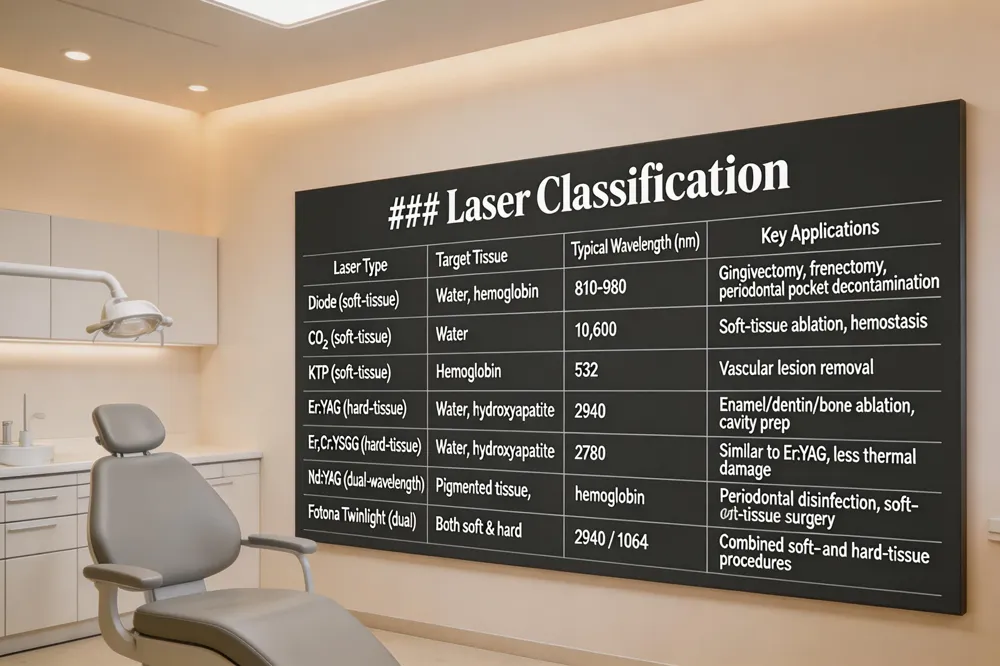
Laser Classification
| Laser Type | Target Tissue | Typical Wavelength (nm) | Key Applications |
|---|---|---|---|
| Diode (soft‑tissue) | Water, hemoglobin | 810‑980 | Gingivectomy, frenectomy, periodontal pocket decontamination |
| CO₂ (soft‑tissue) | Water | 10,600 | Soft‑tissue ablation, hemostasis |
| KTP (soft‑tissue) | Hemoglobin | 532 | Vascular lesion removal |
| Er:YAG (hard‑tissue) | Water, hydroxyapatite | 2940 | Enamel/dentin/bone ablation, cavity prep |
| Er,Cr:YSGG (hard‑tissue) | Water, hydroxyapatite | 2780 | Similar to Er:YAG, less thermal damage |
| Nd:YAG (dual‑wavelength) | Pigmented tissue, hemoglobin | 1064 | Periodontal disinfection, soft‑tissue surgery |
| Fotona Twinlight (dual) | Both soft & hard | 2940 / 1064 | Combined soft‑ and hard‑tissue procedures |
 Laser technology in dentistry uses a focused, high‑intensity beam of light to cut, coagulate, or vaporize soft and hard tissues with remarkable precision. The laser’s energy can remove decayed material, reshape gum tissue, and even assist in whitening, often eliminating the need for traditional drills, scalpel incisions, and sutures. Because it simultaneously cauterizes blood vessels, bleeding is minimized and the treatment area is sterilized, speeding healing and reducing infection risk. The precise, minimally invasive nature of laser treatment makes procedures more comfortable for patients, often requiring little or no anesthesia and producing little noise. Approved by the FDA since the early 1990s, laser dentistry is now employed for a range of services including cavity removal, gum‑disease therapy, biopsies, and soft‑tissue surgeries.
Dental lasers are classified by tissue target and wavelength. Soft‑tissue lasers (diode, CO₂, KTP) are strongly absorbed by water and hemoglobin, making them ideal for gingivectomy, frenectomy, and periodontal pocket decontamination. Hard‑tissue lasers belong to the erbium family—Er:YAG (2940 nm) and Er,Cr:YSGG (2780 nm)—which are absorbed by water and hydroxyapatite, allowing precise ablation of enamel, dentin, and bone with minimal thermal damage. Dual‑wavelength or all‑tissue systems (e.g., Nd:YAG or Fotona Twinlight) combine soft‑ and hard‑tissue capabilities, expanding the clinical repertoire to include cavity preparation, implant site preparation, and soft‑tissue surgery. The selection of a laser depends on the specific procedure, desired hemostasis, and patient comfort.
Laser Benefits, Limitations, and Cost Considerations
Summary of Benefits, Limitations & Costs
| Aspect | Details |
|---|---|
| Benefits | Painless, minimally invasive, simultaneous cauterization, reduced bleeding/swelling, sterile field, faster healing, no sutures, quieter experience |
| Limitations | High upfront equipment cost ($10k‑$80k), need for specialized training, less effective on large cavities or heavily restored teeth, risk of thermal injury if mis‑set |
| Typical Patient Costs | Gum contouring $100‑$250; Laser cavity removal $200‑$500 per tooth; Frenectomy $500‑$1,200; Complex procedures > $1,200 |
| Insurance Coverage | Therapeutic laser services (e.g., periodontal therapy) often covered; Cosmetic laser (whitening) usually excluded |
| Practice Offsets | Increased efficiency, higher patient satisfaction, financing options, FSAs/HSAs for patients |
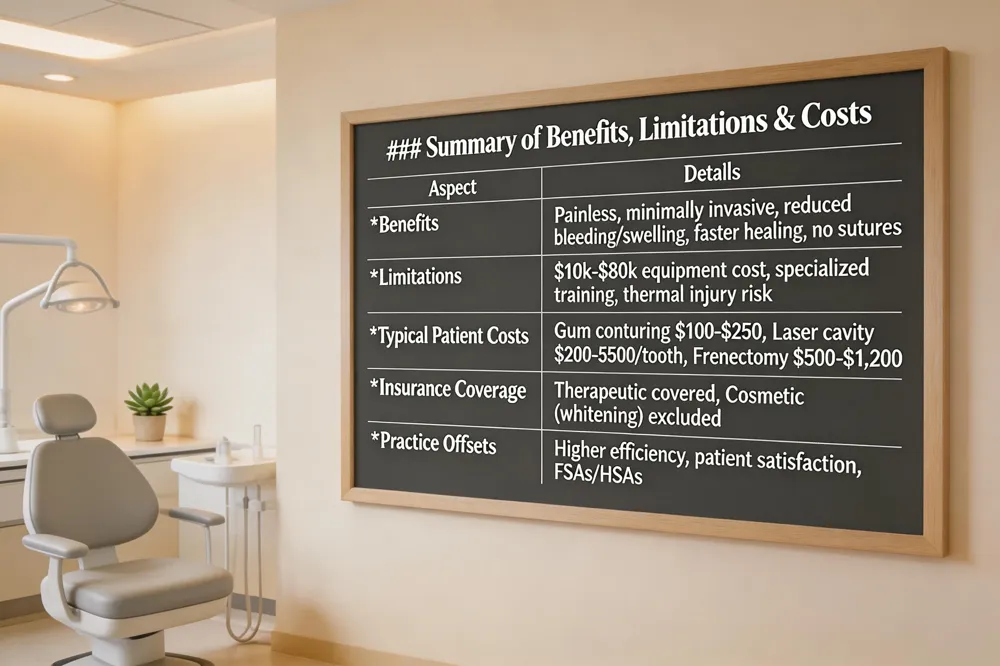 Laser dentistry offers virtually painless, minimally invasive procedures because the focused beam cuts while simultaneously cauterizing soft, reducing bleeding and swelling, and creating a sterile field that lowers infection risk. Precision shaping of gum tissue and selective hard‑tissue ablation improve cosmetic outcomes and often eliminate sutures. However, high equipment costs (US $10,000–$80,000 for hard‑tissue units such as Er:YAG or CO₂ lasers) and the need for specialized training limit widespread adoption. Large cavities, teeth with existing restorations, and interproximal lesions remain challenging for lasers, and incorrect power settings can cause thermal injury. Typical patient expenses vary: a single laser gum contouring visit runs $100‑$250, laser cavity removal $200‑$500 per tooth, and frenectomy $500‑$1,200. Complex procedures may exceed $1,200. Insurance often covers therapeutic laser services (e.g., periodontal therapy), while purely cosmetic treatments like whitening are usually excluded. Practices offset upfront costs through increased efficiency, higher patient satisfaction, and financing options, while patients can use FSAs/HSAs to mitigate out‑of‑pocket fees.
Laser‑Assisted Periodontal and Soft‑Tissue Care
Laser‑Assisted Periodontal & Soft‑Tissue Procedures
| Procedure | Laser Type(s) | Primary Effect | Typical Clinical Outcome |
|---|---|---|---|
| Pocket decontamination | Diode, Nd:YAG | Bacterial eradication (up to 99.9 %) | Greater pocket‑depth reduction, improved attachment |
| Gingivectomy / frenectomy | Diode, CO₂, KTP | Precise tissue cutting + hemostasis | Minimal bleeding, rarely need sutures, faster wound closure |
| Photobiomodulation (LLLT) | Low‑level diode | Stimulates fibroblast proliferation, reduces inflammation | 30‑50 % faster wound healing, less postoperative pain |
| Implant site preparation | Er:YAG, Er,Cr:YSGG | Selective hard‑tissue ablation | Precise osteotomy, reduced thermal damage |
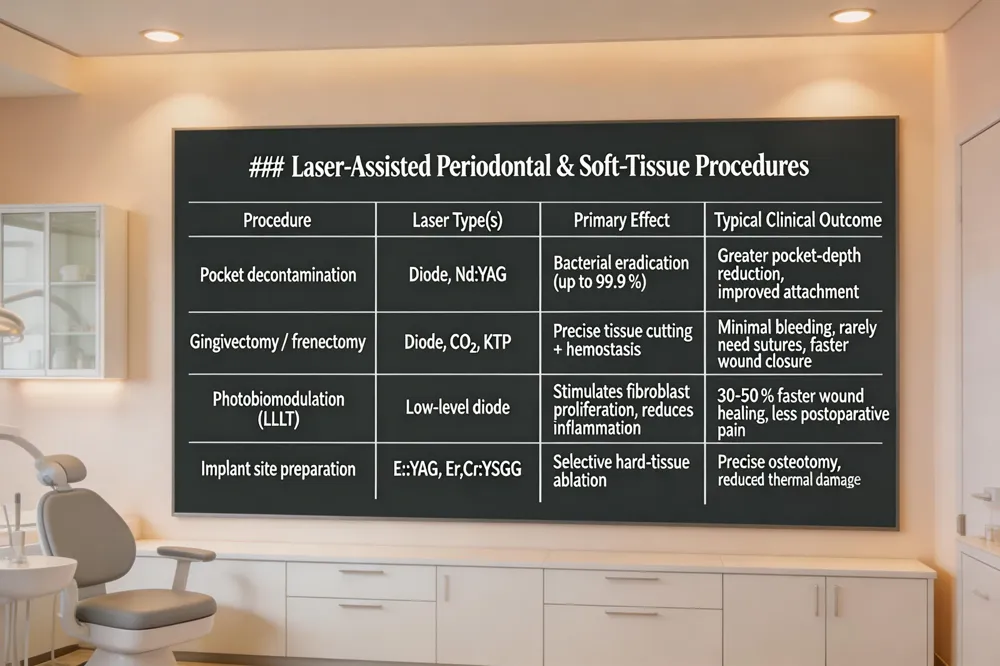 Laser therapy has become a reliable adjunct for managing periodontal disease. By delivering high‑energy pulses at wavelengths that are strongly absorbed by pigmented bacteria and hemoglobin, diode and Nd:YAG lasers can eradicate up to 99.9 % of pathogenic microorganisms within the pocket, while preserving surrounding connective tissue. Clinical studies consistently show greater pocket‑depth reduction and new clinical attachment compared with conventional scaling and root planing, making laser‑assisted periodontics a worthwhile option for many patients.
Photobiomodulation (low‑level laser therapy) further accelerates postoperative recovery. The non‑thermal light stimulates fibroblast proliferation, reduces inflammatory mediators, and enhances collagen remodeling, resulting in 30‑50 % faster wound closure and less postoperative pain after procedures such as gingivectomy, frenectomy or implant site preparation.
Safety protocols—protective eyewear, calibrated power settings, and high‑volume suction—ensure a sterile field with minimal thermal injury. Because the laser simultaneously cuts and coagulates, bleeding is negligible and sutures are rarely needed, delivering a quieter, virtually pain‑free experience that greatly reduces patient anxiety.
Is laser treatment worth it for gums? Yes—laser treatment offers superior bacterial control, tissue preservation, and faster healing, outweighing its higher cost for most patients.
What are the advantages of laser dentistry? It provides precise, minimally invasive care with reduced pain, bleeding, and anxiety, while promoting quicker recovery and improved clinical outcomes.
Laser Use in Minimally Invasive Restorative Dentistry
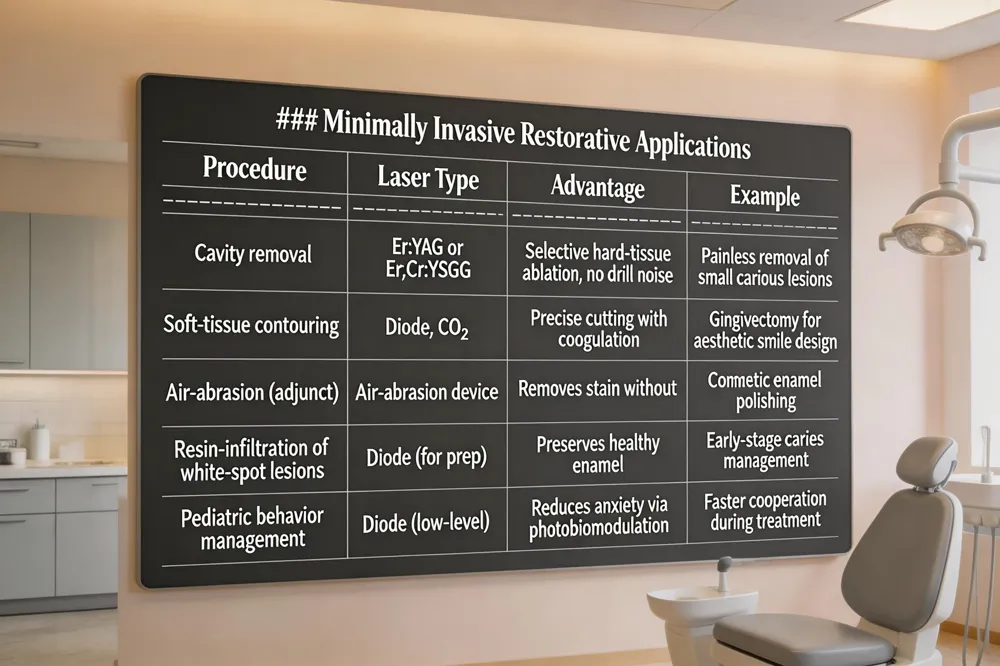
Minimally Invasive Restorative Applications
| Procedure | Laser Type | Advantage | Example |
|---|---|---|---|
| Cavity removal | Er:YAG or Er,Cr:YSGG | Selective hard‑tissue ablation, no drill noise | Painless removal of small carious lesions |
| Soft‑tissue contouring | Diode, CO₂ | Precise cutting with coagulation | Gingivectomy for aesthetic smile design |
| Air‑abrasion (adjunct) | Air‑abrasion device (often combined with laser) | Removes stain without heat | Cosmetic enamel polishing |
| Resin‑infiltration of white‑spot lesions | Diode (for prep) | Preserves healthy enamel | Early‑stage caries management |
| Pediatric behavior management | Diode (low‑level) | Reduces anxiety via photobiomodulation | Faster cooperation during treatment |
 Principles of minimally invasive dentistry
Minimally invasive dentistry (MID) preserves as much natural tooth structure as possible. Early detection through digital radiography, laser fluorescence, and intra‑oral cameras allows clinicians to intervene at the smallest lesions. Conservative removal of only diseased tissue, followed by adhesive, biocompatible restoratives, supports remineralization and long‑term health while reducing patient anxiety.
Principles of minimally invasive dentistry
Minimally invasive dentistry (MID) preserves as much natural tooth structure as possible. Early detection through digital radiography, laser fluorescence, and intra‑oral cameras allows clinicians to intervene at the smallest lesions. Conservative removal of only diseased tissue, followed by adhesive, biocompatible restoratives, supports remineralization and long‑term health while reducing patient anxiety.
Minimally invasive dentistry in pediatric dentistry In children, MID emphasizes prevention and gentle treatment. Techniques such as silver‑diamine fluoride, resin‑infiltration of white‑spot lesions, and the Hall technique avoid drilling. Laser‑assisted cavity removal, air‑abrasion, and atraumatic restorative treatment further minimize discomfort and preserve healthy dentin, fostering a positive oral‑health experience.
What are minimally invasive dental procedures? Procedures include laser gum therapy, micro‑drilling, air‑abrasion, and the use of conservative bonding materials for cavities, gum disease, and cosmetic concerns. These methods aim to remove only the diseased tissue while protecting surrounding structures.
Recent advances in minimally invasive dentistry High‑resolution digital scanning and AI‑enhanced imaging now detect lesions with micron accuracy. Er:YAG and diode lasers enable painless, selective hard‑ and soft‑tissue ablation, reducing the need for traditional drills. Bio‑active materials—silver diamine fluoride, CPP‑ACP, resin‑infiltrants—promote remineralization. Integration of 3‑D printing and AI‑driven treatment planning tailors conservative interventions, making laser‑assisted MID more efficient and patient‑friendly.
Practical Guidance for Midland Patients
Practical Information for Midland Patients
| Item | Details |
|---|---|
| Provider | Dr. Ashley E. Burns, DDS – offers full suite of soft‑ and hard‑tissue laser services |
| Laser Brands | Philips Lite, KLS‑3, Biolase Waterlase, Dentsply Sirona SiroLaser Advance/Blue, LightTouch |
| Safety Protocols | Wavelength‑specific protective eyewear, high‑volume suction, designated Laser Safety Officer, OSHA‑compliant training |
| Insurance & Financing | Therapeutic laser procedures often covered; CareCredit, in‑office plans, FSAs/HSAs accepted |
| What to Expect | Protective glasses, minimal or no anesthesia, reduced bleeding, faster healing, short recovery; post‑op instructions focus on gentle oral hygiene |
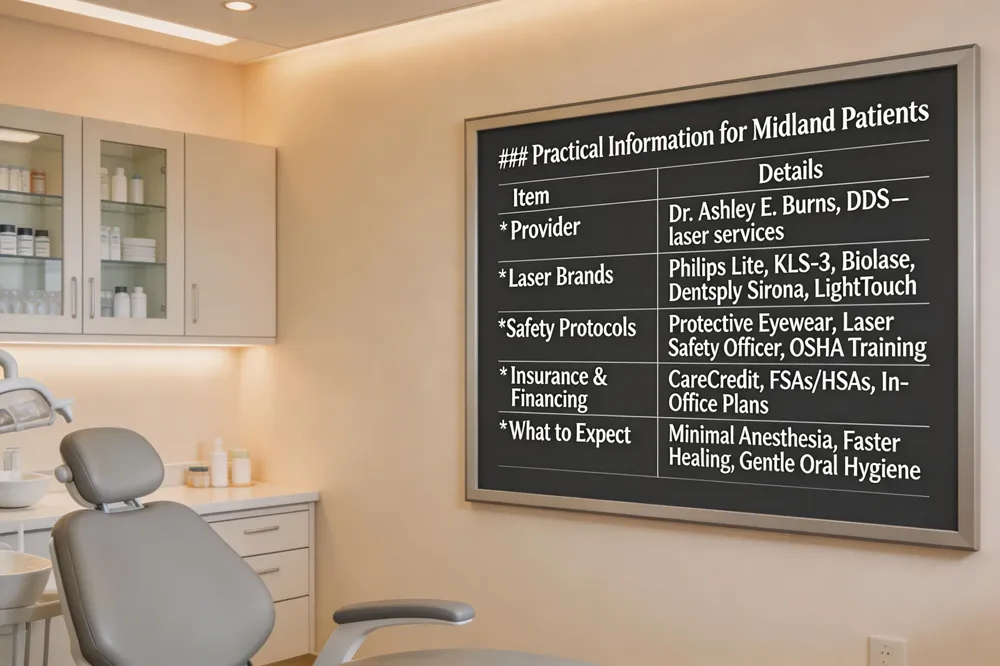 Finding a laser‑ready practice near you: In Midland, Texas, the most convenient option is Dr. Ashley E. Burns, DDS, who offers a full suite of minimally invasive, laser‑assisted services. The office is equipped with both soft‑tissue and hard‑tissue lasers, allowing treatments such as gingivectomy, frenectomy, crown‑lengthening, cavity preparation, and implant site conditioning without traditional scalpels or drills.
Leading dental laser brands and safety protocols: Major manufacturers include Philips Lite, KLS‑3, Biolase (Waterlase series), Dentsply Sirona (SiroLaser Advance/Blue), and LightTouch. These systems provide a range of wavelengths—CO₂ for soft tissue, Er:YAG/Er,Cr:YSGG for hard tissue, and diode lasers for periodontal disinfection. All lasers are used with wavelength‑specific protective eyewear, high‑volume suction to capture plumes, and a designated Laser Safety Officer who verifies proper training, power settings, and compliance with OSHA regulations.
Insurance, financing, and what to expect during a visit: Many dental plans cover laser procedures when medically indicated; the office can submit claims and discuss out‑of‑pocket estimates. Financing options, including CareCredit and in‑office payment plans, help offset the higher equipment cost. During your appointment you’ll wear protective glasses, may experience little or no anesthesia, and will notice reduced bleeding and faster healing compared with conventional surgery. Post‑treatment instructions focus on gentle oral hygiene and a short recovery period, allowing you to resume normal activities quickly.
Bringing Precision and Comfort to Every Smile
Laser dentistry offers millimeter‑level precision that conserves healthy tooth structure while eliminating diseased tissue, delivering the minimally invasive care patients expect. Reduced bleeding, minimal anesthesia, faster healing, and lower infection risk translate into a more comfortable experience. Dr. Ashley E. Burns, DDS, is dedicated to applying these evidence‑based advantages in Midland, ensuring each treatment aligns with patient‑centered outcomes and the latest safety standards. Explore our laser‑enabled services to discover a gentler, more efficient path to a healthier smile.