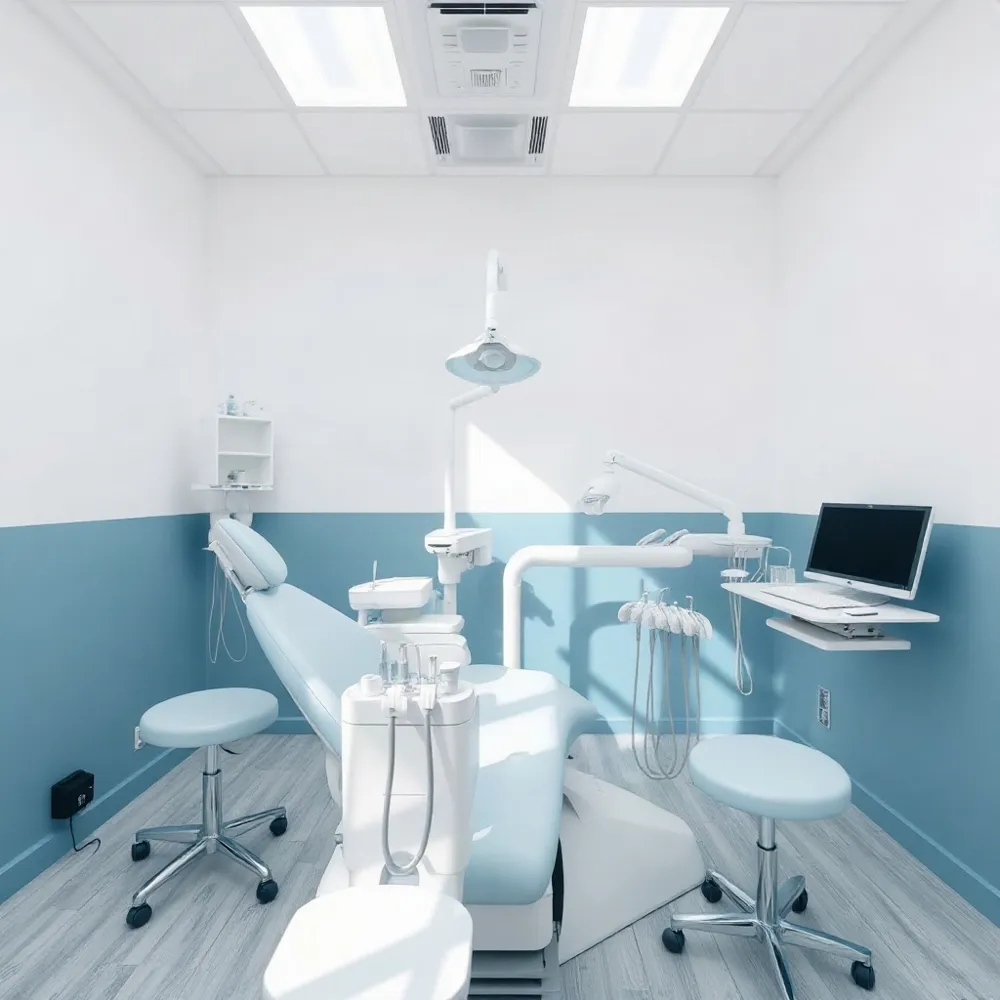
Welcome to a New Era of Patient‑Centred Dentistry
Technology is reshaping dental care by bridging gaps in access, precision, and communication. Virtual reality (VR) immerses patients in calming environments during treatment, lowering heart rate and perceived pain, while augmented reality (AR) projects digital models onto the clinician’s view, guiding instrument placement and reducing repeat visits. Together, these immersive tools let patients explore 3‑D treatment plans before a chairside session, improving understanding and consent. Clinicians benefit from real‑time feedback, haptic simulators that refine motor skills, and AI‑driven analytics that highlight knowledge gaps. The result is a more confident practitioner, a calmer patient, and higher treatment acceptance—all delivered with a warm, human‑centered approach that preserves empathy while leveraging cutting‑edge technology. These innovations also support remote consultations, allowing underserved communities to receive visual explanations and treatment planning without traveling long distances.
VR Distraction Therapy for Children and Adults
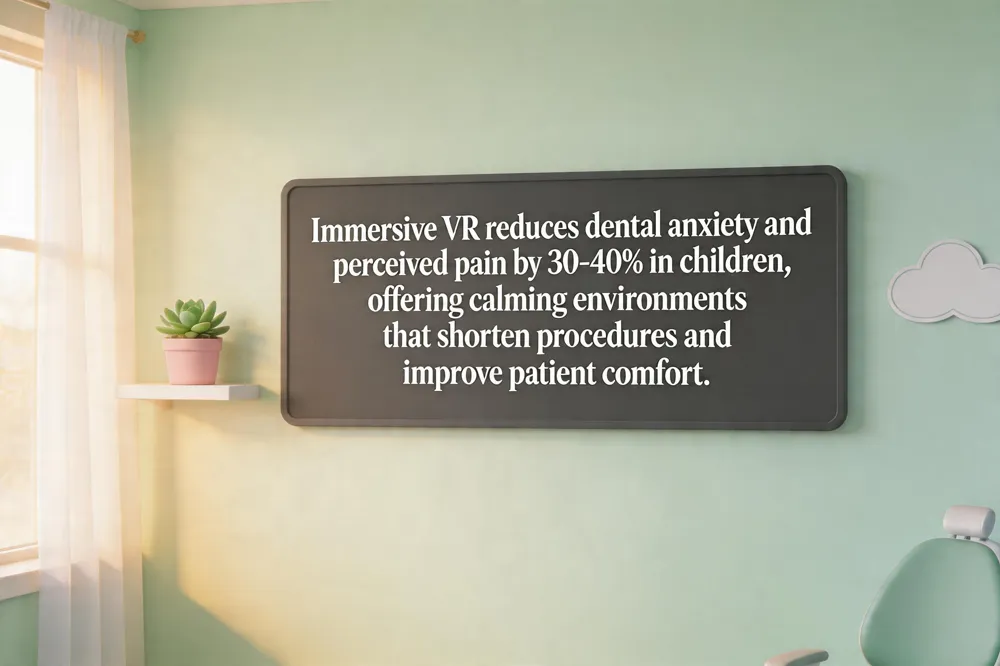 Immersive virtual reality (VR) offers a non‑pharmacologic solution for dental anxiety by transporting patients into calming, interactive environments that distract attention from the chair. In pediatric dentistry, VR headsets have been shown to lower fear scores and heart‑rate stress markers, with a 30‑40% reduction in perceived pain on the Wong‑Baker Faces Scale during procedures such as local anesthetic injections. Both passive scenic tours and active game‑based distractions engage children, making treatments feel shorter and less threatening.
Virtual reality in pediatric dentistry VR is becoming a powerful tool for managing pain and anxiety in young patients. Research indicates that immersive VR significantly lowers children's fear and physiological stress, while modern lightweight headsets are easy to clean and integrate into patient‑centered care plans.
Benefits of virtual reality in healthcare Beyond anxiety reduction, VR improves patient understanding through interactive education, leading to higher compliance and satisfaction. Clinicians can rehearse complex procedures on realistic 3‑D models, enhancing precision and confidence. VR also supports empathy training and remote tele‑health monitoring, expanding access to specialist guidance and reducing overall costs.
Overall, VR distraction therapy enriches the dental experience for both children and adults, aligning technology with compassionate, evidence‑based care.
Digital Dentistry: From Scans to Same‑Day Restorations
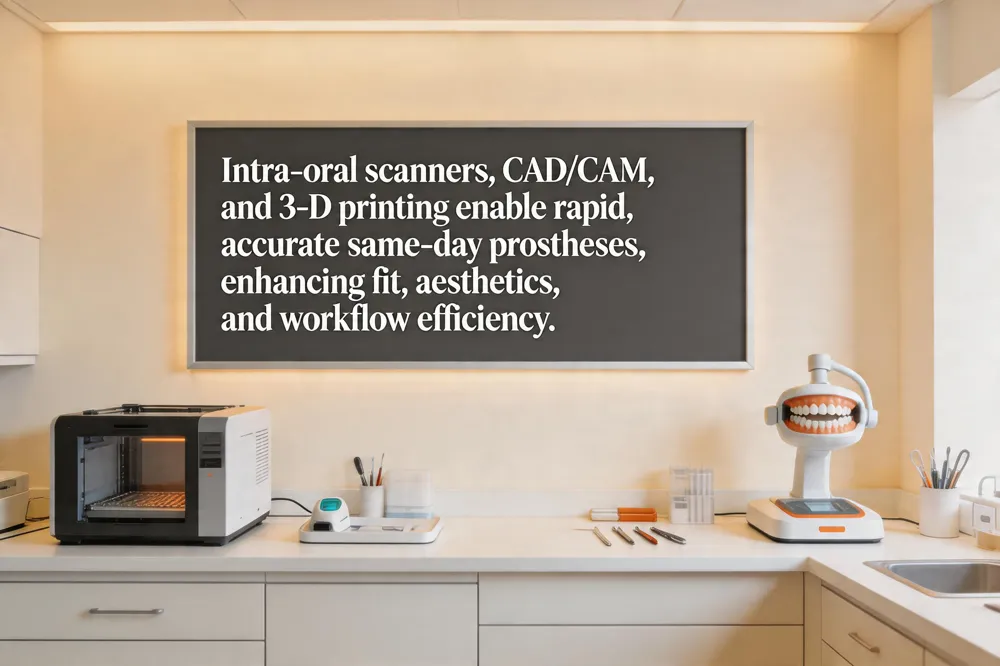 Digital dentistry refers to the use of computer‑based tools—such as intra‑otal scanners, 3‑D imaging, CAD/CAM software, and 3‑D printers—to diagnose, plan, and execute dental treatments. It replaces traditional impression trays and manual workflows with digital scans that create accurate, virtual models of a patient’s teeth and bite. These digital files allow clinicians to design crowns, bridges, implants, orthodontic appliances, and even complete smile designs in a matter of minutes, improving accuracy, shortening chair time, and enhancing patient communication.
In prosthodontics, the workflow begins with a high‑resolution intra‑oral scan that captures the full arch and occlusion. The data are imported into CAD software where restorations—crowns, bridges, implant‑supported prostheses, or removable dentures—are designed with precise margins and contacts. Guided‑implant planning and 3‑D‑printed surgical guides enable accurate osteotomies, while additive manufacturing of zirconia or lithium‑disilicate frameworks can produce same‑day provisional restorations. Studies show digitally fabricated prostheses have superior marginal fit and fracture resistance compared with conventional methods, delivering more predictable, aesthetically pleasing outcomes.
Continuing‑education courses such as Digital Smile Design, 3Shape Academy, and CEREC‑focused programs teach the full digital workflow—from scanning and virtual treatment planning to on‑site 3‑D printing. These ADA‑approved courses equip clinicians with the skills needed to integrate same‑day restorations into practice, improve case acceptance, and maintain a patient‑centered, technology‑driven approach.
Augmented Reality: Real‑Time Guidance in the Operatory
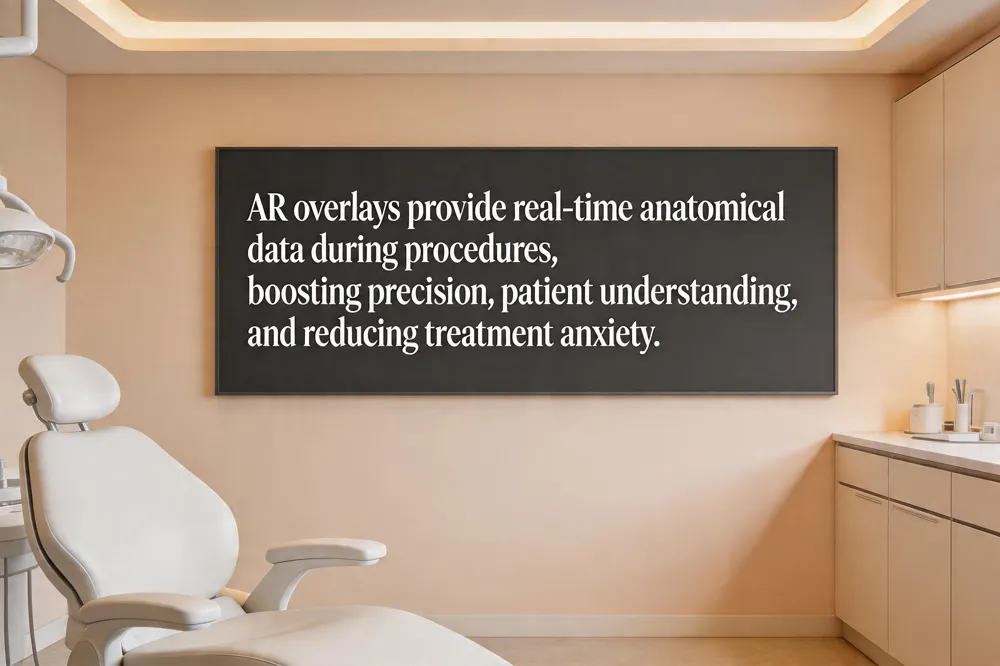 AR overlays digital models onto physical views, enhancing procedural visibility AR provides real‑time data overlays during dental procedures, enhancing surgical precision in tasks such as dental implant placement for patients, AR visualizations turn abstract treatment plans into interactive, on‑screen tours of their own teeth, fostering clearer understanding, higher acceptance rates, and reduced anxiety. In dental education, AR simulations let students rehearse complex cases on virtual models, building confidence and skill retention without the need for physical cadavers. Overall, AR streamlines diagnosis, treatment planning, and intra‑operative guidance, delivering safer, faster, and more predictable dental care.
Virtual Reality in Dental Education: A Flight‑Simulator for Future Clinicians
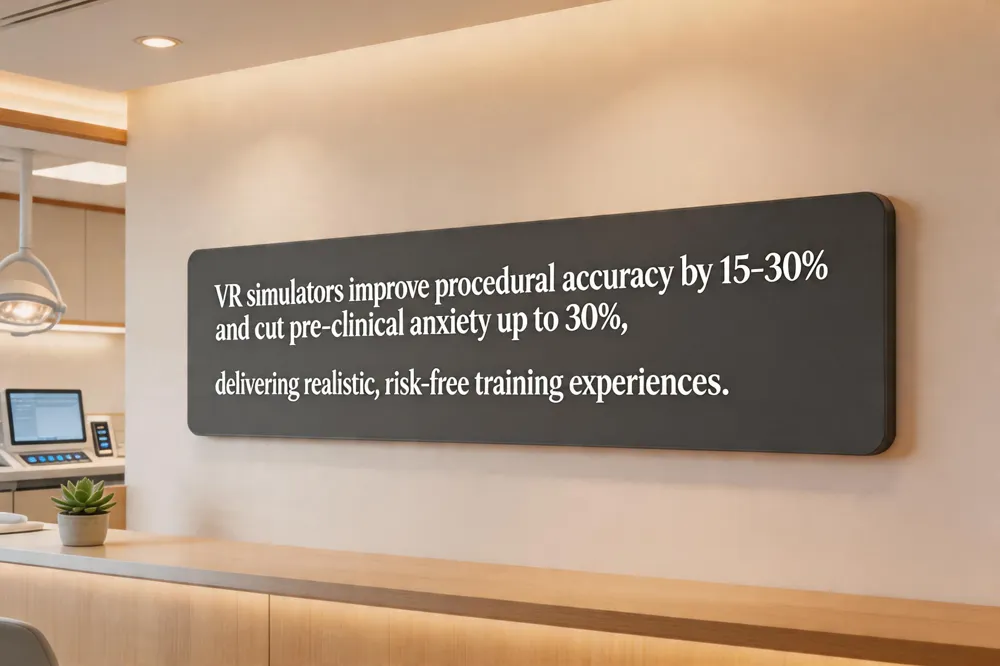 Virtual reality (VR) platforms let dental students immerse themselves in realistic clinical scenarios, where they can practice procedures, diagnose pathologies, and interact with virtual patients without any risk to real people. Immersive clinical‑scenario training replicates the layout of a dental office, complete with 3‑D patient anatomy, instrument sets, and real‑time feedback on hand‑eye coordination, force application and procedural timing. Systematic reviews of 73 studies involving 5,275 participants report that VR and interactive simulators produce statistically significant improvements in educational outcomes—students achieve 15‑30 % higher procedural accuracy, faster skill acquisition, and up to a 30 % reduction in pre‑clinical anxiety compared with traditional mannequin labs. Evidence from NYU College of Dentistry illustrates these gains: a custom VR anesthesia simulator models a full dental operatory and a patient’s head and mouth, allowing second‑year students to rehearse local‑anesthesia injections repeatedly. Real‑time visual and haptic feedback mirrors the “flight‑simulator” experience used in pilot training, building a mental map of the task that translates to increased confidence and smoother transitions into real‑world clinics. While the technology offers clear benefits, wider adoption must address equipment cost, curriculum integration, and faculty training to ensure consistent, patient‑centered outcomes.
Haptic Simulators and the Simodont System
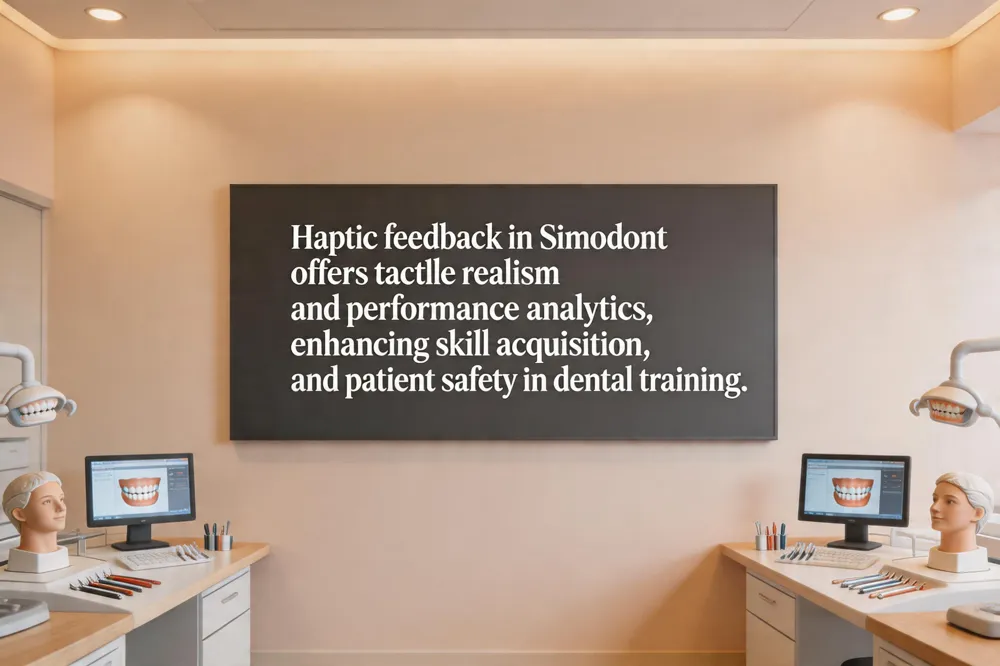 Haptic simulators now deliver real‑time tactile feedback, letting students feel the resistance of enamel, dentin, or bone as they drill, inject, or place implants. Sensors capture hand‑movement data, and the system instantly alerts the learner to excessive force or off‑axis trajectories, creating a risk‑free rehearsal of complex procedures. The platform also provides performance analytics—time‑to‑completion, error rates, and precision scores—so educators can track progress and tailor remediation, while students receive objective, data‑driven insights that accelerate skill refinement.
Globally, dental schools have embraced these tools; institutions from the United States to Europe and the Middle East integrate haptic VR into curricula, reporting higher confidence, reduced anxiety, and improved procedural accuracy.
Simodont dental Trainer: Simodont Dental Trainer is a high‑fidelity, VR‑based simulation system that provides realistic, haptic‑feedback dental procedures for students and clinicians. It offers a wide range of customizable scenarios—cavity preparation, crown design, implant placement, root canals, and more—using anatomically accurate virtual teeth and advanced sensors that track hand movements. Real‑time feedback and performance analytics help learners refine their technique, improve precision, and reduce errors before working on live patients. The immersive platform is used by dental schools and training centers worldwide to enhance skill acquisition, boost confidence, and promote patient safety. By integrating Simodont into your practice’s continuing‑education program, you can ensure that your team stays at the forefront of modern, technology‑driven dental training.
Expanding Access: Tele‑Dentistry, Dental Deserts, and Market Growth
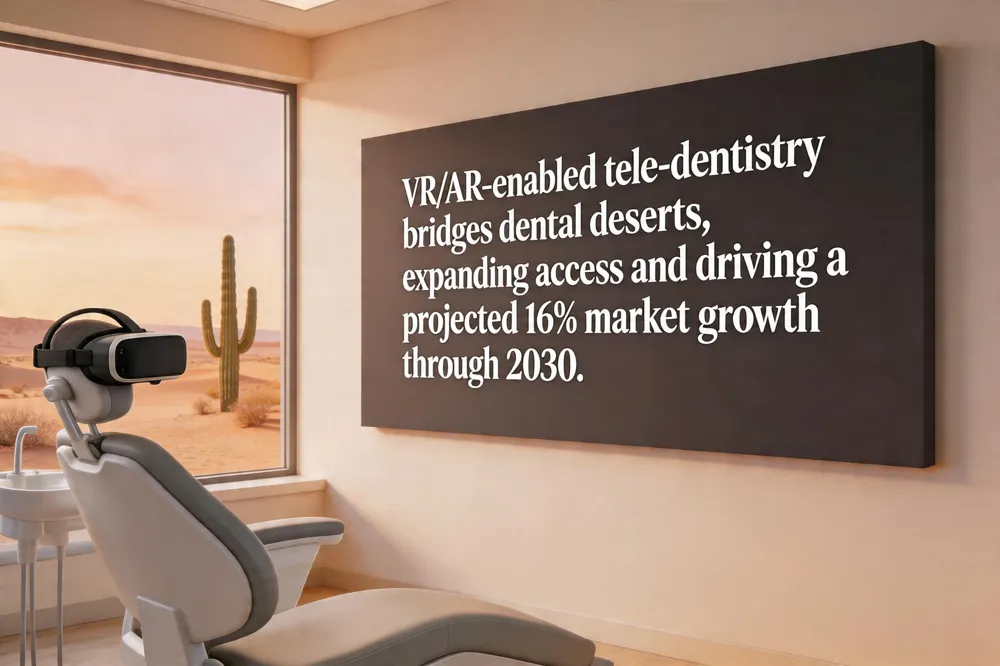 Tele‑dentistry is poised to expand by roughly 16 % through 2030, driven by technologies that make remote consultations smoother and more engaging for patients. One of the most pressing barriers to oral health care is the prevalence of dental deserts—areas where fewer than one provider serves 4,000 residents. About one‑third of U.S. residents live in these underserved zones, leading to delayed or avoided care, especially among the 36 % of the population who experience dental anxiety. Virtual reality (VR) and augmented reality (AR) can help bridge this geographic gap. By converting laser scans into interactive 3‑D models, dentists can conduct virtual examinations, treatment planning, and even immersive patient education without the patient leaving home. AR overlays can guide clinicians during remote procedures, while VR distraction therapy eases patient fear during at‑home consultations. Together, these immersive tools not only improve the patient experience but also extend high‑quality dental services into communities that previously lacked access, supporting the projected growth of the tele‑dentistry market.
Future Directions: AI‑Powered VR, Empathy Training, and Patient‑Centred Care
 Dental VR delivers immersive, 3‑D visualizations that help patients understand treatment plans and see expected outcomes, easing anxiety before and during procedures. By streaming relaxing videos, cartoons, or mini‑games through smart glasses, the technology provides a distraction that reduces stress and shortens appointment times. For clinicians and dental students, VR simulators act as a “flight‑simulator,” allowing endless practice of skills such as local‑anesthesia injections and instrument handling without risk to real patients. Integrated with X‑ray and intraoral imaging, the system also supports real‑time treatment planning and chair‑monitoring, improving workflow efficiency.
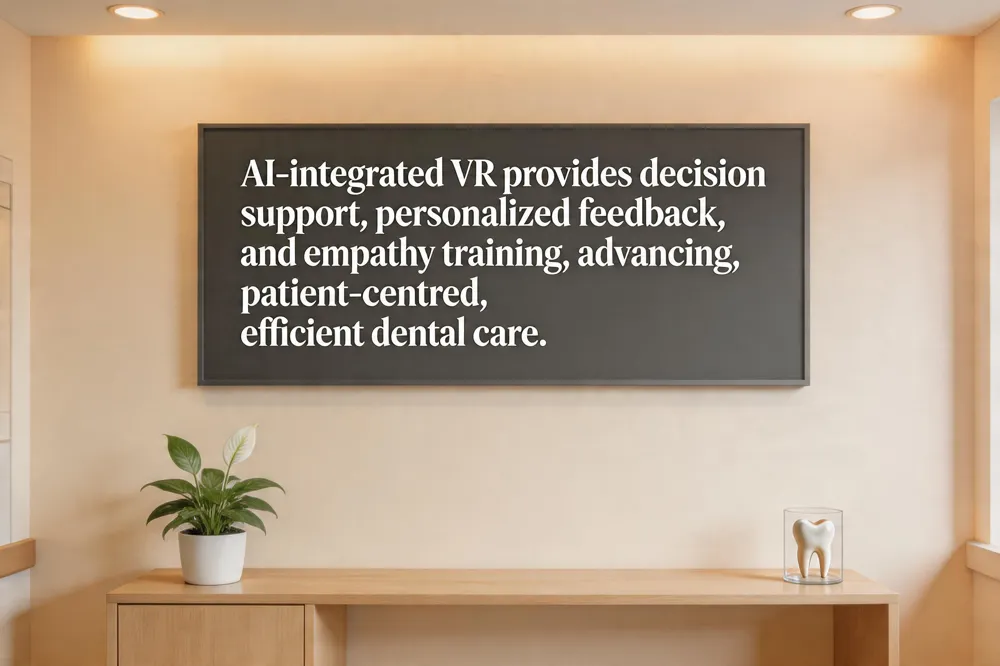
Combining AI with immersive simulations adds real‑time decision support: AI can analyze a patient’s CBCT or scan data, suggest optimal drill trajectories, and adapt the virtual scenario to the learner’s performance, providing personalized feedback and accelerating skill mastery. AI‑driven avatars also enable empathy and communication skill development; trainees practice delivering explanations and answering questions in a virtual patient, building bedside manner that translates to higher satisfaction in the clinic.
Long‑term, for practice efficiency include reduced cancellations, lower reliance on pharmacologic sedation, and faster onboarding of new staff. The data collected from VR sessions can be used to track competency, streamline credentialing, and continuously refine protocols, ultimately enhancing patient‑centred care while cutting costs.
Putting It All Together for a Better Dental Experience
Virtual reality (VR) and augmented reality (AR) are reshaping dental care by reducing anxiety, improving procedural understanding, and enhancing clinical precision. Immersive VR distraction lowers heart rate and fear for the 36 % of patients with dental phobia, while AR overlays guide clinicians during implant placement and other complex procedures. Dr. Burns’ practice is committed to staying at the forefront of these advances—investing in lightweight, sub‑$1,000 headsets, integrating 3‑D scans that can be explored in a virtual environment, and planning future haptic feedback tools that mimic real‑world tactile sensations. We invite you to experience this technology‑forward, patient‑centered care and see how the future of dentistry can make your visit calmer, clearer, and more comfortable.