Introducing Sustainable Tooth Replacement
Dental implants have become the preferred solution for missing teeth because they offer a permanent, natural‑looking restoration that eliminates the need for removable dentures or bridges. Their biocompatible titanium or zirconia construction integrates with the jawbone through osseointegration, preserving bone density and facial structure while delivering superior chewing efficiency and speech clarity. From an environmental standpoint, a single implant can last a lifetime, reducing the material waste and carbon emissions associated with frequent denture replacements. At Ashley E. Burns, DDS we incorporate digital imaging, reusable instruments and recyclable packaging, ensuring each implant procedure supports patient health and a greener dental practice.
The Environmental Edge of Dental Implants
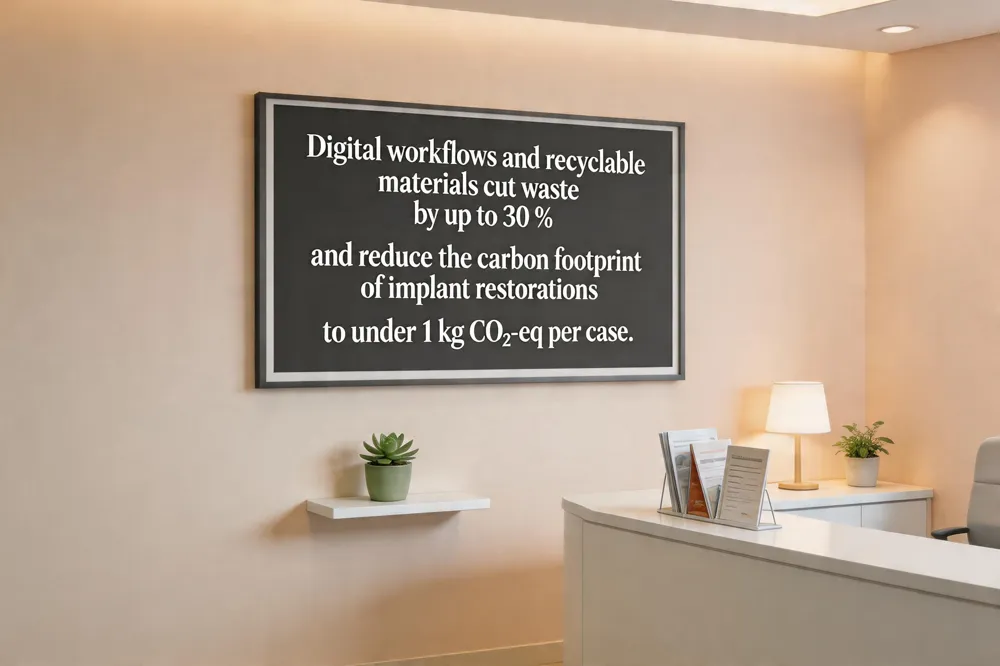 Dental implants offer a clear sustainability advantage over dentures and bridges. A single titanium or zirconia implant can last 25 years or more, eliminating the frequent replacements that generate extra material, energy, and waste. Studies show that digital implant workflows—CAD/CAM design, intra‑oral scanning, and 3‑D‑printed surgical guides—cut material waste by up to 30 % and lower carbon emissions compared with traditional impression trays and milling. The carbon footprint of a full implant‑supported restoration is estimated at under 1 kg CO₂‑equivalent per procedure, roughly 40 % less material consumption over a patient’s lifetime when compared with removable prostheses.
Eco‑friendly dental materials further reduce impact. Recyclable impression trays, reusable stainless‑steel suction tips, and biodegradable sponges replace single‑use plastics. Low‑VOC, water‑based composites and metal‑free zirconia crowns provide durable restorations with a smaller chemical footprint. Clinics that adopt digital records, LED lighting, and water‑saving fixtures cut utility use, while recyclable packaging and reusable surgical trays keep waste under 1 kg per case.
By integrating these green technologies and materials, dental practices not only improve patient outcomes but also lower their environmental footprint, making implants a truly sustainable long‑term solution.
Clinical Benefits and Long‑Term Health Outcomes
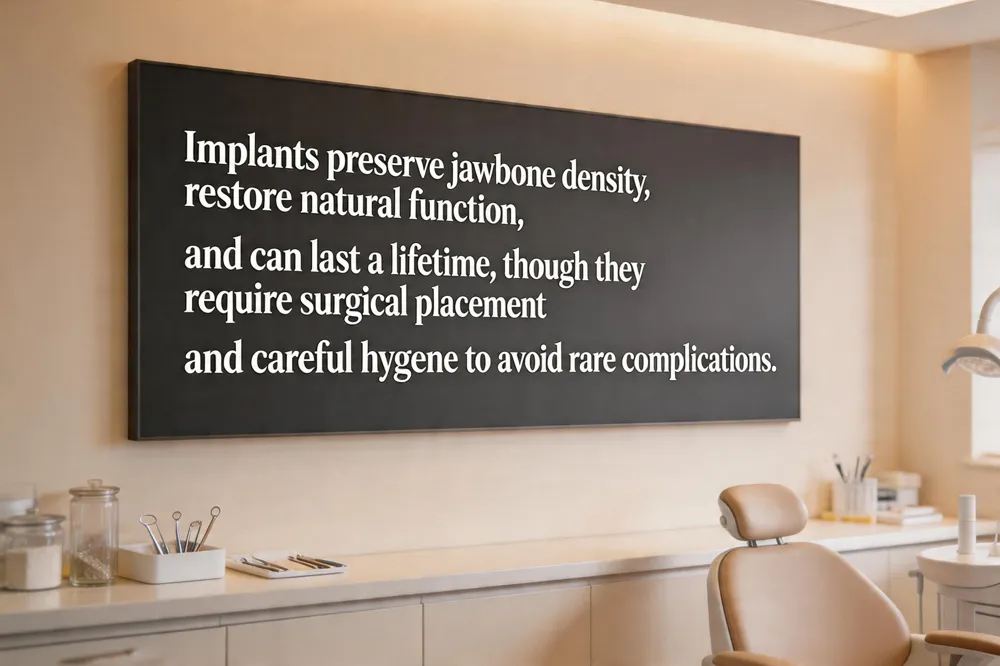 Dental implants preserve jawbone density by stimulating bone remodeling through osseointegration, preventing the up to 25 % bone loss that can occur within the first year after extraction. This bone preservation maintains facial structure and reduces the need for future grafts. Functionally, implants restore chewing efficiency, speech clarity, and bite stability comparable to natural teeth, allowing patients to enjoy a broader diet and improve overall nutrition.
Advantages and disadvantages of dental implants – They look, feel, and function like natural teeth, require only routine brushing and flossing, and avoid altering adjacent teeth, making them more conservative than bridges. Longevity can reach a lifetime with proper care, but the upfront cost is higher and a surgical placement with a healing period is required. Success hinges on clinician expertise; rare complications include infection or implant failure.
Tooth implant side effects – Mild pain, swelling, bruising, and temporary numbness are common and resolve within days to weeks. More serious issues such as infection, nerve injury, or sinus problems are less frequent and should prompt immediate dental contact.
Long‑term side effects – Peri‑implantitis, gum recession, persistent nerve irritation, and, in rare cases, metal allergy can arise over years, emphasizing the need for diligent oral hygiene and regular check‑ups.
Reasons not to get dental implants – Insufficient bone, untreated gum disease, uncontrolled systemic conditions (e.g., diabetes, lupus), heavy smoking, high cost, or inability to maintain long‑term care may make removable prosthetics a more suitable interim solution.
Patient‑Centric Cost and Care Considerations
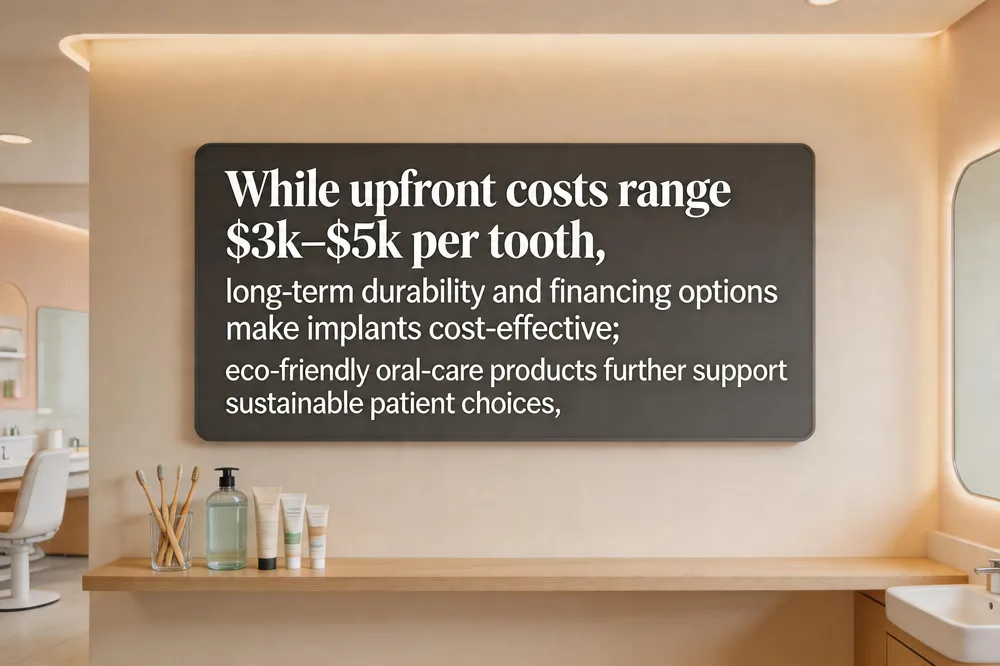 Dental implants are a long‑term solution that can be cost‑effective when the full life‑cycle is considered. In the United States a single‑tooth implant typically ranges from $3,000 to $5,000, including the titanium fixture, abutment and custom crown. Prices vary by material (titanium is generally less expensive than zirconia), the need for adjunct procedures such as bone grafts, and regional market factors; many Texas offices quote $2,500‑$3,500 for straightforward cases. Endosteal titanium implants alone cost $1,000‑$2,500, while premium zirconia or mini‑implants can reach $1,500‑$3,500 per unit. Full‑arch solutions like All‑on‑4 fall between $15,000 and $30,000, reflecting the additional implants and any sinus lifts. Insurance often covers a portion of the surgical component, and most practices offer flexible financing, health‑savings‑account (HSA) use, and low‑interest payment plans to improve affordability.
Patient reviews frequently highlight the stability, natural aesthetics, and reduced maintenance of implants compared with removable dentures. Eco‑friendly oral‑care products—biodegradable toothbrushes, bamboo handles, low‑VOC composite resins, and recyclable packaging—receive positive feedback for their environmental stewardship and comfort. Sustainable practices such as digital impressions, reusable sterilization trays, and LED curing lights further lower waste and energy use. The Eco‑Dentistry Association (EDA) provides guidelines and certification (GreenDOC™) for practices committed to green dentistry, helping patients locate environmentally responsible providers. By combining transparent pricing, financing options, and sustainable clinical protocols, patients can achieve lasting oral health while supporting a healthier planet.
Implementing Green Practices in the Dental Office
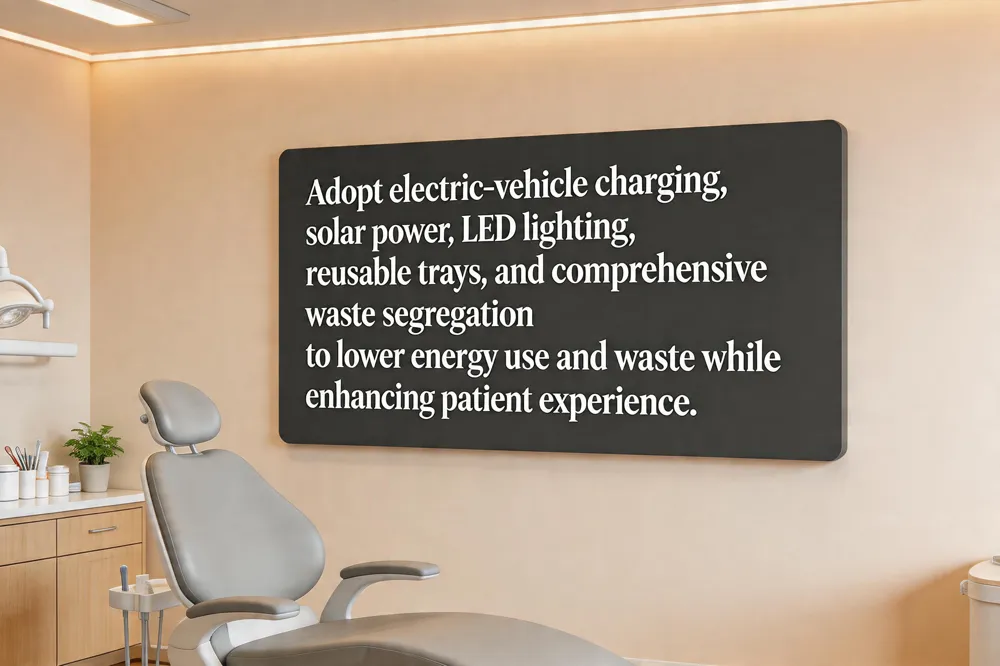 Sustainable Dentistry: How‑to Guide for dental practices – Begin by encouraging active travel and installing electric‑vehicle charging stations for staff and patients. Prioritize eco‑friendly procurement: choose paper, timber and biodegradable supplies, reduce plastic and chemical use, and work with suppliers to adopt greener products while optimizing inventory. Boost energy efficiency with green electricity, solar panels, improved insulation, LED lighting, smart thermostats, and low‑flow water fixtures. Implement comprehensive waste management that includes clinical waste segregation, recycling, paper reduction, reuse of durable items, safe disposal of medications and amalgam, and strategies to minimize food and water waste. Embed sustainability by communicating the vision, creating a formal policy, measuring progress, and enhancing biodiversity with wildlife‑friendly landscaping.
Designing a dental office – A patient‑centered layout separates operatory from reception, using a single‑entry room for privacy and workflow efficiency. Define infection‑control zones with dedicated sterilization stations and hands‑free fixtures. Employ ergonomic workstations, technology‑free delivery arms, and minimal cabling to reduce strain and clutter. Incorporate natural lighting, calming color palettes, low‑VOC paints, reclaimed wood, and other sustainable materials to create an eco‑friendly atmosphere. Ensure flexibility for future technology upgrades without major renovations.
Sustainability in dentistry – Deliver high‑quality, preventive care while minimizing environmental impact. Use reusable instruments, reduce single‑use plastics, and select eco‑friendly materials. Conserve energy and water through efficient equipment, LED lighting, and low‑flow devices. Educate patients on the environmental impact of oral‑health choices. Follow professional toolkits and guidelines to measure carbon emissions, implement waste‑reduction strategies, and earn sustainability recognitions.
Awareness and barriers to sustainability in dentistry: a scoping review – Awareness of environmental impacts remains low among clinicians and patients. Primary barriers include cost concerns, lack of standardized guidelines, challenges in managing biomedical waste, limited education on sustainable practices, and supply‑chain issues. Addressing these gaps is essential to close the divide between sustainability aspirations and practical implementation.
Understanding Implant Types and Future Innovations
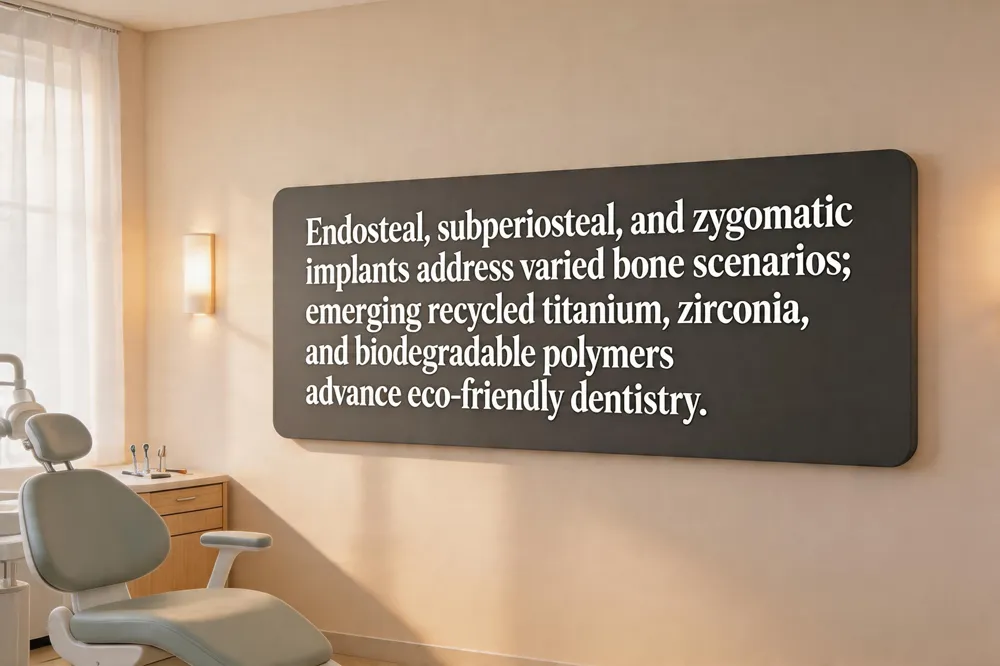 Dental implants come in three main classifications. Endosteal implants are screw‑like titanium posts placed directly into the jawbone and are the most common solution for single or multiple tooth replacements. Subperiosteal implants sit on top of the bone beneath a thin gum layer, offering an option for patients with limited bone height who cannot undergo grafting. Zygomatic implants are longer posts anchored in the dense cheekbone (zygomatic bone) and are used when the upper jaw lacks sufficient bone for traditional implants. The choice among these types depends on bone density, anatomy, and restoration needs.
Emerging eco‑friendly implant materials are reshaping the field. Biocompatible titanium remains a staple, but manufacturers are introducing recycled titanium alloys, zirconia ceramics, and biodegradable polymer components that lower the carbon footprint. Digital intra‑oral scanning and CAD/CAM milling reduce waste by eliminating stone models and disposable trays, while recyclable packaging and reusable sterilization trays further cut environmental impact.
Patient education on sustainable oral care emphasizes proper hygiene to extend implant longevity, the use of biodegradable toothbrushes and floss, and choosing practices that employ paper‑less records, LED lighting, and green waste‑management protocols. By combining the right implant type with eco‑conscious materials and habits, patients achieve lasting oral health while supporting a healthier planet.
Choosing a Green Smile with Dr. Burns
Dental implants are a sustainable solution because they are made from recyclable titanium or zirconia, last a lifetime with proper care, and preserve jawbone density, eliminating the need for frequent denture replacements and the associated material waste. Dr. Ashley E. Burns, DDS, embraces eco‑friendly dentistry by using digital intra‑oral scanning, CAD/CAM design, and reusable surgical instruments, which cut plastic waste and lower energy consumption. Her practice also recycles implant packaging, employs low‑temperature sterilization, and promotes paper‑less records. Experience a healthier smile and a greener planet—schedule your eco‑conscious implant consultation with Dr. Burns today.