Introduction to Dental Implant Restoration
Definition of Dental Implant Restoration
Dental implant restoration is a dental procedure that replaces missing teeth by surgically inserting a titanium post into the jawbone. This post acts like a natural tooth root, supporting a prosthetic tooth such as a crown, bridge, or denture to restore both function and appearance.
Overview of the Restoration Process
The restoration process begins with an initial consultation to assess candidacy. Then, the titanium implant is surgically placed into the jawbone and allowed to heal through osseointegration — a process where the bone fuses with the implant, typically taking three to nine months. After healing, an abutment is attached, and a custom-made prosthetic tooth is secured, matching natural teeth in look and function.
Primary Benefits to Oral Health and Aesthetics
Dental implants stimulate the jawbone, preventing bone loss and maintaining facial structure to avoid the sunken appearance that can result from missing teeth. They restore normal chewing and speaking abilities, improve smile aesthetics, and preserve adjacent teeth. With proper care, implants provide a durable, natural-looking, and long-lasting solution that enhances overall oral health and patient confidence.
The Dental Implant Restoration Process: From Consultation to Completion
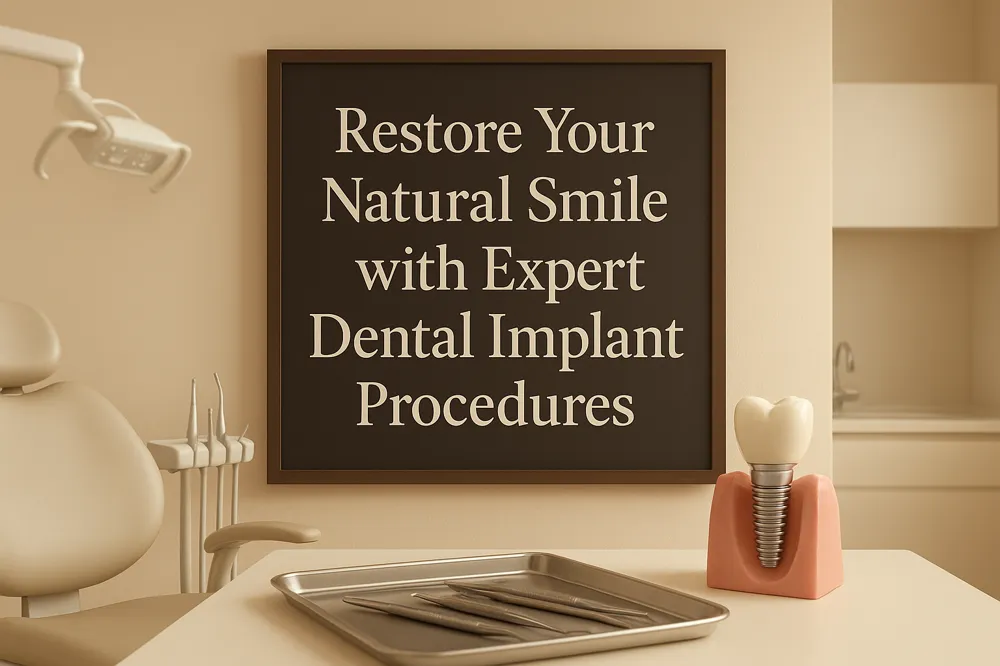
What is dental implant restoration?
Dental implant restoration is a durable and effective solution for replacing missing teeth. It involves surgically placing a titanium implant into the jawbone that acts as a stable root. After the healing and integration process called osseointegration healing period, an abutment is attached to the implant, providing a connector to secure an artificial tooth such as a crown, bridge, or denture. This method restores natural function and appearance, often lasting over 15 years and preserving Dental implants and jawbone health.
Initial consultation and assessment
The process begins with a comprehensive consultation where the dentist evaluates oral health and jawbone density. Advanced imaging, such as Digital X-rays and 3D scans, is used to map the jawbone structure precisely. This step ensures accurate planning and identifies if bone grafting is needed to strengthen the implant site.
Surgical placement of titanium implant
In a carefully controlled surgical procedure, the Titanium Post in Jawbone is inserted into the jawbone. Titanium is biocompatible, allowing the implant to fuse naturally with the bone over time, mimicking the function of natural tooth roots.
Osseointegration and healing phase
Following surgery, a healing period of three to nine months allows osseointegration—where the bone grows around and integrates with the implant. This phase is vital to ensure the implant’s strength and stability.
Attachment of abutment and prosthetic crown or bridge
After successful healing, the abutment is attached to the titanium post. The prosthetic tooth, whether a crown, bridge, or denture, is custom-made to match the natural teeth and then secured to the abutment, restoring full functionality and aesthetics.
Role of advanced imaging and technology for precision
Throughout the process, cutting-edge imaging technology and digital planning tools provide high precision in implant placement. This minimizes complications and optimizes both the function and appearance of the final restoration.
Candidate requirements including jawbone health
Ideal candidates generally have sufficient healthy jawbone to support the implant. If bone loss has occurred, grafting procedures can restore bone density. Good overall oral health and absence of active gum disease are important prerequisites to ensure successful implant integration and longevity.
| Step | Description | Importance |
|---|---|---|
| Initial consultation | Oral exam and advanced imaging | Accurate diagnosis and treatment planning (Dental implant restoration) |
| Implant surgery | Titanium post surgically inserted into jawbone | Foundation for stable tooth replacement (Dental Implant Surgical Placement) |
| Osseointegration | Healing phase where bone fuses with implant | Ensures implant strength and durability (Osseointegration Process) |
| Abutment and crown placement | Connecting and restoring tooth appearance | Restores function and natural aesthetics (Custom-Made Dental Crown |
| Candidate evaluation | Assess bone health and oral condition | Determines suitability and success rate (Dental implant candidacy examination |
Enhancing Oral Function and Health with Dental Implants
What do new dental implants aim to improve?
New dental implants benefits focus on enhancing oral function, appearance, and providing long-term stability for those who have missing teeth. Advances such as nanotechnology improve the bonding between implants and the jawbone, speeding up osseointegration healing period and increasing durability. Modern techniques including 3D printing in dental implant fabrication and AI-driven treatment planning allow for custom, minimally invasive implant procedures. These innovations result in more natural-looking teeth, faster healing, and better patient outcomes while reducing discomfort.
How do dental implants improve chewing efficiency and eating variety?
Dental implants are securely anchored in the jawbone, restoring the full force and efficiency of natural teeth. This stability allows patients to comfortably eat a wide variety of foods, including tough or fibrous items like steak, nuts, and apples. Improved chewing aids digestion and supports a nutrient-rich diet, contributing positively to overall health. Learn more about How dental implants restore chewing function.
Can dental implants enhance speech and eliminate denture issues?
Unlike removable dentures, which may slip or click while talking, dental implants stay firmly in place. This firm foundation supports clear speech, eliminates slurring or whistling sounds, and gives patients confidence when speaking. The natural appearance and secure fit reduce self-consciousness often caused by missing teeth or unstable dentures. See details on dental implants and speech clarity.
Do dental implants stimulate the jawbone to prevent bone loss?
Yes, How dental implants mimic natural tooth roots, stimulating the jawbone through Osseointegration of titanium implants. This stimulation maintains bone density and prevents the bone deterioration that normally follows tooth loss. Preserving the jawbone helps maintain facial contours and prevents the sunk-in appearance related to bone shrinkage. For additional insights, see how dental implants strengthen jawbone health.
How do implants preserve natural tooth alignment and gum health?
Dental implants fill the gaps left by missing teeth, preventing adjacent teeth from shifting out of position and reducing risks such as cavities and gum disease. Since implants do not rely on or affect neighboring teeth, they preserve natural tooth structure better than traditional bridges. Moreover, filling tooth gaps supports healthy gums by reducing plaque buildup. Read more on Dental implants as artificial tooth roots.
What is the impact on digestion and overall nutrition?
By restoring the ability to chew effectively, dental implants support better digestion and nutrient absorption. Patients can enjoy a varied and balanced diet without the restrictions caused by missing teeth or unstable dentures. This improvement in oral function translates to better overall well-being and quality of life. Explore functional benefits of dental implants.
Dental Implants and Facial Structure: Preserving Your Natural Appearance
Do dental implants improve facial structure?
Yes, Dental implants benefits can significantly improve facial structure by providing necessary support where teeth are missing.
Effect of tooth loss on jawbone deterioration
When teeth are lost, the jawbone no longer receives stimulation from tooth roots, leading to jawbone deterioration from missing teeth and resorption. This process can cause a Dental implants and preventing sunken appearance and premature aging.
Osseointegration stimulating bone growth
Dental implants are made of biocompatible Titanium dental implants surgically anchored into the jawbone. Through the Osseointegration of titanium implants, the implant fuses with the bone, stimulating new bone growth and preserving jawbone density.
Prevention of sunken facial appearance and sagging
By maintaining jawbone volume, Preserving facial contours with dental implants. They support the cheeks and lips, which helps avoid sagging and the sunken look typically associated with missing teeth.
Support for cheeks and lips enhancing youthful look
Implants contribute to a more youthful and vibrant appearance by maintaining the natural shape and fullness of the mid-face, which is crucial for Enhanced facial aesthetics with dental implants.
Comparison with dentures and bridges regarding bone preservation
Unlike dentures or traditional bridges, which sit on the gums and may accelerate bone loss, Dental implants as artificial tooth roots, preserving facial structure and preventing bone deterioration. They also avoid modifying adjacent teeth, protecting Clinical efficacy in dentition defects.
Dental implants offer a permanent, natural-looking solution that not only restores dental function but also supports Benefits of Dental Implants. Proper care and regular dental visits ensure their effectiveness in preserving your natural appearance.
Aesthetic Benefits and Patient Confidence with Dental Implants
How do dental implants enhance the natural appearance of your smile?
Dental implants are custom-designed to match the color, size, and shape of surrounding natural teeth. This personalized fit creates a seamless and natural-looking smile, avoiding the artificial appearance often associated with some dental restorations. Learn more about the Benefits of Dental Implants and how Dental implants benefits contribute to a natural look and feel.
In what ways do dental implants improve smile aesthetics and self-esteem?
By filling gaps where teeth are missing, implants restore complete smiles which greatly boost patient self-confidence. They support the facial structure, preventing the sunken appearance caused by bone loss, and help maintain youthful facial contours. Discover how Dental implants supporting overall oral health and Facial structure preservation assist in preserving facial aesthetics.
How do implants provide stability compared to traditional dentures and bridges?
Unlike dentures that can slip or shift and bridges requiring adjacent teeth alteration, implants are securely anchored into the jawbone through osseointegration healing period. This prevents slipping or discomfort, allowing patients to eat, speak, and smile confidently without fear of movement. For details, reference Stable foundation for prosthetic teeth and Osseointegration Process.
What advantages do dental implants have over traditional dentures and bridges?
Dental implants preserve jawbone health by stimulating bone growth, unlike dentures that may accelerate bone loss. They do not rely on adhesives, avoid damage to neighboring teeth, and eliminate the inconvenience of frequent repairs or removals. Read about the Advantages of implant supported restorations and Dental implants vs dentures to understand these benefits.
How do dental implants boost social confidence and communication?
With their natural appearance and secure fit, implants allow patients to speak clearly without slurring or clicking sounds. This improvement in speech, alongside a restored, attractive smile, enhances social interactions and reduces embarrassment, leading to improved quality of life. Explore how Dental implants help restore proper chewing and speech and Dental implants benefits support communication and confidence.
Complementary Cosmetic Dentistry Context:
Cosmetic dentistry enhances your smile through bleaching, contouring, and restoring chipped teeth, increasing symmetry and confidence. Dental implants, as a form of prosthodontics, provide a strong foundation for these cosmetic improvements, delivering durable and aesthetic results.
Through addressing both function and appearance, dental implants offer patients a lasting restoration that not only looks natural but supports oral health and improves psychological well-being. Additional information on Dental implant restoration highlights how implants combine function with aesthetics.
Considering Dental Implant Restoration: Costs, Longevity, and Care
What Are the Typical Costs and Financial Considerations for Implant Procedures?
Dental implant procedures typically cost between $3,000 and $6,000 per implant. When considering full mouth restoration, costs can vary much more, generally ranging from $15,000 to $80,000 based on the extent of treatment required. This range accounts for multiple procedures such as crowns, veneers, or orthodontics alongside implants. For instance, crowns typically cost $500 to $2,000 per tooth, and veneers may range from $400 to $2,500 each. Full arch replacements like All-on-4 average around $12,000. These expenses depend on factors including geographic location, materials, and the practitioner's expertise (Dental Implant Procedures in the United States, Dental Implant Restorations Process.
How Long Do Dental Implants Last With Proper Care?
Dental implants are designed as a durable, long-term solution. With good oral hygiene and regular dental visits, implants can last several decades or potentially a lifetime (Longevity of dental implants). The titanium posts fuse securely to the jawbone through osseointegration of titanium implants, giving them the stability of natural teeth. Restoration parts such as crowns or bridges typically last approximately 15 years before needing replacement, while dentures secured by implants last at least seven years (Restorative Parts Lifespan.
What Are the Maintenance Practices for Dental Implants?
Maintenance involves daily brushing and flossing similar to natural teeth. Regular dental check-ups are essential to monitor the health of implants and surrounding tissues (Dental implant care tips, Care and maintenance of dental implants. Avoiding habits that damage teeth, such as smoking or chewing hard objects, also prolongs implant life. Maintaining a balanced diet supports overall oral health and bone stability (Healthy diet for dental implants).
What Are the Potential Risks and Requirements for Candidates?
Implants require sufficient bone density in the jaw to ensure proper support (Dental implant candidacy examination. Patients with active gum disease or certain health conditions may be unsuitable (Risk factors affecting dental restoration efficacy). Potential complications are rare but can include infection, nerve or sinus damage, or allergic reactions to titanium (Dental implant complications. Careful evaluation, including Digital X-rays and 3D scans, helps determine candidacy and minimize risks.
Is Investing in Dental Restoration Worth It for Long-Term Oral Health?
Yes, dental restoration through implants greatly improves oral function, aesthetics, and quality of life (Dental implants benefits). It prevents bone deterioration, preserves facial structure, and protects adjacent teeth from shifting (Dental implants and jawbone health, Facial structure preservation). Although dental implants have upfront costs, they can reduce the need for more extensive future treatments while boosting confidence and social interactions (Boosting confidence with a natural smile). In the long run, investing in dental implant restoration supports both oral and overall health, delivering valuable, lasting benefits (Long-term benefits of dental implants).