Beyond the Dental Procedure
A dental visit is about more than examining teeth or completing a procedure. A patient may also be weighing discomfort, anxiety, cost, appearance, time, or how treatment could affect daily routines. Patient-centered care asks dental professionals to consider these circumstances alongside clinical findings, so the person’s needs and values can inform the conversation and plan. A 2023 review describes this broader approach as part of care that respects and responds to individual patients (review of patient-centered care in dentistry).
That approach can shape ordinary moments in an appointment: listening before recommending treatment, explaining findings in clear language, making space for questions, and discussing appropriate options together. Comfort matters, too. Acknowledging a concern or checking whether an explanation makes sense can help patients take part in decisions without pressure.
These principles offer a useful way to understand patient-centered dentistry, not a claim about specific services or policies at Ashley E. Burns, DDS. The sections ahead explore how attention to each person’s circumstances can guide communication, treatment choices, and everyday care.
What Patient-Centered Care Means
 In dentistry, patient-centered care means respecting and responding to each person’s needs, preferences, and values, then letting those values inform clinical decisions. The focus is not only on a diagnosis or procedure, but also on what the patient hopes to achieve and what matters in daily life. This approach is described in a 2023 review of patient-centered care in dentistry.
An individualized plan considers the whole person. Biological factors, such as oral health and other medical conditions, may interact with psychological concerns, including dental anxiety, and social circumstances, such as available time, support, or financial limits. These factors can affect both treatment choices and a person’s ability to follow a plan.
That broader view changes how a dental team approaches care. Two people with a similar diagnosis may have different concerns, goals, abilities, or resources. A plan that suits one person may need adjustment for another, whether that means addressing anxiety, explaining options in a different way, or considering practical needs around treatment and recovery. The aim is to make recommendations clinically appropriate and workable for the person receiving care.
Patient-centered care is not defined by one universally accepted number of principles. Research frameworks describe it in different ways, with recurring themes such as respecting preferences, providing understandable information, offering emotional support, and coordinating care. A qualitative study of dental professionals also found varied understandings of the term, reinforcing that it is better treated as a responsive approach than a fixed checklist (study of dentists’ perspectives).
For patients, the practical measure is whether the conversation makes room for their concerns and helps them understand how care relates to their priorities. At Ashley E. Burns, DDS in Midland, patient-centered care is part of the practice’s stated focus; treatment planning should connect clinical findings with the individual’s circumstances rather than assume that every person needs the same experience.
Listening Before Planning Treatment
A useful consultation starts with an open question: what brought you in, and what would you like help with? Giving the patient room to answer without interruption can reveal priorities that an examination alone may not show. Listening to concerns before discussing a plan is also described in research on dentist-patient communication.
The conversation may cover symptoms, anxiety, past dental experiences, appearance, available time, cost, and the ways treatment could affect daily life. At Ashley E. Burns, DDS, patient-centered care means considering a person’s needs and circumstances alongside clinical findings, rather than treating the procedure as the only concern.
A front-tooth extraction, for example, may raise questions about appearance, speech, and social interactions, as well as follow-up visits and costs. Planning may also need to account for medication interactions or arranging childcare during recovery. A 2023 review of patient-centered dental care uses this kind of broader context to show why treatment discussions should address more than symptoms.
Advice should also fit a patient’s abilities and resources. Someone with limited dexterity or eyesight may need different guidance about cleaning between teeth. When discussing a toddler’s tooth decay, a clinician may need to consider the caregiver’s circumstances and what support is practical at home.
These details matter because dental anxiety can lead people to avoid or delay seeking care, while treatment costs can make access harder. Asking about such barriers early gives the dental team a chance to discuss concerns and consider appropriate options before settling on a plan.
Communication That Builds Understanding
Clear communication is a two-way exchange: the dental team explains what it has found and what care may involve, while the patient has room to ask questions, express concerns, and describe what matters to them. A 2024 review of dentist-patient communication emphasizes that explanations should be clear, accurate, concise, complete, and logically organized.
Plain language helps make that exchange useful. Dentists can explain findings, treatment options, possible benefits and risks, costs, and alternatives without relying on unexplained technical terms. At Ashley E. Burns, DDS in Midland, patient-centered care means making space for patients to understand their oral health and discuss questions about their care.
Listening matters as much as explaining. Open-ended questions, such as asking what concerns the patient most, can surface priorities that might otherwise go unmentioned. Giving the patient time to answer without interruption, noticing signs of uncertainty, and maintaining an attentive posture and calm tone can help create a respectful conversation.
For complex topics, visual aids such as models or images and written information to take home can supplement, rather than replace, a direct discussion. These supports give patients another way to review what was explained and consider their options after the appointment.
Before moving ahead, a dentist can invite the patient to explain the plan in their own words. This makes it easier to spot and clarify misunderstandings without putting the patient on the spot. Adequate time for questions and follow-up after treatment can also help address new concerns and reinforce instructions. Research reviews describe communication and patient involvement as parts of patient-centered dental care, while noting that proposed dentistry-specific models still need further testing.
These habits can reduce uncertainty and help patients take part in decisions, but they do not guarantee a particular clinical outcome. The aim is a shared understanding that supports care shaped around each patient's needs and preferences.
For more on how communication can strengthen the dentist-patient relationship, see how clear communication can ease dental anxiety.
Making Decisions Together
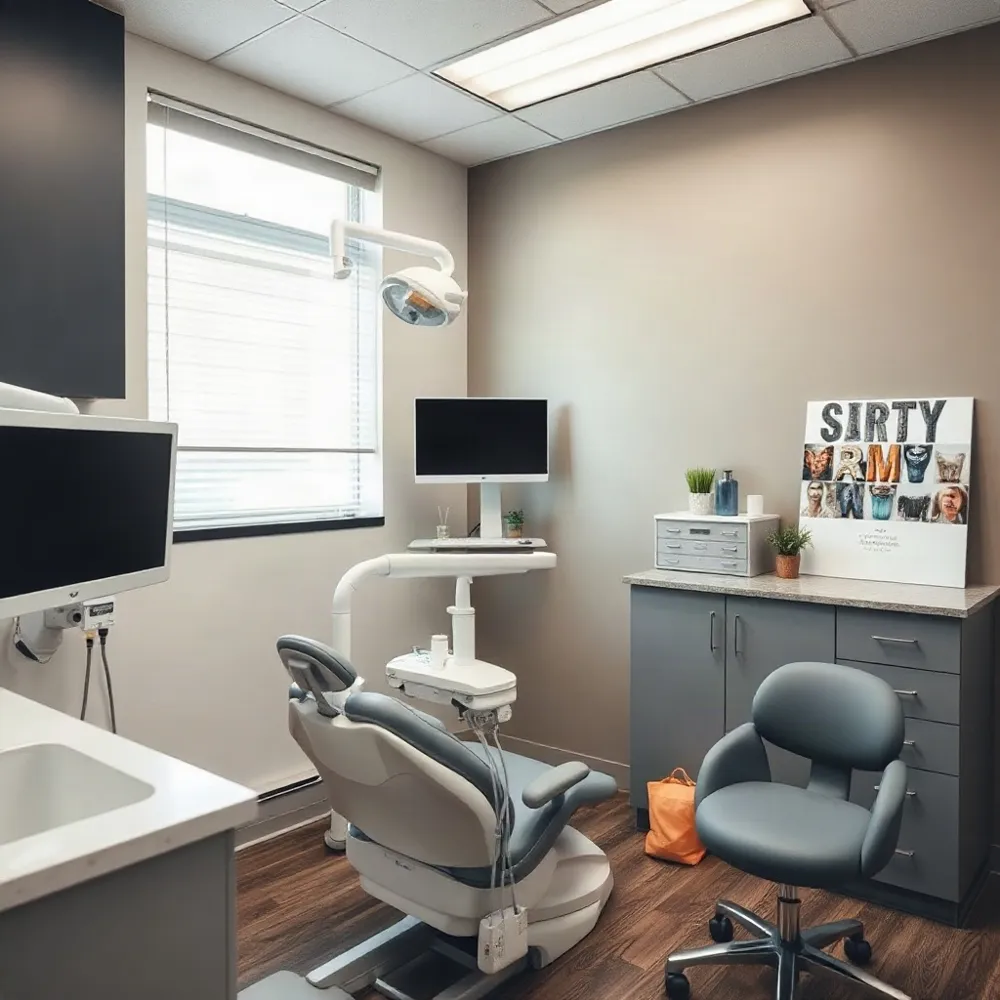 Shared decision-making is a conversation in which the patient and dental professional exchange information and work toward a care decision together. The clinician brings clinical knowledge; the patient brings personal priorities, concerns, and preferences. The aim is to combine both perspectives, not to transfer the decision entirely to either person.
A dentist can explain which options are clinically appropriate, what benefits and risks each may involve, and what alternatives exist, including delaying or declining treatment when suitable. Patients can ask how the choices may affect their oral health and daily life, then share what matters most to them. The shared decision-making process in dentistry also calls for a shared understanding of the problem before setting treatment goals.
This exchange supports informed consent, but consent alone does not show that a decision was mutually informed. Patients need clear, understandable information and a genuine opportunity to take part. A review of shared decision-making in dentistry describes high-quality information and decision aids as parts of informed participation, while noting that the evidence base in dentistry remains limited.
People differ in how much responsibility they want in a treatment decision. Some may prefer to weigh options closely with the dentist; others may want a clear recommendation before choosing. Supporting a patient’s choice does not mean asking them to decide alone or setting aside professional guidance.
When preferences and clinical judgment differ, respectful discussion can clarify the concern, explain the reasons for a recommendation, and explore acceptable alternatives. Patient-centered care does not require a clinician to provide treatment considered unsafe or clinically inappropriate. At Ashley E. Burns, DDS, comprehensive dental services are presented alongside an emphasis on patient-centered care, providing a practice context for discussing options with attention to the individual patient.
Everyday Examples of Individualized Care
Patient-centered care becomes visible in the small choices that shape an appointment. A dental team might ask about a patient’s goals, concerns, medical history, and preferences before discussing treatment. The plan can then reflect both clinical findings and what matters in the patient’s daily life.
For example, a patient comparing treatments can receive a plain-language explanation of likely benefits, risks, costs, and alternatives, followed by time for questions. A 2023 review of patient-centered dentistry describes exploring how a dental problem and its treatment may affect a person beyond the clinical symptoms, including practical circumstances and personal priorities. The review’s discussion of patient-centered dental care offers examples of this broader approach.
Comfort can also be planned rather than left to chance. A patient who feels anxious may agree with the team on a pause signal, scheduled breaks, or another reasonable way to communicate discomfort. If a family member or caregiver’s involvement would help, the patient can be asked whether they want that person included in a discussion or follow-up.
Individualized care may involve coordinating with other dental professionals and making transitions clear, such as explaining what to expect after a referral. Appointment convenience and timely guidance when an urgent concern arises are also practical access considerations, though availability varies by practice. These examples fit the broader view of care described in a review of patient-centered care in dentistry.
At Ashley E. Burns, DDS in Midland, patient education and attention to individual needs are part of the practice’s stated approach to care. A useful plan should remain open to review: health, circumstances, and preferences can change, so patients and their dental team may need to revisit goals and next steps together. More practical examples appear in this guide to building a treatment plan together.
A Simple Guide to Daily Prevention
 The 2-2-2 rule is a handy reminder for everyday prevention: brush twice a day for two minutes each time, and see a dentist twice a year. It offers a simple routine, but it is a general guideline rather than a plan tailored to every person.
Use fluoride toothpaste and brush gently across the surfaces of each tooth and along the gumline. Thorough, gentle brushing helps remove plaque while limiting irritation to the gums. For more practical guidance on brushing and flossing, see this guide to daily prevention.
Regular dental visits give a dentist the chance to assess your teeth and gums and remove hardened plaque, also called tartar, that brushing cannot clear. The appropriate schedule may differ based on your oral health, so some people may need visits more often than twice a year or additional steps at home.
At Ashley E. Burns, DDS in Midland, preventive guidance can be discussed in the context of each patient’s needs rather than treated as a fixed routine. Follow your dental professional’s recommendations for your own oral health, including any changes to brushing habits or visit frequency.
What Research Says and What It Cannot
Research offers reasons to take patient-centered care seriously, but it does not settle every question about how to deliver it. A 2023 narrative review of patient-centered care in dentistry associated this approach with better patient health outcomes and satisfaction, reduced use of care, and greater work satisfaction for healthcare professionals.
Those associations are not proof that a particular care model causes these outcomes. The review’s proposed dentistry-specific model is theory-derived and has not been empirically tested as an intervention. The authors also describe limited implementation evidence, inconsistent definitions, little practical guidance, and gaps in formal education and training.
A 2014 qualitative study interviewed 20 dentists who also taught at one UK dental school. Their varied accounts offer insight into how those participants understood patient-centered care, not a survey of all dentists or evidence about any particular US practice. Recommendations in the research to teach communication, behavior change, and pain and anxiety management are proposals, not proof that a specific practice follows those policies. They should not be treated as requirements for a Texas dental office.
For context on the practice’s stated approach, ashleyburnsdds.com describes its patient-centered care. The broader research can inform questions patients ask, but it does not establish how Ashley E. Burns, DDS delivers care.
Care Shaped Around the Person
Patient-centered dental care brings clinical judgment together with respect for a person’s circumstances, priorities, and preferred role in decisions. It does not mean every request is appropriate; it means recommendations and their reasons are discussed openly.
Listening, understandable information, and meaningful choices help patients and dental professionals build a shared understanding of the concern and possible next steps. A dentistry review describes these as parts of a patient-centered approach, while noting that its proposed model still needs testing in practice (review of patient-centered care in dentistry).
For readers in Midland, Ashley E. Burns, DDS provides comprehensive dental services with a patient-centered focus. At an appointment, consider bringing your questions, concerns, and priorities, then discuss how they relate to your oral health and suitable care options with a dental professional.